
Ear mites in cats: how to recognise them and treat them properly
Ear mites are one of the most common parasites in kittens and cats taken in from the street. They cause intense itching and a very characteristic dark wax, and today’s parasite treatments deal with them well. The usual mistake is treating just one animal, or treating as mites something that is actually something else.
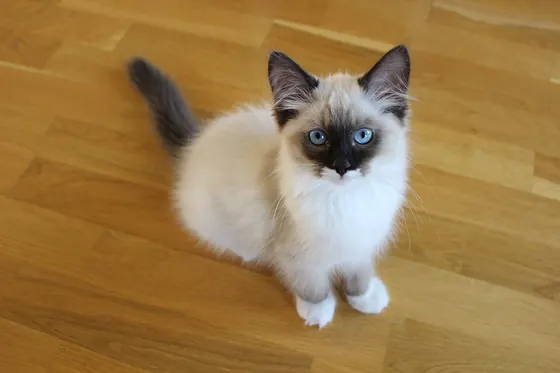
What they are and which cats get them
The ear mite, Otodectes cynotis, is a tiny parasite, barely visible to the naked eye as a moving white dot, that lives in the ear canal and feeds on skin debris and wax. It is very common in kittens, especially those born outdoors, in colonies or in breeding establishments with poor hygiene, and in cats living with many others. It spreads by direct contact, from mother to kittens, between cats that sleep together, and also between cats, dogs and ferrets in the same household. An adult indoor cat with no contact with other animals rarely has them, so in that cat other causes of ear inflammation (otitis) should be considered first.
How to recognise them
The most characteristic sign is a dark, dry, crumbly wax, very dark brown or black, that looks like coffee grounds, inside the ear. The cat scratches its ears persistently, shakes its head, holds its ears slightly drooped or flattened and may have wounds and scabs behind the ears and on the neck from scratching. In some cats the itching is enormous, while others, curiously, hardly itch at all despite having lots of mites. If the scratching and shaking are intense, a blood vessel in the ear flap can burst and an aural haematoma can form: the ear flap swells like a soft cushion full of blood.
Not everything black is mites
Dark wax also appears with yeast (Malassezia) or bacterial ear infections, which are more common in adult cats with allergies. In young cats, inflammatory polyps of the middle ear or nasopharynx cause discharge, recurring ear infections, sometimes a head tilt and breathing noises. In older cats, an ear infection on one side that does not respond to treatment can be due to a tumour of the wax glands. A grass awn in the ear, common in cats that go out in spring and summer, causes sudden, violent head shaking. And allergies produce ear infections in both ears along with itching on the face. That is why it is worth having the vet confirm it before treating.
When it is more serious
See the vet the same day or the next if the cat tilts its head, loses its balance, walks in circles or its eyes flick from side to side: these are signs that the infection has reached the middle or inner ear. Also if one eye has a drooping eyelid, a smaller pupil and the third eyelid showing (Horner’s syndrome), if touching the ear is very painful, if there is pus or a strong bad smell, if the ear flap has suddenly swollen or if there is blood. In very young kittens with mites, the itching and wounds can easily become infected: do not wait in that case either.
What the vet will do
The vet will look down the ear canal with an otoscope, where the mites can often be seen moving over the wax, and take a sample of wax to examine under the microscope. That same sample shows whether there are also yeasts or bacteria, which changes the treatment. If the cat is in a lot of pain or the canal is very dirty, a clean under sedation may be needed. The vet will also check that the eardrum is intact, because some ear products must not be used if it is perforated. If there are neurological signs or a polyp is suspected, imaging such as a CT scan may be needed.
Current treatment
Treatment today is usually straightforward. Several veterinary parasite treatments for cats, as spot-ons or tablets, eliminate ear mites with one or two applications, as well as protecting against fleas and other parasites; the vet will choose the right one for the cat’s age and weight. This is often combined with gentle ear cleaning with a veterinary ear cleaner and, if there is a secondary infection, specific ear drops. Follow the full course even if the itching improves within a few days, because eggs can hatch later. The vet will check the ears at the end to confirm the mites have gone.
Treat every animal in the house
This is the key to stopping them coming back. If one cat has mites, the other cats, dogs or ferrets in the house most likely have them too, even if they are not scratching. Treating only the one with symptoms is the most common cause of relapse: the mites pass from the untreated animal to the treated one and it all starts again. Talk to your vet about treating them all at once, each with the right product for its species: never use a dog’s parasite treatment on a cat, because some contain permethrin, which is highly toxic to cats. Wash the blankets and beds where they sleep. In people, the cat ear mite may cause the odd itchy bite, but it does not set up home.
What it costs in Spain in 2026
As a guide: consultation, €40 to €60; otoscopy and wax cytology, €20 to €50; a parasite treatment that covers ear mites, €12 to €25 per application depending on the product; veterinary ear cleaner, €10 to €20; medicated ear drops, €15 to €30; ear clean under sedation, €60 to €150. An aural haematoma that needs draining or surgery can cost €150 to €400, and surgery for a middle ear polyp, depending on the technique, €400 to €1,500. In a simple case of ear mites, the total usually comes to between €70 and €120, not counting treatment for the other animals.
What not to do
Do not put cotton buds inside the canal: you push the wax deeper, irritate the skin and can damage the eardrum. Clean only the visible part of the ear flap with gauze and the cleaner you have been recommended. Do not use home remedies such as oil, vinegar, hydrogen peroxide or surgical spirit inside the ear. Do not apply essential oils, which are toxic to cats. Do not use human ear drops or leftovers from the dog: some can damage the ear if the eardrum is perforated. And do not consider the cat cured just because it has stopped scratching: finish the course and have the follow-up check.
Prevention
If you adopt a kitten or take in a cat from the street, take every newcomer to the vet before introducing it to your animals and ask for its ears to be checked. Regular external parasite control with a product that covers mites greatly reduces the risk, especially for cats that go out or in multi-animal homes. Check your cat’s ears when you brush it: a healthy ear is pink, clean and does not smell. And if you see dark wax or notice it scratching, see the vet early: mites treated in time leave no lasting damage, but a long-standing untreated ear infection can end up affecting the middle ear.
Black wax like coffee grounds and intense itching in a kitten or a newly rescued cat usually mean ear mites. They are treated with veterinary parasite products, but every animal in the house must be treated at the same time. No cotton buds or home remedies, and see the vet if it tilts its head.
Educational content from Michipedia, translated from the Spanish original. It does not replace the advice of a vet or a feline behaviour specialist. Every cat is an individual.