
How to choose your cat’s food: what the label tells you and what it leaves out
A cat is not a small dog, and neither is its food. It needs real animal protein, taurine, fat and very few carbohydrates, and labels have tricks to make everything look better than it is. Five checks are enough to separate what is worth buying from what just has a nice photo.
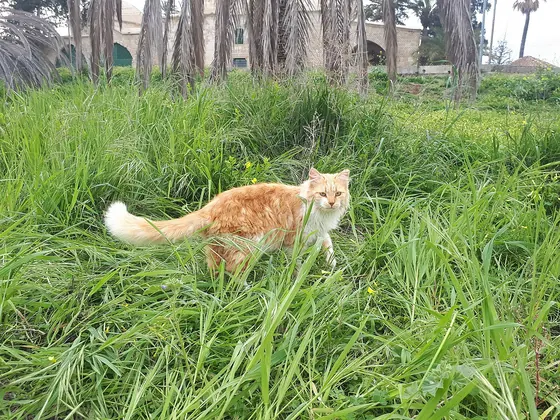
First, understand what a cat eats
A cat is an obligate carnivore, and that is not a figure of speech. Its metabolism is built to get energy from protein and fat, not from starch: it makes glucose from amino acids all day long, even when it has not eaten. It also cannot produce enough of several nutrients that other animals make for themselves, such as taurine, arachidonic acid, or vitamin A from plant sources, so it has to get them ready-made from meat. That is why you cannot choose cat food with the same logic as dog food, and why feeding a cat dog food, even for a few weeks, is a bad idea: it is short of taurine and has too many carbohydrates.
The word that matters: “complete”
Before you look at the ingredients, find the phrase “complete food” for cats on the bag or tin, along with the life stage it is meant for: kitten, adult, neutered, senior. A complete food is formulated to cover everything a cat needs if it is the only thing it eats, following the nutritional guidelines of FEDIAF, the European reference body. A “complementary” food is not: it is designed as a treat or a topper. This is very common with wet food, where complementary tins and pouches with lovely photos are everywhere. If that is all your cat eats, it will go short of nutrients however happily it eats it. This is the most important check, and the one fewest people make.
Ingredients: the start of the list
Ingredients are listed in descending order by weight, so the first three or four make up most of the product. What you want is one or more named animal sources at the top: “dried chicken”, “turkey”, “salmon”, “chicken liver”. What you do not want is a list that starts with a cereal or with “vegetable protein”, or meat that only appears as “meat and animal derivatives” with no species named, because that can change from batch to batch. And watch out for ingredient splitting: “rice, rice flour, rice starch” are the same ingredient spread over three lines so that none of them outweighs the meat. Add them up in your head.
“With 40% fresh chicken” is not what it seems
Fresh meat is about seventy per cent water, and that percentage is measured before the food is cooked and dried. After processing, far less remains than the packaging suggests. Dried meat or chicken meal, which sound less appealing, actually provide a good deal more protein per kilo of finished food. Neither is bad: what matters is that there is plenty of animal protein overall, not how big the number on the front is. That is what the analytical constituents are for, and they are more honest than the marketing.
The analysis: high protein, low carbohydrates
Crude protein, crude fat, fibre, ash and moisture. In a good-quality dry food for adult cats, protein usually sits between 32 and 45%, and fat between 12 and 20%. Carbohydrates are not declared, but you can estimate them by subtracting everything else from a hundred: if the result is above 35 or 40%, the food contains a lot of filler. Ash above 9 or 10% usually means a lot of bone, which raises phosphorus and magnesium, something best avoided in cats prone to urinary or kidney problems. And remember that these figures describe quantity, not quality: vegetable protein counts as protein too.
Taurine, and why it is not a minor detail
A lack of taurine in cats causes dilated cardiomyopathy and a degeneration of the retina that ends in blindness. It was a real problem in the 1980s, until it was understood and manufacturers started adding it. Today every complete cat food lists it among the additives, so there is no need to obsess over it, but it works as a test: if a product sold as a cat’s main food does not mention it, be suspicious. It is also the underlying reason why poorly formulated homemade or vegetarian diets are so dangerous for this species.
Grain or grain free
Cats digest a moderate amount of cooked starch reasonably well, although they do not need it. The problem is not the presence of cereal but how much there is and what takes its place. Many “grain free” foods replace rice with peas, potato or lentils, which are not meat either, and can end up with as many carbohydrates as the food they criticise. True food allergies are uncommon in cats and are usually to a specific animal protein, not to wheat. If your cat has no diagnosis, choose on animal protein and low carbohydrates, and treat the “grain free” label as a secondary issue.
Dry, wet or both
This is the big difference from dogs. The cat descends from a desert animal, has a weak thirst drive and is built to get nearly all its water from its prey. A cat that eats only dry food drinks more, but usually still falls short on total water intake, and that shows in more concentrated urine, which encourages crystals, cystitis and blockages. That is why many vets recommend that at least part of the diet is wet. You do not need to go fully wet, which is expensive: one pouch a day alongside the dry food already makes a real difference to hydration. We go into the figures in the article on dry versus wet food.
How much to feed
The table on the bag is a guide for an average cat and tends to be generous, especially if yours is neutered and lives in a flat. A calm adult cat of 4 kg (about 9 lb) needs roughly 190 to 250 kilocalories a day, which with a typical dry food is between 50 and 65 grams. Weigh it on kitchen scales rather than using a measuring cup, because the difference between a level cup and a heaped one can be thirty per cent. And the body has the final say: you should be able to feel the ribs as you run your hand along without pressing, and see a bit of a waist from above.
The price, worked out per day
In Spain, in 2026, a mid-range dry food costs between €4 and €7 a kilo, and a premium one between €8 and €14. It sounds a lot, but a cat eats very little: at 60 grams a day, even a food at €12 a kilo comes to about €0.70 a day, around €22 a month. Price tracks quality up to a point and then stops doing so, because at the top end you are also paying for brand, design and distribution. Work out the cost per day, not per bag: a more energy-dense food is fed in smaller amounts. And buy small bags, 1.5 to 3 kilos, because open dry food loses its aroma and the cat notices before you do.
How to tell your choice is working
You do not need the most expensive food on the market: you need one that is complete, rich in animal protein, that your cat eats willingly and that agrees with it. The signs are simple: it keeps its weight, its coat is glossy and free of dandruff, its stools are well formed without an excessive smell, it has good energy, and it passes a normal amount of urine in the litter tray. If all that holds, do not change for the sake of it, because cats cope badly with novelty. If there is frequent vomiting, diarrhoea, itching or a dull coat, talk to your vet before trying foods at random.
Look for “complete food” for cats, a named animal source at the start of the ingredients, high protein and low carbohydrates. Add some wet food for the water, weigh the portion on scales and judge it by your cat’s body, not by the table on the bag.
Educational content from Michipedia, translated from the Spanish original. It does not replace the advice of a vet or a feline behaviour specialist. Every cat is an individual.