
Persians, flat faces and breeds built on mutations
Extreme-type Persians, Exotics and Himalayans, Scottish Folds or Munchkins. They are lovely cats with health problems that come from the way they have been bred.
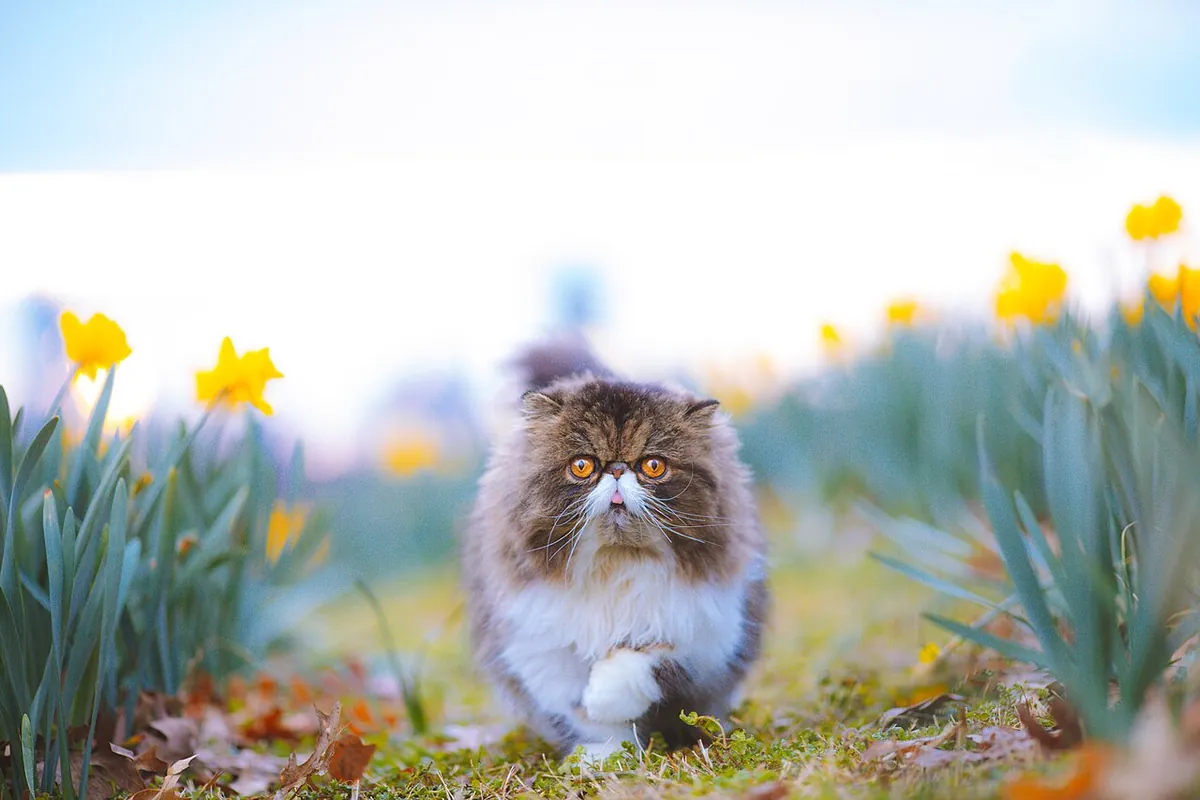
What goes on in a flat face
In the most extreme Persians, Exotics and Himalayans the muzzle has been shortened so much that the nose sits almost level with the eyes. That has consequences: narrow nostrils that make breathing hard, especially in heat or with exertion, constant tear staining because the ducts that drain tears are deformed, staining and dermatitis in the facial folds, crowded teeth and difficulty picking food up from the bowl. Vets call it feline brachycephalic syndrome. Not all Persians are affected equally: those of a more traditional type, with some muzzle, have far fewer problems.
Kidneys and heart
Persians and related breeds also carry an inherited disease, polycystic kidney disease, in which cysts form in the kidneys and eventually cause kidney failure. There is a genetic test, and a responsible breeder only breeds from parents that test negative and shows you the result. Some of these lines also have more cases of hypertrophic cardiomyopathy, which is monitored with heart scans. Before buying a kitten of these breeds, ask for both parents’ results in writing; if the breeder does not have them or will not show them, you have your answer.
Daily care for a Persian
A Persian is not a low-maintenance cat. Its long, fine coat tangles easily and needs brushing every day; left alone, it forms mats tight against the skin that hurt and sometimes can only be removed by shaving at the groomer’s. The area around the eyes needs wiping daily with a damp pad to prevent irritation, the area under the tail needs watching because it gets dirty, and it needs a flat, wide feeding dish so it can eat without burying its face. In hot weather, shade, water and a cool spot: it finds it harder to cool down by breathing.
Folded ears and short legs
The Scottish Fold has folded ears because of a mutation that affects cartilage throughout the body, not just in the ears. Every cat with folded ears has some degree of a bone and joint disorder, osteochondrodysplasia, which can cause arthritis and pain from a young age; some countries have banned or restricted breeding them. The Munchkin owes its short legs to another mutation, and in the Manx the lack of a tail is linked to spinal malformations in some cats. These cats deserve every bit of love, but it is worth knowing what lies behind them before looking for one.
If you already have one or want one
If one already lives with you, the key thing is a vet check that assesses its breathing, eyes, mouth, kidneys and heart, and a care plan tailored to it. A cat with folded ears that moves little or does not jump may not be calm: it may be in pain, and arthritis can be treated. If you are looking for one, go for moderate-type cats, with a visible muzzle and open nostrils, from registered breeders with health tests. And think about adoption: many shelters have Persians and Persian crosses waiting, often handed in because the owners could not keep up with the brushing.
If you love Persians or Exotics, choose a moderate type, with parents clear of polycystic kidney disease and a visible muzzle, and plan on daily brushing and eye cleaning. Folded ears always come with a cartilage and joint problem.
Educational content from Michipedia. It does not replace the advice of a vet or a feline behaviour specialist. Every cat is an individual.