
Play and an interesting home
An indoor cat is a hunter with nothing to hunt. Ten or fifteen minutes of good play, several times a day, prevents a good share of problems.
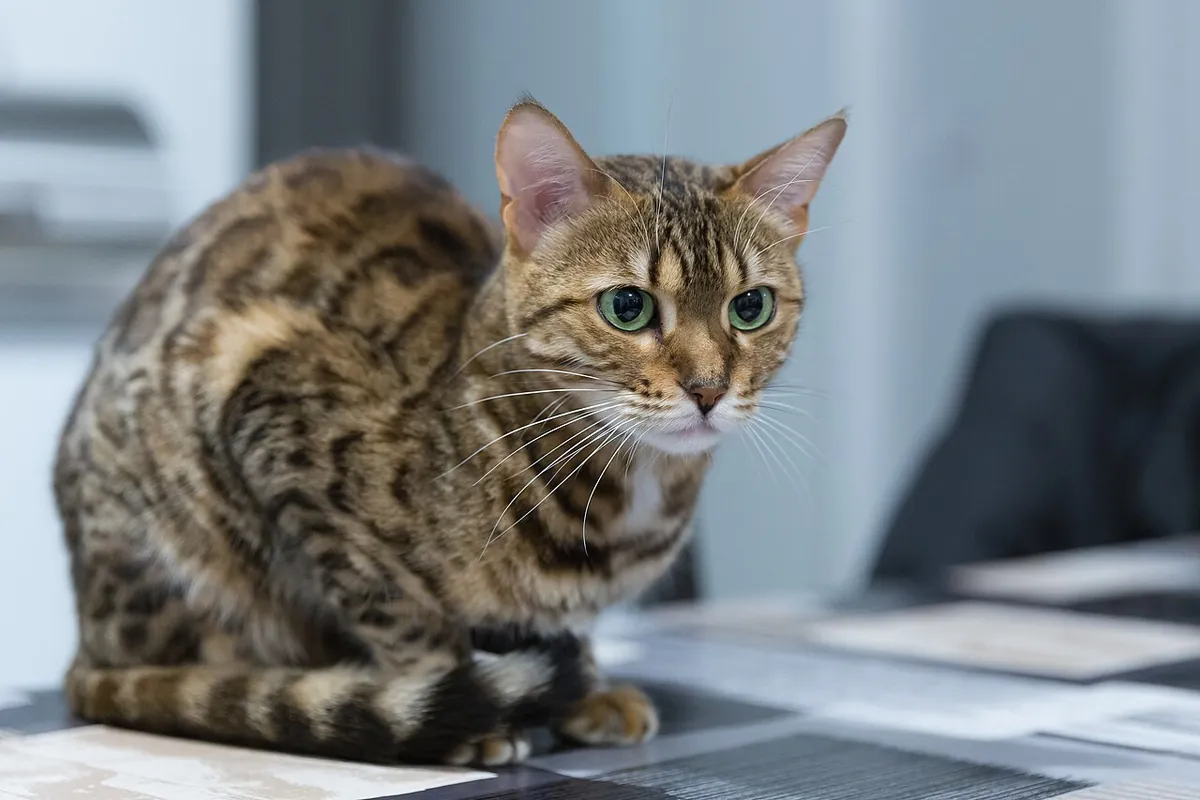
A hunter in a flat
The domestic cat keeps the behaviour of its wild ancestor: outdoors it catches many small prey a day and spends hours stalking, chasing and pouncing. In a flat all of that disappears, and the energy and frustration come out elsewhere: ankle ambushes, night-time races, yowling, eating out of boredom or overgrooming until bald patches appear. The environmental needs guidelines from the International Society of Feline Medicine and the American Association of Feline Practitioners list play that mimics hunting among the five pillars of a cat’s wellbeing, alongside a safe place, separate resources, predictable handling and respect for its sense of smell.
How to play properly
The best toy is a wand with feathers or a mouse on the end of a string, moved the way prey moves: hiding behind a chair, moving away, stopping, twitching on the floor. Not in front of its face, but moving away from it. Short sessions of five to fifteen minutes, two or three times a day, always ending with a real catch. Then, if you can, feed it: hunt, catch, eat is the full sequence. A laser pointer is frustrating if there is never anything to catch; if you use one, finish on a toy it can bite. Put the wand away afterwards: swallowed string and ribbon is an emergency.
Food it has to work for
Splitting the daily ration into several small meals is closer to how a cat eats in the wild. Puzzle feeders, treat balls, snuffle mats or simply hiding a few kibbles around the house give it something to do and also slow down its eating, which helps overweight cats and those that vomit from eating too fast. Start on an easy level so it does not get frustrated and make it harder bit by bit. An egg box or a cardboard tube with kibble inside works as well as a pricey shop-bought toy.
Windows, boxes and high places
A safe window with a view of the street, a tree or a bird feeder is cat television and can keep it entertained for hours. Put a shelf or a bed on the windowsill, always with a safety net if you open the window. Cardboard boxes, paper bags with the handles removed and tunnels are favourites and cost nothing. Shelves and cat trees multiply the space in a small flat vertically. Rotate toys: put half away and swap them each week, because something new is more interesting than what has been lying on the floor for a month.
Catnip, safe plants and learning things
Catnip produces a brief euphoria in some cats; those that do not react to it sometimes respond to silver vine or valerian. It is not addictive and is best used now and then. A pot of cat grass, usually sprouted wheat or oats, lets it nibble safely. And cats learn far more than people think: with treats and a clicker you can teach them to come when called, to walk into the carrier on their own, to high-five or to walk on a harness. Five minutes of training tires them out as much as a play session.
Hunting play with a wand toy, short and several times a day, always ending in a catch. Food spread through puzzle toys, safe windows, high places and toys on rotation. It is the cheapest way there is to have a calm cat.
Educational content from Michipedia. It does not replace the advice of a vet or a feline behaviour specialist. Every cat is an individual.