
Weight: the most common problem and the least noticed
A large share of indoor cats are overweight, and most of their owners do not notice. A few hundred grams too many already matter in a 4 kg (9 lb) animal.
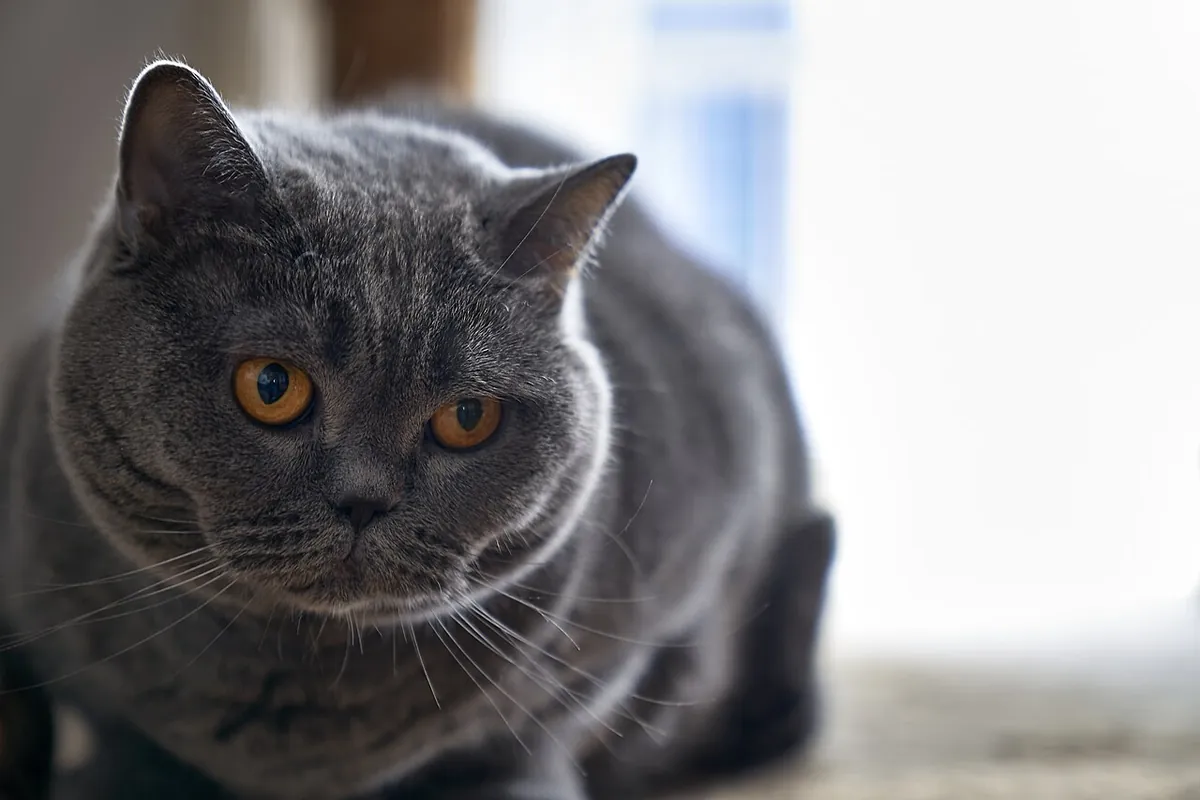
How to tell if it is the right weight
Rather than the scales, vets use the body condition score, which runs from 1 to 9; 5 is ideal. Run your hand along its sides: the ribs should be easy to feel under a thin layer of fat, without pressing. Seen from above, it should have a slight waist behind the ribs. Many cats have a flap of loose skin low on the belly that swings as they walk; it is normal and does not by itself mean the cat is overweight, but if it is full of fat and you cannot feel the ribs, it is. The ideal weight tool takes you through it step by step.
Why it matters so much
One extra kilo on a 4 kg cat is like 15 to 20 kg (33 to 44 lb) on a person. Obesity multiplies the risk of diabetes, which in cats is closely linked to excess weight, worsens arthritis, makes it hard to groom the back and the area under the tail, which leads to skin and urinary problems, and is associated with a shorter life. On top of that, an obese cat that stops eating for any reason is at much greater risk of hepatic lipidosis, which can be fatal. Keeping it at a healthy weight is probably the most effective thing you can do for its long-term health.
Where the extra weight comes from
Almost always the same things: a neutered indoor cat that burns little energy, a bowl of dry food that is always full, treats and titbits nobody counts, several people at home feeding it without the others knowing and very little play. Add to that the fact that cats ask for food out of boredom or for attention, and that giving them something is the easiest way to stop the yowling at six in the morning. An automatic feeder set for that time, instead of you getting up, breaks the habit.
How to slim it down safely
First, a vet visit to rule out other causes and set a target weight and a specific ration. Never starve it or cut its food suddenly: weight loss must be slow, around one per cent of body weight a week, so the liver does not suffer. Weigh the ration on scales, split it into several meals or puzzle feeders, count treats as part of the daily ration and add play sessions. Weight control foods help it eat a reasonable volume with fewer calories.
Weighing it at home
A cat is easy to weigh at home: weigh yourself alone, then weigh yourself holding the cat and subtract. Or use baby scales, which are more precise. Do it once a month, at the same time of day, and write it down. As well as watching for weight gain, that record helps with the opposite: losing weight without dieting is an early sign of kidney disease, hyperthyroidism, diabetes or dental problems in adult and senior cats, and half a kilo (about 1 lb) less on a 4 kg cat is invisible to the eye but not to the scales.
Ribs you can feel without pressing and a slight waist. A weighed ration, treats counted in and daily play. To slim it down, slowly and with the vet, never by starving it. And weigh it every month: losing weight without a diet is a warning sign too.
Educational content from Michipedia. It does not replace the advice of a vet or a feline behaviour specialist. Every cat is an individual.