
How a kitten grows
In a year it goes from about 100 g (3.5 oz) to almost its adult weight, and large breeds keep growing until three or four. Each stage needs something different.
From newborn to kitten
A kitten is born weighing about 100 g (3.5 oz), deaf and with its eyes closed, which open at around ten days. It gains weight every day and, at around three or four weeks, starts walking confidently, playing with its littermates and trying solid food. Weaning is complete at around seven or eight weeks. In those weeks the mother teaches it to use litter and to hunt, and its littermates teach it to control its bite. If you find a kitten this small, weigh it every day on kitchen scales: if it is not gaining weight, it needs a vet as soon as possible.
Two to six months: the growth spurt
This is the stage of fastest growth. It needs a food made for kittens, richer in energy, protein and minerals, split into three or four meals a day. Between three and six months it swaps its baby teeth for adult ones, so it is normal for it to bite more and for you to find the odd tiny tooth around the house. This is also when vaccines and worming are completed and, in Spain, when the law requires it to be neutered, before six months. Many females can have their first season from four or five months, sometimes earlier.
Neutering and appetite
After neutering, energy needs drop and appetite rises, a combination behind a large share of overweight cats. There is no need to halve its food, but the ration does need adjusting and, once it has finished growing, switching to a food for neutered cats or watching the amounts closely. Weigh it every month during the first year and compare with its shape: you should see a waist from above, and feel the ribs when you run your hand over them, without pressing. That is the time to correct things, not when it is already 2 kg (4 lb) overweight.
When it stops growing
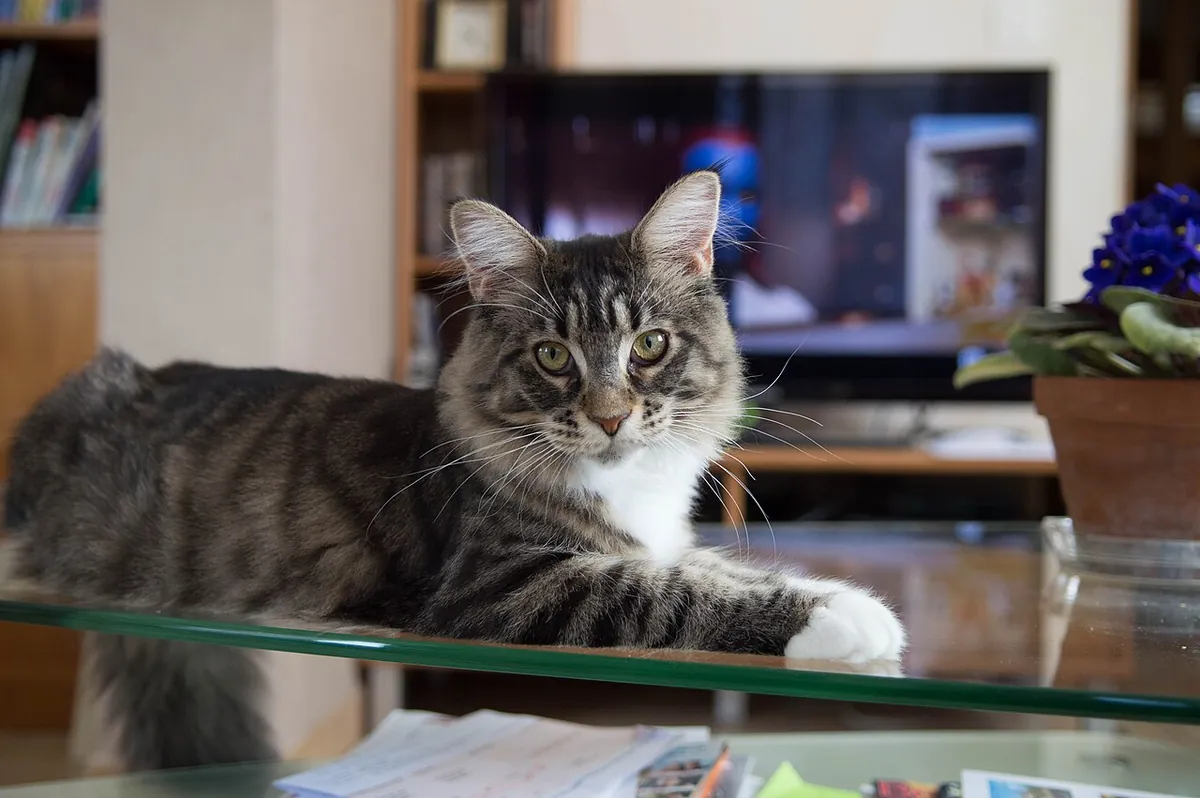
An ordinary domestic cat reaches nearly its adult size at about twelve months, which is the usual age to switch to adult food. Large breeds take much longer: a Maine Coon, a Norwegian Forest Cat or a Ragdoll can keep putting on weight and muscle until three or four years old. For them it is worth staying on a growth food suited to their size for longer, as your vet advises. Michipedia’s kitten growth tool gives you an estimate of how big your kitten will get from its weight and age.
What it learns in the first year
The sensitive period for socialisation in cats is very early, roughly between two and seven or eight weeks, but what it experiences up to a year still counts. Gently and with treats, get it used to what it will have to accept as an adult: having its paws handled and claws clipped, its mouth opened, being brushed, the carrier, the car, the noise of the hoover and visitors. Teach it to play with toys, not hands: a kitten that bites fingers is funny, a 5 kg (11 lb) adult doing the same, not so much.
Kitten food until one year old, longer in large breeds, neutering before six months and adjusting the ration afterwards. And use the first year to get it used to being handled, to the carrier and to playing with toys.
Educational content from Michipedia. It does not replace the advice of a vet or a feline behaviour specialist. Every cat is an individual.