
Bathing and brushing your cat: when it is needed and how to do it well
A cat spends a good part of its day grooming, and it does it very well. Bathing is almost never necessary and is usually a bad experience for everyone. Brushing, on the other hand, helps with hairballs, knots and moulting, and is a good way to give it a once-over.
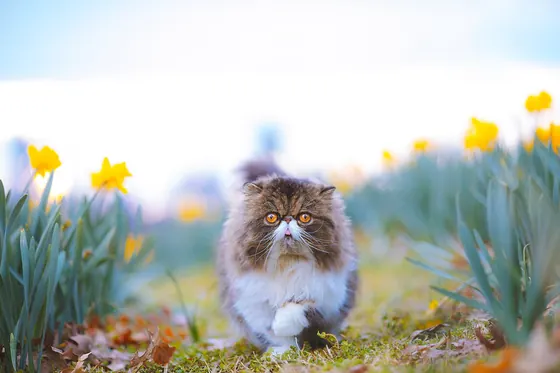
Cats wash themselves, and very well
A healthy adult cat can spend up to a third of its waking hours grooming. Its tongue is covered in hard papillae shaped like tiny hooks that work like a comb: they pull out dead hair, dirt and parasites and spread the skin’s natural oils. That is why a healthy cat does not smell and does not need shampoo. Bathing it for no reason strips that protective oil, dries out the skin and, in most cases, causes considerable stress. What it does need is help with dead hair, especially during moults and in long-haired breeds.
Why brushing does matter
All the hair a cat pulls out with its tongue gets swallowed, and most of it passes out in the faeces without trouble. But if it swallows a lot, for example during a heavy moult or in a long-haired cat, hairballs form that it vomits up or, worse, that can get stuck in the gut. Brushing removes that hair before it is swallowed. It also prevents knots, reduces hair on sofas and clothes, and lets you check the skin for fleas, wounds, lumps or dandruff. Many cats, once used to it, end up enjoying brushing as if it were a long stroke.
How often to brush for each coat
It depends on the type of coat. A short-haired cat, such as the common European shorthair, usually manages with one brush a week, and two or three during the moulting seasons in spring and autumn. Semi-longhaired cats, such as the Maine Coon, Norwegian Forest Cat, Siberian or Ragdoll, need two or three sessions a week, with special attention to the neck, belly, armpits and the back of the thighs. And cats with long, dense coats, such as the Persian, Himalayan or Angora, need daily brushing: in them, knots form within days and, if left, turn into mats of felted hair that pull on the skin and have to be shaved off.
Which brushes to use
For short coats, a rubber grooming glove or a soft rubber brush is very effective and nearly all cats tolerate it well. For semi-long and long coats, a combination of a wide-toothed metal comb to detangle and a soft slicker brush to remove dead hair. Deshedding tools that reach the undercoat remove a huge amount of hair during moults, but should be used gently and not every day, because used badly they irritate the skin. A couple of tools at €8 to €25 each is all you need. Always brush in the direction of the hair, with short strokes.
How to get it used to brushing
Start with very short sessions of one or two minutes on the areas it likes best, usually the cheeks, head and back, when it is relaxed. Stop before it gets fed up and give it a treat. Gradually make the sessions longer and work towards the more sensitive areas, such as the belly, tail and hind legs, which many cats guard. If it turns to bite or swishes its tail hard, stop: that is its way of saying enough. With kittens, getting them used to it in the first months makes adult life much easier, especially in long-haired breeds.
Knots: never with scissors
If you find a small knot, try to tease it apart with your fingers, little by little, then with the comb, holding the hair at the base so it does not pull the skin. There are detangling products for cats that help. What you must not do is cut it out with scissors: a cat’s skin is very thin and elastic, it lifts up with the knot and it is very easy to make a deep cut without realising. It is one of the most common accidents at home. If the knots are large or tight against the skin, have a cat groomer or the vet deal with them using clippers, sometimes under sedation if the cat will not tolerate it.
When a bath is needed
There are situations where a bath is justified. Hairless cats, such as the Sphynx, build up oil on their skin that no hair absorbs and need a bath or a clean every one or two weeks. Older, obese or arthritic cats sometimes cannot reach to groom their rear end and get dirty. A bath is also needed when a cat gets covered in something sticky or, above all, something toxic, such as oil, paint, a cleaning product or lily pollen, which it could swallow while licking itself. And for some skin treatments, when the vet advises it. Apart from that, a cat does not need bathing.
How to bath it if you have to
Get everything ready first: shampoo made for cats, never for people or dogs, several towels and the bathroom door shut. Use a washing-up bowl or the sink with lukewarm water about ten centimetres (4 in) deep, rather than a full bath, and a non-slip mat so it does not slide. Wet it with a jug or a gentle shower head, avoiding the face, and wash only what is needed. Rinse very thoroughly, because it will swallow any shampoo left when it licks itself. Dry it with towels in a warm room; many cats cannot stand a hairdryer, and if you use one, keep it on a low, warm setting at a distance. And a treat at the end, even if it protested.
Alternatives to a bath
For small dirty patches, unscented wipes made for cats or a cloth dampened with lukewarm water almost always do the job. For an older cat that gets its rear end dirty, trimming the hair in that area and wiping it daily with a cloth is far better than bathing it. Dry or no-rinse foam shampoos can work for cats that will not tolerate water, although they must be brushed out thoroughly. And if your cat smells bad, do not bath it: a healthy cat does not smell, and a bad smell usually comes from the mouth, ears, skin or anal glands, and is a reason to see the vet.
If it stops grooming
A cat that suddenly stops grooming, with a dull or greasy coat or dandruff along its back, is giving a signal you should take seriously. It may be arthritis pain that stops it twisting round, excess weight, dental problems that make grooming painful, or a general illness. On the other hand, a cat that licks itself so much it makes bald patches also needs a check-up, because it may be an allergy, parasites, pain or stress. How a cat grooms is a gauge of its health, and it is worth watching.
Most cats do not need bathing: they groom themselves. They do benefit from brushing, weekly for short coats, several times a week for semi-long and daily for long coats. Never cut knots out with scissors, and only bath a cat when there is a reason, with cat shampoo.
Educational content from Michipedia, translated from the Spanish original. It does not replace the advice of a vet or a feline behaviour specialist. Every cat is an individual.