
Cat body language: tail, ears, eyes and whiskers
Cats communicate mainly through their bodies and through scent, far more than with their voices. The trouble is that their signals are subtle and we read many of them the wrong way round, because we read them as if they were a dog's. Learning to read them prevents scratches, helps you spot fear and pain, and makes living together much better.
The tail, the best indicator
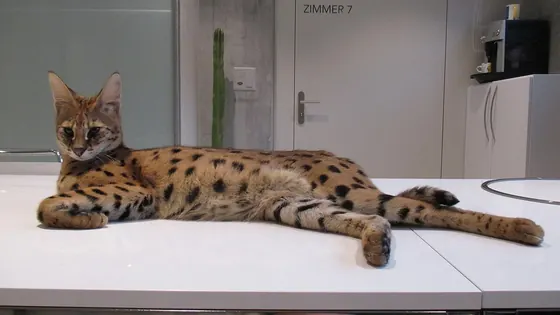
The tail is the easiest signal to read. A tail held straight up, often with the tip slightly curved like a question mark, is a friendly greeting: the cat is approaching happily and in a good mood, and it is how cats that get on greet each other. A low tail, or one tucked between the legs, signals insecurity or fear. A bristling, puffed-up tail, like a bottle brush, is intense fear or a defensive threat. And here is the big confusion with dogs: a cat swishing its tail from side to side, especially with sharp thumps or lashes, is not happy, it is irritated, tense or overstimulated. If its tail starts thumping while you stroke it, stop.
The ears
A cat's ears are extremely mobile and say a lot. Pointing forward and upright, they show attention, interest or a relaxed, curious state. If they swivel independently in different directions, the cat is listening and analysing what is going on. When they turn to the sides and sit half flattened, in what is sometimes called airplane ears, the cat is uncomfortable, unsure or starting to get irritated. And when they are pressed completely flat against the head, backwards or to the sides, there is fear or imminent defensive aggression: it is how the cat protects them in a fight. Ears that rotate further and further back while you stroke the cat are the warning that a bite may be close.
The eyes and the slow blink
Pupils change with light, but also with emotion. Very dilated pupils in good light signal intense arousal, which may be fear but also the urge to play or hunt, so you need to look at the rest of the body. Very narrow pupils in dim light can indicate tension or aggression. A fixed, sustained stare without blinking is a form of pressure or threat between cats, which is why many cats are uncomfortable when we stare at them. Conversely, the slow blink, closing the eyes slowly and opening them again, is a sign of trust. A 2020 study found that cats return slow blinks to people and are more likely to approach someone who does it. Try it with yours.
The whiskers
Whiskers, or vibrissae, are highly sensitive hairs the cat uses to measure gaps, detect air movements and sense what is right in front of its mouth, which it cannot see well close up. Their position also communicates. Relaxed and to the sides, the cat is calm. Pushed forward and fanned out, it is interested, hunting or examining something closely. Pulled back flat against the face, it is frightened or on the defensive. Incidentally, you should never cut a cat's whiskers: you take away an important sensory tool and leave it disoriented. And if you notice it avoids eating or drinking from narrow, deep bowls, the whiskers brushing against the sides may be bothering it.
Body posture
A relaxed cat has a soft body, lies on its side or stretched out, or sits with its legs tucked under it in that loaf-of-bread pose, which signals calm. A tense cat crouches, lowers its body and keeps its legs underneath, ready to flee. The famous Halloween pose, with an arched back, raised fur and the body side-on, is that of a frightened cat trying to look bigger to deter a threat, not an aggressive cat that wants to attack. A crouched cat wiggling its bottom from side to side is about to pounce on something, whether a toy, another cat or your ankles. Reading the whole posture is better than focusing on a single signal.
A belly on show is not an invitation
A cat lying belly up in front of you is showing a great deal of trust, because it is exposing the most vulnerable part of its body. But that does not mean it wants a tummy rub, and here again we confuse cats with dogs. Many cats, if you touch their belly, respond by grabbing your hand with their front paws, biting and kicking with their back legs. It is not betrayal: it is a perfectly natural defensive or playful reaction. Enjoy the trust and stroke its head or cheeks instead, which is what most cats prefer. Some cats do like having their tummy touched, but they are the exception and they will let you know.
Rubbing and head-butting
When a cat rubs its cheeks against your legs, furniture or corners, or gives you a gentle head-butt, it is leaving its scent. It has glands on its cheeks, chin, forehead and at the base of its tail, and uses them to mark its territory and the members of its group. Cats that get on rub against each other to share a common scent, and when they do it with you they are including you in their group. It is one of the clearest signs of affection they have. It is also the basis of facial pheromone diffusers, which mimic those reassuring scent marks. If the cat rubs against a piece of furniture or a blanket again after you wash it, it is renewing its mark.
The voice: meowing is for humans
Curiously, adult cats hardly meow at each other. The meow is mainly a way for kittens to communicate with their mother, which domestic cats have kept and adapted to talk to us, because they have learned that it works. Each cat develops its own repertoire with its person, and you learn to tell the “I'm hungry” meow from the “open the door” one. The trill or chirrup, a short, vibrating sound, is a friendly greeting. Chattering the jaw at birds through the window reflects excitement and frustration at prey it cannot reach. And hissing and growling are signals of fear and warning: the cat is asking for distance, not being nasty.
Signs of fear and pain that go unnoticed
Cats hide fear and pain very well, a trait inherited from their double role as hunters and prey. That is why it pays to know the subtle signs. A cat in pain may stay still in a hunched position, head low, eyes narrowed and whiskers tense, and stop grooming or overgroom one area. There is even a validated facial expression pain scale for cats that vets use. A stressed cat may hide more, eat less, lick itself a lot or stop using the litter tray. If you notice changes like these without explanation, especially sudden ones, do not put them down to personality: see the vet, because they are often the first sign of a health problem.
Read the whole picture, not one signal
The most important rule for understanding a cat is not to rely on a single signal. Dilated pupils can mean fear or wanting to play; a purr can mean pleasure or pain; a moving tail can mean concentration or irritation. What gives the meaning is the whole: posture, tail, ears, eyes, whiskers, voice and the context in which it happens. With a little practice you will learn to read your cat the way it reads you, and you will know when it wants affection, when it wants to be left alone and when something is wrong. Respecting its signals, especially the ones asking for distance, is what makes a cat trust you more and more.
A raised tail is a friendly greeting; a lashing tail is irritation, not joy. Ears rotating backwards and dilated pupils warn that something is bothering the cat. The slow blink is trust and you can return it. A belly on show is not an invitation to touch it. And always read the whole picture, not one signal on its own.
Educational content from Michipedia, translated from the Spanish original. It does not replace the advice of a vet or a feline behaviour specialist. Every cat is an individual.