
How smart are cats? What science knows about their minds and memory
Cats are intelligent, but in their own way: they excel at what a solitary hunter needs, such as remembering where food is, tracking hidden objects, learning by association and reading cues from their surroundings and their people. Comparing them with dogs is tricky, because cats cooperate far less in experiments, which means they are studied less.
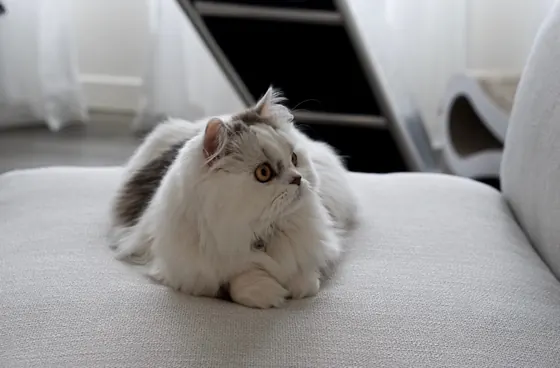
A hunter’s intelligence
An animal’s intelligence can’t be measured on a single scale: each species is good at what it needs to survive. The cat descends from a solitary hunter of small prey, and its mind is specialised for that: detecting movement, judging jumps, remembering where resources are, learning from experience and adapting to a territory. It has not been selected over thousands of years to work with people and follow commands, as many dog breeds have. So if you measure its intelligence by how obedient it is, it will come off badly. If you measure it by how much it learns from its surroundings, the result is very different.
Neurons: fewer than a dog, but still plenty
In 2017, a team including the neuroscientist Suzana Herculano-Houzel, of Vanderbilt University, published a study in the journal Frontiers in Neuroanatomy that counted the neurons in the cerebral cortex of several carnivores. The cat had around 250 million and the dog about 530 million; we humans have about 16 billion. The press presented it as proof that dogs are cleverer, but the authors were more cautious: the number of neurons indicates processing capacity, not how it is used. The study also looked at very few animals. What it does show is that the cat’s brain has a sizeable cortex for its size.
They know things still exist
One of the best-studied abilities in cats is object permanence: understanding that something still exists even when it is out of sight. Cats have it well developed, as befits a hunter that has to follow a mouse hiding behind a stone. In classic tests, in which a toy or food is hidden behind a screen in front of the cat, it searches in the right place even after a few changes. Cats struggle more when the object is moved without them seeing, something many other species also find hard. That is why games of hiding toys under a blanket appeal to them so much.
Memory: they remember what and where
Cats remember well where the things that matter to them are. In 2016, a study by Saho Takagi and colleagues at Kyoto University, published in Behavioural Processes, showed cats several bowls of food, let them eat from some and, a while later, brought them back into the room without warning: the cats spent longer exploring the bowls they had not eaten from, which suggests they remembered what they had eaten and where. In people, we associate this kind of memory with the memory of lived episodes. In everyday life it shows in the way cats remember routes, hiding places, timetables and people for years.
They read their people
Cats pay far more attention to people than it might seem. They recognise their owner’s voice among other voices, tell their name apart from other words and, according to a study by Isabella Merola and colleagues published in 2015 in Animal Cognition, many cats look at their person when faced with an unfamiliar object and adjust their behaviour to the emotional reaction they see, an ability known as social referencing. Other research has found that cats follow a pointing gesture towards a container of food. They are not as expressive as a dog in how they respond, but the radar is switched on.
They learn more than people think
Cats are constantly learning by association: the sound of the tin opener means food, the carrier means the vet, the person who gets up early is the one who serves breakfast. They also learn by watching, and many end up opening doors and cupboards after seeing us do it so often. With positive reinforcement, in short sessions and with treats they really love, they can be taught to come when called, sit, give a high five, go into the carrier or wear a harness. In 2016 Guinness World Records recognised an Australian cat, Didga, for performing 24 tricks in one minute. Cats are not incapable of learning: they just need a reason.
Why they are studied less than dogs
There are far fewer cognition studies on cats than on dogs, and that is no coincidence. Cats are harder to study: they get stressed in unfamiliar places, don’t always cooperate, get bored with the test or decide to leave halfway through the experiment. Many researchers have had to carry out their studies in the cats’ own homes or in cat cafés to get results. That means we still know relatively little and that many findings come from small samples. Be wary of bold headlines about whether cats are cleverer or less clever than dogs: science is still a long way from answering that.
How to stimulate their mind
An indoor cat without stimulation gets bored, and boredom shows up as weight gain, destructive behaviour, miaowing or aggression. To keep its mind active, offer daily play with wand toys and toys that mimic prey, interactive feeders or puzzles where it has to work to get the food out, boxes and hiding places to explore, windows with a view and, if you fancy it, short clicker training sessions. In older cats, stimulation also helps slow cognitive decline, which shows as disorientation, night-time miaowing or changes in sleep. A busy mind is part of a healthy cat.
Cats have a hunter’s intelligence: they remember what they ate and where, understand that objects still exist when out of sight, recognise your voice and their name, and learn by association and with rewards. They have about 250 million cortical neurons, compared with about 530 million in dogs, but that alone is not enough to compare them. They are studied less because they cooperate less.
Educational content from Michipedia, translated from the Spanish original. It does not replace the advice of a vet or a feline behaviour specialist. Every cat is an individual.