
Do cats recognise their own name? What science has shown, and why they still do not come
Yes. A Japanese study published in 2019 in Scientific Reports showed that cats can tell their own name apart from other similar-sounding words and from the names of other cats in the household. Recognising it does not mean they will come: they often respond with a tiny gesture, such as moving their ears or tail, and decide to stay where they are.
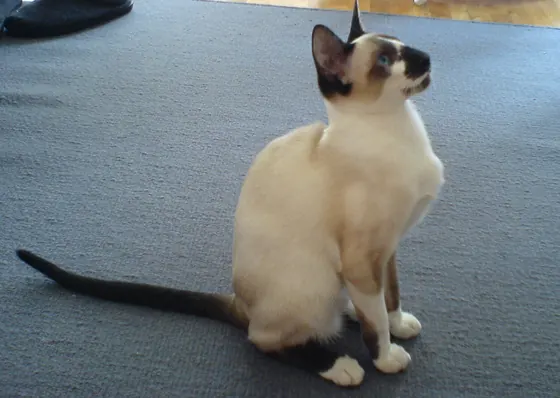
The study that proved it
In 2019, a team led by Atsuko Saito of Sophia University in Tokyo published a study in the journal Scientific Reports involving 78 cats from private homes and a cat café. The method was simple: each cat heard a recording of four words similar in sound and length to its name, one after another. As happens with any sound repeated with no consequences, the cats responded less and less each time. Then their name was played. Most of the cats reacted again, more strongly, when they heard it, moving their ears, head or tail, which shows they could tell it apart from the other words.
They can tell their name from other cats’ names too
The same study compared each cat’s name with the names of the other cats it lived with. Cats from private homes tended to distinguish their own name from their companions’; in the cat café, where dozens of customers call all the cats at random, the difference was less clear. And the reaction appeared both with their owner’s voice and with a stranger’s, which suggests they recognise the word itself, not just the tone of the person saying it. A later study by Saho Takagi and colleagues, also published in Scientific Reports in 2022, found signs that cats also associate the names of other cats in the household with their faces.
How they learn it
Cats do not understand their name as a word that identifies them, the way people do. They learn it by association: it is a sound they hear often and that is usually followed by something important to them, such as food, strokes, play or attention. Over time, that particular sound becomes meaningful and they pay attention to it. That is why cats also tend to react to other words that are repeated a lot at home and linked to something they care about, such as the sound of the tin or the food bag, or a particular word you use to call them for dinner. Their ability to learn this way is greater than many people think.
So why does my cat not come when I call?
It is the question everyone asks. The study showed something very telling: the cats that recognised their name almost always responded with small gestures, such as turning their ears or moving their head or tail, and very few got up and went towards the sound. Cats have not been bred for thousands of years to obey, as many dogs have, but to catch mice on their own. They recognise that you are calling them, but they weigh up whether it is worth getting up. If being called usually ends in something pleasant, they will come more often; if it sometimes ends with being put in the carrier or given a tablet, they will learn to be cautious.
How to teach your cat to come
You can teach a cat to come when called, and it is useful in an emergency. The method is positive reinforcement: say its name in a cheerful voice and, when it looks at you or comes over, reward it straight away with something it really likes, such as a little of its favourite wet food or a treat. Start very close, in a quiet room, and gradually increase the distance. Keep sessions short, just a few minutes, before meals, when it is more motivated. Some people use a particular sound, such as a whistle or the click of a clicker, as well as the name. Never use its name to tell it off.
Which names work best
There is no perfect name, but a few things help. Short names of one or two syllables are easier to distinguish. High-pitched sounds and clear vowels, especially an “ee” sound, catch their attention well, which partly explains why so many cats respond to the classic “puss puss” or “kitty”, or in Spain to “misi, misi” and “michi”. It is best if the name does not sound too much like words you say a lot at home, such as “no”, or like the name of another animal or person in the family. Above all, always use the same name rather than switching every day between different diminutives and nicknames, although adopted adult cats can learn a new name without any trouble.
They recognise your voice too
The fact that cats can pick out their name fits with what we know about their ability to recognise voices. In 2013, Atsuko Saito and Kazutaka Shinozuka published a study in the journal Animal Cognition in which cats responded more to their owner’s voice calling them than to strangers saying their name. Later studies have found that cats can tell when their owner is talking to them, in the higher, sing-song tone we tend to use with animals, from when they are talking to other people. It is not that they understand sentences, but they pay far more attention to us than they let on.
Older cats and cats that do not respond
If a cat that always reacted to its name stops doing so, before assuming it has become aloof it is worth ruling out a hearing problem. Deafness is common in older cats, and it is also congenital in many white, blue-eyed cats. A deaf cat usually miaows louder, startles when touched without having seen you and does not react to noises that used to wake it. In older cats, cognitive decline can also make them less responsive. If you notice the change, mention it at the next check-up. Deaf cats can learn to respond to visual signals, such as switching a light on and off, or to the vibrations of footsteps.
Cats recognise their name: a study by Atsuko Saito in Scientific Reports (2019) with 78 cats showed they can tell it apart from similar words and from the names of other cats in the home, even when a stranger says it. They learn it by associating it with good things. If they do not come, it is not that they do not know: they are deciding whether it is worth it. You can teach them with treats.
Educational content from Michipedia, translated from the Spanish original. It does not replace the advice of a vet or a feline behaviour specialist. Every cat is an individual.