
How to tell if your cat is happy: the signs that really matter
Cats don’t wag their tails with joy like dogs, and that has earned them a reputation for being hard to read. But a happy cat shows it, if you know where to look: in its posture, in its eyes, in how it sleeps, plays and interacts with you. And a cat that isn’t well tells you too, even if it does so quietly.
Posture and tail
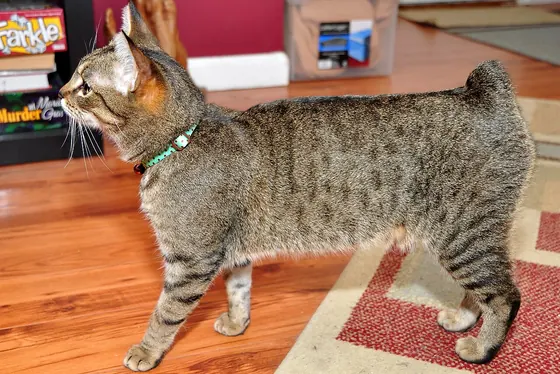
A contented cat moves around the house calmly, with a relaxed body, without crouching low or hugging the walls. A tail held high, sometimes with the tip slightly curled like a question mark, is a friendly greeting and one of the clearest signs of trust. When lying down, a relaxed cat stretches out, lies on its side or even on its back, showing its belly, which means it feels safe in its surroundings. Its ears are in a neutral position, facing forwards, and its whiskers are relaxed. A cat that is always tense, hunched up, with its tail clamped to its body or in hiding, doesn’t feel safe.
The slow blink
If your cat looks at you with half-closed eyes and blinks slowly, it’s telling you something lovely. The slow blink is a sign of relaxation and trust. A University of Sussex study published in 2020 in the journal Scientific Reports found that cats respond with more slow blinks when a person slow-blinks at them, and that they are more likely to approach an unfamiliar person who does so. You can try it: look at your cat softly, narrow your eyes and close them slowly for a few seconds. Many cats return the gesture. A fixed, unblinking stare, on the other hand, can feel uncomfortable or threatening to a cat.
Purring and kneading
Purring is, in most cases, a sign of wellbeing: cats purr when they’re relaxed, on your lap, being stroked or about to doze off. But it’s worth knowing that they can also purr when they’re in pain, stressed or ill, as a way of soothing themselves, so it needs to be read alongside the other signs. Kneading, that rhythmic pushing of the front paws reminiscent of kittens suckling, tends to appear when a cat is very content, often on a blanket or on you. It’s a behaviour carried over from kittenhood that cats associate with comfort and security.
Playing, exploring and taking an interest
A happy cat is curious about its surroundings: it investigates a new box, looks out of the window, chases a toy, comes to see what you’re doing. Play is one of the best signs of wellbeing in cats, at any age. An adult cat that still plays, even for a few minutes a day, is doing well physically and emotionally. It’s also a good sign if it wants to interact with you, comes to greet you when you get home, rubs against you or follows you around the house. Every cat has its own personality, and some are more independent, but a cat that has lost interest in everything deserves attention.
Eating, grooming, using the litter tray and sleeping well
Basic routines say a lot about how a cat is doing. A cat that’s well eats with a good appetite, grooms regularly and has a clean, shiny coat, always uses the litter tray and sleeps in a relaxed way, in open spots rather than always hidden away. Changes in any of these routines can be a sign that something is wrong, whether a health problem or stress: going off food or eating much more, stopping grooming or over-grooming to the point of bald patches, peeing or pooing outside the litter tray, or sleeping much more or less than usual. Knowing your cat’s routines will help you spot these changes.
Signs that something isn’t right
A stressed, bored or unwell cat can show it in many ways. Some are obvious, such as hiding a lot, hissing, growling or scratching. Others are subtler: over-grooming, losing appetite, no longer playing, meowing more than usual, spraying urine, toileting outside the litter tray, becoming more irritable or, on the contrary, very listless, or spending all day hidden in a corner. Weight gain from boredom and destroying furniture can also be signs that something is amiss. Faced with any of these signs, the first step is to rule out a health problem with your vet, because pain and illness change behaviour.
Pain stays hidden
It’s important to remember that cats are very good at hiding pain and illness, an instinct that protected them in the wild. A cat that seems calm may be suffering in silence. Often, changes we put down to personality, such as becoming grumpier, more solitary or less active, are actually signs of pain, for example from arthritis or dental problems, which are very common in older cats. If your cat’s behaviour has changed for no obvious reason, or if it’s older and no longer jumps or plays as it used to, a vet check-up may uncover a treatable problem and, once that’s relieved, lift its spirits again.
The five pillars of a feline environment
In 2013, the leading international feline medicine associations published guidelines on cats’ environmental needs, summed up in five pillars. First, a safe place to retreat to. Second, multiple, separate resources: food, water, litter trays, scratching posts, play and rest areas, so the cat doesn’t have to share or compete for them. Third, the chance to play and hunt, even if only with toys. Fourth, positive, consistent and predictable interaction with people, in which the cat is in control. And fifth, respect for the importance of smell, avoiding strong-smelling products and not wiping away its scent marks. Meeting these is the foundation of a happy cat.
Control is everything
If one thing defines a happy cat, it’s the feeling of being in control of its environment. It can choose where to be, when to interact and when to withdraw. That’s why one of the most important things you can do for your cat is to respect its space and its choices: let it approach when it wants, don’t force it to be stroked or held, always give it an escape route and high places, and keep routines predictable. Paradoxically, cats given more freedom to decide when to interact tend to end up seeking their people’s company more. You earn a cat’s trust by giving it control.
A simple check-up
You can ask yourself a few questions to assess your cat’s wellbeing: does it have somewhere to hide and high places to perch? Does it have enough litter trays, clean and in quiet spots? Does it play every day? Does it have scratching posts? Does it eat and drink normally? Does it groom itself? Does it sleep relaxed? Does it come to greet you or seek your company? Does it see the vet at least once a year? If the answer to most of these is yes, your cat is probably doing well. If any is no, there’s something to improve. Small changes, such as an extra scratching post, a shelf or five more minutes of play a day, can make a big difference to its life.
A happy cat walks around relaxed with its tail up, slow-blinks at you, plays, explores, eats, grooms, uses the litter tray and sleeps peacefully. Changes in these routines, hiding or over-grooming are warning signs, and the first step is to rule out pain. Give your cat a refuge, separate resources, daily play, predictable handling and control over its surroundings.
Educational content from Michipedia, translated from the Spanish original. It does not replace the advice of a vet or a feline behaviour specialist. Every cat is an individual.