
Is a cat’s nose meant to be wet or dry? What is normal and when to worry
A dry or warm nose does not mean your cat is ill, and a wet one does not mean it is healthy: it changes through the day depending on the surroundings, whether it has been asleep or whether it has just licked itself. What does deserve attention is discharge, crusts, sores, changes in colour or frequent sneezing.
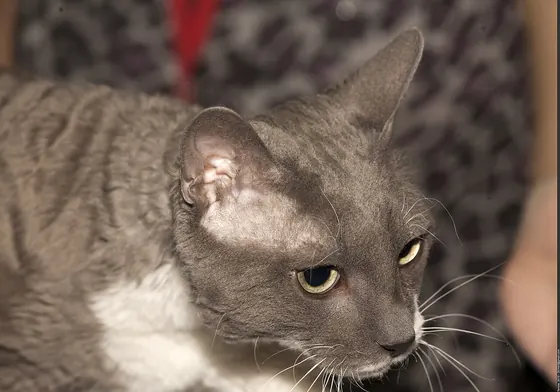
The dry nose myth
It is widely believed that a cat with a dry, warm nose has a temperature or is unwell, and that a cold, wet nose is a sign of good health. The idea comes from dogs, and it is not reliable in them either. The moisture and temperature of a cat’s nose change several times a day for reasons that have nothing to do with health: if it has just woken from a nap in the sun or by the radiator, its nose will be dry and warm; if it has just groomed itself or had a drink, damp and cool. Touching its nose will not tell you whether it is well, and certainly not whether it has a fever.
Why it is usually damp
A cat’s nose, the hairless part known as the nose leather or nasal planum, is usually slightly damp for two reasons. First, it produces a thin layer of secretion, and second, the cat licks it often while grooming. That moisture has a purpose: it helps trap scent particles from the air and improves its sense of smell, which is far keener than ours. The evaporation of that moisture also helps cool the area a little. But a dry nose at any given moment is just as normal as a damp one: it depends on the surroundings, the heating, the air conditioning and what the cat has been doing.
How to really tell if a cat has a fever
A cat’s normal temperature is roughly 38 to 39.2 °C (100.4 to 102.6 °F), higher than ours, so cats always feel a little warm to the touch. The only reliable way to know if a cat has a fever is to take its temperature rectally with a digital thermometer, which is neither easy at home nor pleasant for the cat, and which a vet clinic does in seconds. More useful than the nose is the overall picture: a cat with a fever is usually listless, hides away, stops eating, moves little and may have a scruffy, fluffed-up coat or breathe faster. If you notice these signs, especially if it has not eaten for more than 24 hours, call the vet.
The changes that do matter
What matters about a cat’s nose is not whether it is wet or dry, but whether it changes in appearance. These are signs to get checked: thick, yellow or green discharge, or discharge with blood; discharge from just one nostril, which can point to a foreign body, a polyp or a dental problem; frequent or persistent sneezing; crusts, cracks or sores that do not heal; a swollen or misshapen nose; loss of pigment or changes in colour; and nosebleeds. A nose that stays very dry and cracked for days, especially if the cat is also eating less or seems low, also deserves a check-up.
Snot and sneezing: nearly always a virus
The most common cause of a runny nose in a cat is an upper respiratory tract infection, what people loosely call cat flu. It is usually caused by feline herpesvirus, responsible for rhinotracheitis, and by calicivirus, sometimes complicated by bacteria. It is especially common in kittens, in colony and rescue cats and in cats with weakened immunity. As well as the runny nose there are usually sneezes, watery eyes and, if the nose is badly blocked, loss of appetite, because a cat that cannot smell its food will not eat it. The basic three-in-one vaccine greatly reduces how severe it gets, which is why it is one of the core vaccines for every cat, even those that never go outside.
White noses and sun: take care
White cats, or cats with pink, unpigmented noses and ears, are very sensitive to the sun. Repeated exposure to ultraviolet radiation can cause sunburn and, over the years, lesions that develop into a type of skin cancer, squamous cell carcinoma, which appears mainly on the nose, eyelids and ear tips. At first it looks like a scab or a red patch that will not heal, which is why it is mistaken for a wound. If your cat has a pink nose and likes sunbathing on the balcony or at the window, limit the hours around midday and get it checked if you see a scab that keeps coming back. Caught early, it can be treated, often with minor surgery or local techniques; left to advance, it calls for much more aggressive procedures. Do not use human sun creams without asking first: some contain zinc oxide or other ingredients a cat must not lick.
Normal colour changes
Not every change in nose colour is bad news. Many cats’ noses turn pinker or redder when they are hot, excited or have just been playing, because more blood flows to the area, and they go back to their usual colour within minutes. Ginger and tortoiseshell cats often develop small black spots on the nose, lips and eyelids as they age, known as lentigo, which are harmless and need no treatment. What you should get checked is a nose that turns pale or whitish, which can indicate anaemia, or bluish, which can mean a lack of oxygen and is an emergency.
What you can do at home
If your cat’s nose is a little dry in winter because of the heating, there is no need to do anything; if it has dried mucus on it, you can wipe it gently with a gauze pad soaked in lukewarm saline. Do not apply creams, petroleum jelly or human products without asking, because the cat will lick them off and some contain substances that are toxic to it. A humidifier in the room helps cats with a blocked nose breathe more easily, and warming wet food slightly makes it smell stronger and encourages them to eat. And if the discharge lasts more than a few days, there is blood, or the cat stops eating, take it to the vet.
Whether a cat’s nose is wet or dry, warm or cold says nothing about its health or whether it has a fever: it changes with the surroundings, sleep and grooming, and a fever can only be measured with a thermometer. What matters is change: thick or bloody discharge, persistent sneezing, crusts, sores that do not heal, a pale or bluish nose. In cats with pink noses, be careful with the sun.
Educational content from Michipedia, translated from the Spanish original. It does not replace the advice of a vet or a feline behaviour specialist. Every cat is an individual.