
Fever in cats: how to tell, the causes and why never paracetamol
A warm or dry nose tells you nothing about whether a cat has a fever. What gives it away is a subdued cat that hides and has no appetite, and the only way to confirm it is with a thermometer. Here is how to take its temperature, which figures are worrying, what usually lies behind it and what you must never give it.
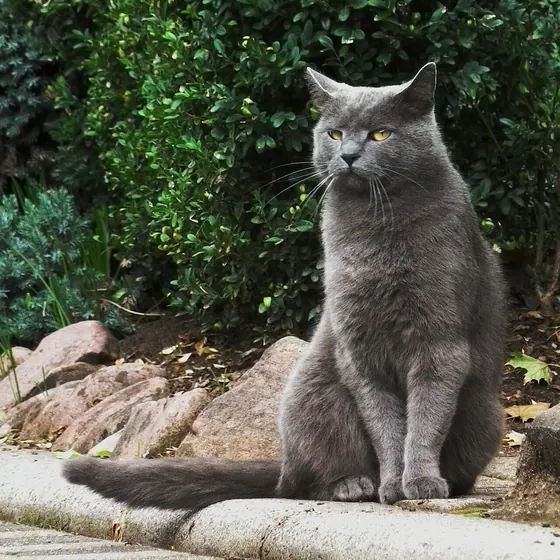
A cat’s normal temperature
A healthy adult cat has a rectal temperature of about 38 to 39.2 °C (100.4 to 102.6 °F), a little higher than a person’s. At the clinic, because of nerves, it is normal for it to rise a few tenths, up to 39.5 °C (103.1 °F), without a fever. Above about 39.5 °C it counts as a fever, and from about 40.5 °C (104.9 °F) it is a high temperature that needs attention the same day. Below 37.5 °C (99.5 °F) is hypothermia, which in a sick cat is as worrying as fever or more so, because it usually signals a serious condition such as shock or a thromboembolism. The nose myth is no use: a cat can have a cold nose with a fever, or a warm, dry one because it has just been sleeping in the sun.
How to take its temperature at home
The reliable method is a digital rectal thermometer with a flexible tip. Lubricate the tip with petroleum jelly, ask someone to help hold the cat gently wrapped in a towel, lift the tail and insert only one or two centimetres (under an inch), with a slight twist, without forcing it. Wait for the beep and wash the thermometer well afterwards. Ear thermometers for pets exist and are less unpleasant, but they are less accurate, and forehead thermometers for people do not work on cats. If your cat becomes very aggressive or very stressed, do not persist: stress and struggling can raise the temperature, and you may end up scratched. In that case, describing the symptoms to the vet is enough.
What a cat with a fever looks like
A feverish cat is usually subdued, hides, sleeps more than normal, does not eat or eats very little, drinks less or more, does not groom and has an unkempt-looking coat. Sometimes it breathes a little faster, its ears feel hot to the touch or it shivers. It may be grumpier when touched, especially if something hurts. None of these signs is specific: they also appear with pain, nausea or stress. So if your cat is like this, the most useful thing is to take its temperature or go to the vet and have it taken there, rather than assuming it is “a virus” that will pass on its own.
Common causes: abscesses and infections
In cats with outdoor access, by far the most common cause of fever is an abscess from another cat’s bite. A cat’s teeth inject bacteria under the skin, the outer wound closes straight away and, two to four days later, a soft, warm swelling appears, the cat is subdued and feverish, and sometimes limps if the bite was on a leg. It is drained, cleaned and treated with a veterinary antibiotic. Viral respiratory infections, especially in kittens and colony cats, also cause fever. And other infections, such as urinary infections in older cats, pneumonia, pyothorax or dental infections, round off the list of the most frequent.
Causes that are more worrying
A fever that lasts more than a few days without an obvious cause, or that comes back after improving, points to other diseases. In young cats, feline infectious peritonitis is one of the main suspects, and it now has effective antiviral treatment under veterinary supervision. Panleukopenia causes fever with vomiting and diarrhoea in unvaccinated kittens. Diseases caused by FeLV and FIV, some blood parasites, pancreatitis, immune-mediated diseases and tumours such as lymphoma can also produce fever. When no source is found after the basic tests, it is called fever of unknown origin, and the investigation is widened step by step.
When it is an emergency
See the vet the same day if the temperature is above about 40.5 °C (104.9 °F), if the cat has not eaten for more than twenty-four hours, if it is very subdued, or if it is a young kitten, an older cat or a cat with chronic illness. Go to the emergency vet immediately if the fever comes with difficulty breathing, seizures, repeated vomiting, bloody diarrhoea, very pale or yellow gums, or if the cat is almost motionless. Also if the temperature is below 37.5 °C (99.5 °F) in a sick cat. A temperature above 41 °C (105.8 °F) after being in the sun or shut in a car is heatstroke, which is a different emergency.
What the vet will do
First the vet confirms the fever and looks for its source with a full examination: skin and coat to find abscesses or wounds, mouth, lymph nodes, abdomen, listening to the chest, and joints. If there is an abscess, it is drained and treated. If there is no clear cause, the usual next step is a full blood panel with haematology and biochemistry, FeLV and FIV tests and a urinalysis. Depending on the results, X-rays, ultrasound, specific infectious disease tests or analysis of any fluids present may be needed. In many cases the cause is treated and a veterinary anti-inflammatory or painkiller that is safe for cats is added, always tailored to its weight and kidney function.
What it costs in Spain in 2026
As a guide: consultation, €40 to €60; out-of-hours emergency, €70 to €150 for the visit. Draining an abscess with cleaning and medication, €60 to €200 depending on whether sedation is needed. Full blood tests, €80 to €160; FeLV and FIV test, €30 to €55; urinalysis, €30 to €60; abdominal ultrasound, €70 to €150; X-rays, €60 to €150. If the fever means the cat has to be hospitalised on fluids and intravenous medication, allow €80 to €200 a day. Investigating a fever of unknown origin can add up to several hundred euros in tests.
Why never paracetamol (or ibuprofen or aspirin)
This point saves lives. Paracetamol (acetaminophen) is fatal to cats: they cannot metabolise it, and within hours it destroys their red blood cells and liver; a fraction of an adult tablet can be enough to kill a cat. Ibuprofen and other human anti-inflammatories damage their stomach and kidneys, and aspirin, although it has been used in cats in very specific situations under veterinary supervision, is dangerous at home because its safety margin is narrow. There is no human fever medicine you can give your cat without risk. If you have already given one, call the emergency vet immediately: for paracetamol there is a treatment, but it has to be started early.
What you can do, and how to prevent it
While you seek advice, keep the cat somewhere quiet and comfortably warm, with fresh water, tempting food and the litter tray nearby, without making it move. Do not wet it or wrap it in cold towels to bring the fever down: fever is a defence response, and cooling a cat abruptly can make it worse. For prevention, the most effective measures are neutering (which greatly reduces fighting and therefore abscesses), up-to-date core vaccinations plus protection against feline leukaemia if the cat goes out, appropriate parasite control and, if it has outdoor access, checking its body when it comes home after a fight to spot bites early.
A cat has a fever above about 39.5 °C (103.1 °F), and the only way to know is a thermometer, not its nose. The most common cause in cats that go outdoors is an abscess from a bite. Never give it paracetamol, ibuprofen or aspirin: paracetamol kills cats.
Educational content from Michipedia, translated from the Spanish original. It does not replace the advice of a vet or a feline behaviour specialist. Every cat is an individual.