
My cat will not eat: why you cannot wait it out as with a dog
A dog can skip a couple of meals without much trouble. A cat cannot. When a cat stops eating, the liver starts to build up fat, and within a few days the fasting becomes a disease in its own right, whatever caused it in the first place. That is why this is a symptom you do not leave until next week.
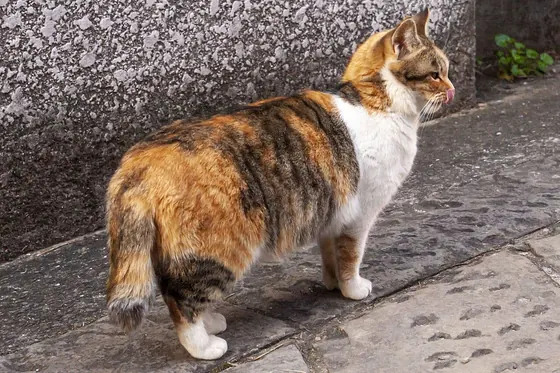
Hepatic lipidosis: the reason for the hurry
When a cat does not get enough calories, the body moves fat from its stores to the liver for energy. The feline liver is poorly equipped to process that flood: fat builds up inside the liver cells, the organ stops working properly, nausea sets in and takes away even more appetite, and the vicious circle closes. This is hepatic lipidosis (fatty liver disease), the most common liver disease in cats. It can start after just a few days of eating very little, and the risk is much higher in overweight cats. Treated properly and in time, most cats recover; treated late, it can be fatal. So the rule is simple: a cat that eats nothing for 24 hours, or very little for two or three days, needs to see the vet.
Not eating is almost never fussiness
Cats can be picky, but a cat that refuses their usual food for more than one or two meals usually has a reason. The most common causes are nausea (from a digestive, kidney, liver or pancreatic problem), pain (teeth, mouth, joints, a wound, cystitis), fever from an infection, a blocked nose from cat flu (if they cannot smell the food, they will not eat it), stress (a house move, a new cat, visitors, building work at home) and, in older cats, kidney disease and advanced hyperthyroidism. A cat that eats treats but not their food does not rule anything out: very often it is nausea that makes them refuse their usual food.
Check the mouth and the nose
If the cat approaches the food with interest, sniffs it, even picks up a mouthful and drops it, or chews on one side only, drools or paws at the mouth, suspect the mouth: tooth resorption, gingivostomatitis, a broken tooth, an ulcer or a foreign body, for example a thread caught under the tongue. If they sneeze, have a runny nose or watery eyes and have stopped eating, the most likely reason is that they cannot smell: gently warming wet food so it gives off more smell and cleaning the nose with saline helps, but they still need a vet visit if they have gone a day without eating.
When it is a straight emergency
Go to the vet without waiting if, as well as not eating, they vomit repeatedly, have severe diarrhoea, are very flat or hiding without moving, breathe with the mouth open or with difficulty, have yellowish gums, ear skin or whites of the eyes (jaundice, a sign the liver is affected), are dehydrated or drool a lot. In males that also go to the litter tray without passing urine, suspect a urinary blockage, which is life-threatening. And if the cat is overweight, diabetic, has kidney disease or is a kitten, do not even wait the 24 hours: the margin is smaller.
What you can do in the meantime
If the cat is bright and has just eaten less at one meal, you can try tempting them for a few hours: wet food warmed to body temperature, a tin with a different texture (pâté, chunks, mousse), a clean, flat plate where the whiskers do not brush the sides, in a quiet spot away from the litter tray, and your company if they are the type that eats better with someone there. Remove what they do not eat within half an hour and offer something fresh later. Weigh the cat if you have scales: knowing whether they have lost weight helps the vet a lot. But do not turn this into three days of "let's see if this works": if they have not eaten in a day, call.
What not to do
Do not force-feed by putting food in their mouth with a syringe unless your vet tells you to and shows you how: besides the risk of them inhaling it into the lungs, a cat that is forced can develop an aversion to that food and refuse it afterwards. Do not change the food every few hours: in a nauseous cat, linking a new food with feeling unwell creates lasting aversions. Do not give human stomach or pain medicines; paracetamol is deadly to cats. And do not let an overweight cat quietly lose weight thinking it will do them good: losing weight by not eating is exactly how lipidosis is triggered.
What the vet will do
A full examination, paying special attention to the mouth, temperature, hydration, gum colour and abdominal palpation, and weight compared with the last visit. The usual next step is blood tests with liver and kidney function, glucose and, in older cats, thyroid hormone; often also a urine test and abdominal ultrasound. While looking for the cause, the vet will treat the nausea and pain and may prescribe a veterinary appetite stimulant. If the cat has gone several days without eating or already has lipidosis, the most effective measure is to place a feeding tube, usually into the oesophagus through the neck, to give liquid food several times a day. It sounds dramatic, but cats tolerate it surprisingly well and it is often what saves them.
The feeding tube, without fear
An oesophagostomy tube is placed under a short anaesthetic, comes out on one side of the neck and is protected with a soft bandage. A blended recovery diet and medication are given through it, with no stress for the cat and no battles with syringes. The cat can still eat by mouth if they want to, and the tube is removed once they are eating steadily on their own again, which in lipidosis can take several weeks. Many families learn to use it at home after a day or two of hospitalisation. It is one of the treatments in feline medicine with the best ratio of effort to result.
What it can cost
In Spain, a consultation costs 40 to 60 €; with blood tests and ultrasound, 200 to 350 €. If the cat needs hospitalisation with fluids, expect 80 to 200 € a day. A full course of treatment for hepatic lipidosis with a feeding tube, initial hospitalisation, follow-up blood tests and recovery diet can run from 800 to 2,500 € depending on duration and clinic. The sooner you go, the cheaper it is and the better the outlook: a cat that arrives on day two of not eating usually needs far less than one that arrives on day five.
Prevention: what is down to you
Know how much your cat eats. In multi-cat homes with a shared bowl, it is very easy for one to stop eating without anyone noticing for days: microchip feeders or separate meals prevent this. Weigh them once a month with baby scales, or by weighing yourself holding the cat and subtracting. If they need to lose weight, do it gradually with the diet your vet recommends, never by cutting food suddenly. Introduce food changes slowly and avoid starting a new food on stressful days such as a journey or a house move. And have the mouth checked at every visit: dental pain is a much underrated cause of poor appetite.
In a cat, not eating is a relative emergency: 24 hours eating nothing, or two or three days eating very little, already justifies a vet visit, especially if overweight. Do not syringe-feed on your own and do not wait for it to pass: hepatic lipidosis is prevented by getting there early.
Educational content from Michipedia, translated from the Spanish original. It does not replace the advice of a vet or a feline behaviour specialist. Every cat is an individual.