
How to help a cat lose weight without putting them at risk
A chubby cat looks endearing, but excess weight is one of the most common health problems in pet cats and lies behind diabetes, arthritis and urinary problems. Slimming them down is possible, but in cats there is a rule that does not exist in dogs: never all at once.
How to tell if they are overweight
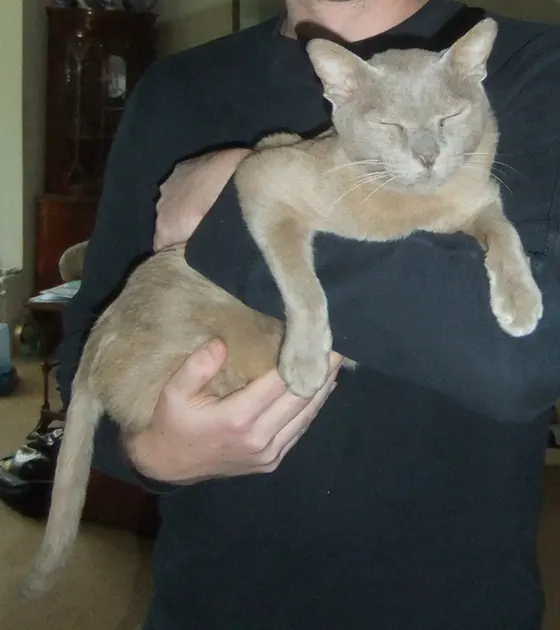
Weight on its own says little, because a large moggy and a small Siamese cannot be compared. Vets use the body condition score, from 1 to 9, where 5 is ideal. A cat at a healthy weight has ribs that are easy to feel when you run your hand over them, covered by a thin layer of fat, a visible waist behind the ribs when seen from above and a belly that does not hang down. If you struggle to feel the ribs, there is no waist and the belly is rounded, they are overweight. Each point above 5 is roughly 10 % extra weight. The flap of skin hanging between the back legs, the so-called primordial pouch, is normal and is not fat. Michipedia's ideal weight tool lets you assess it step by step.
Why it matters so much
An obese cat has a risk of diabetes several times higher, plus more arthritis, more urinary problems including blockage in males, more skin problems because they cannot reach to groom, and a higher anaesthetic risk. And if they stop eating because of any illness, a much higher risk of hepatic lipidosis, a serious liver disease. Studies suggest overweight cats live shorter, less healthy lives. The good news is that losing weight improves almost all of this: in overweight diabetic cats, slimming down greatly increases the chance of remission.
The golden rule: slowly
In cats, sudden weight loss or fasting can trigger hepatic lipidosis, precisely in obese cats, who are most at risk. That is why a cat is never left without food or has their portion halved from one day to the next. The safe rate is losing between 0.5 and 2 % of body weight per week, which for a 7 kg (15 lb) cat is about 35 to 140 grams (1 to 5 oz) a week. It may seem tiny: a cat that needs to lose 2 kg (4.4 lb) will take several months, sometimes almost a year. That is how it is, and it is fine. The vet does it with a plan: calculates calories based on the target weight, chooses the food and schedules weigh-ins every two to four weeks.
Food: what and how much
The most effective option is a veterinary weight loss diet: it has fewer calories per mouthful, more protein to preserve muscle and more fibre or water so they feel full, and it is formulated so the cat does not go short of anything while eating less. Simply giving less of their usual food works less well, because they stay hungry and may miss out on some nutrients. Wet food helps, because it has fewer calories per volume and is more filling. Weigh the daily portion on kitchen scales, to the gram: measuring cups can be out by 20 or 30 %, and in cats that is the whole difference. Prepare the day's portion in the morning and do not go beyond it.
Treats and invisible calories
Treats, snacks, "special" pouches, the slice of ham, malt paste and whatever other family members give add up to calories you do not see. The usual rule is that treats should not exceed 10 % of daily calories, and on a diet it is best to subtract them from the portion or use some of the day's kibble as treats. Talk to the whole family: in many cases the cat does not lose weight because someone is feeding them on the sly. If a neighbour feeds them when they go out, or they steal food from the dog or another cat, that needs sorting out too. In multi-cat homes, microchip feeders let each cat eat their own food.
Tricks that work
Split the portion into several small meals through the day, instead of leaving the bowl full: cats are built to eat little and often. Use interactive feeders, treat balls or snuffle mats so they have to work for their food; hide small portions around the home for them to find. Put food bowls in high places or on another floor so they move. When they ask for food between meals, offer attention or play instead: many cats ask for food because it is the way they have learnt to get your attention.
Exercise, cat style
A cat does not go for a run, but they can burn energy at home. Two or three play sessions a day of five to ten minutes with a wand toy or a toy that mimics hunting, with chasing, stalking and a final catch, are the equivalent of a walk. Tall cat trees, shelves and vertical routes encourage them to move. In cats with arthritis, start with short games at ground level, and treat the pain: a cat in pain will not move however much you want them to. More play does not make up for eating too much, but it helps preserve muscle while they lose weight and keeps them happier.
Monitoring and what it costs
Weigh them every two weeks at first, on the same scales and at the same time of day: at home, weigh yourself holding them and subtract your own weight, or use baby scales. Write the weight down. If it does not drop within a month, the vet will adjust the amount. If it drops too fast, likewise. Once the target weight is reached, the portion is increased gradually until you find the maintenance amount. As a guide in Spain in 2026, a veterinary weight loss diet costs 25 to 60 € a month depending on the cat's size and how much is wet; weight check appointments are usually cheap or free at many clinics.
After neutering, prevention is easier
Many cats start putting on weight in the months after neutering, because they burn less energy and have more appetite. It is the best moment to prevent it: adjust the portion, usually by 20 to 30 % less, use a food for neutered cats or simply weigh the food, and weigh them once a month during the first year. Preventing two kilos (about 4 lb) is far easier than losing them. And if they are already overweight, the sooner you start, the less time they will need and the fewer complications they will have.
To tell if your cat is overweight, feel the ribs and look for the waist. Weight loss yes, but slowly, 0.5 to 2 % of body weight a week, with a veterinary diet weighed to the gram, several meals a day and play: an obese cat that stops eating can develop hepatic lipidosis.
Educational content from Michipedia, translated from the Spanish original. It does not replace the advice of a vet or a feline behaviour specialist. Every cat is an individual.