
How much play a cat needs each day (and how to play so it counts)
A cat does not need walks, but it does need to hunt, and in a flat the only hunting it gets is what you offer it. A well-played cat sleeps better, puts on less weight, breaks fewer things and bites fewer ankles. It does not take much time, but it does take doing it properly. This is what works.
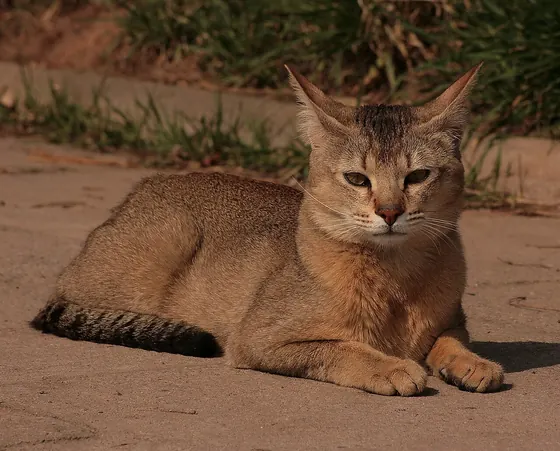
The figure: several short sessions a day
As a general guide, an adult indoor cat benefits from two or three interactive play sessions a day, of about 10 to 15 minutes each. In total, 20 to 45 minutes a day. A kitten or a young, very active cat, such as a Bengal, an Abyssinian or an Oriental, needs more: it may play in bursts many times through the day. An older or calm cat, like many Persians or British Shorthairs, makes do with less and with gentler play, but still needs it. What matters is that sessions are short and frequent, not one long session a week: that is how cats hunt naturally, with many brief attempts spread through the day and night.
Why short sessions: that is how they hunt
A free-living cat does not catch one big prey animal a day: it catches many small ones, such as mice or insects, in brief attempts, many of them unsuccessful, spread over the 24 hours, with more activity at dawn and dusk. Each attempt is a short, intense effort: stalk, sprint, pounce and catch. A cat is not built to run for long, but for bursts of energy. That is why cats tire quickly when playing and lose interest after a few minutes, and it is not that they do not enjoy it. Respecting that natural pattern, with several short sessions instead of one long one, is what makes play satisfying for the cat rather than frustrating.
How to play: imitate prey
The play that really satisfies a cat is interactive play, where you move the toy as if it were an animal. Prey does not hurl itself at the cat or circle in front of its face: it runs away, hides behind furniture, stops, creeps along the floor, peeks out a little and escapes again. Move the wand so the toy goes away from the cat, not towards it. Alternate fast movements with pauses, because cats are triggered by movement after stillness. Vary between ground prey, like a mouse, and flying prey, like a bird, to see which motivates yours more. And let it catch the toy now and then during the session: if it never catches anything, it gets frustrated and bored.
End with the catch and some food
A cat's natural cycle is hunt, eat, groom and sleep. To make play complete, always end the session by letting it catch the prey and bite or kick it for a while. Then, if it is mealtime, give it its food or a small treat. That closes the hunting sequence and lets it truly relax. If you stop the game abruptly while the cat is at the height of excitement, or never let it catch anything, it may stay wound up and frustrated, and look for something else to hunt: your feet, for example. That is also why a play session just before its last meal and before you all go to bed works so well.
The best toys
A wand with feathers, strips of fabric or a toy on the end of a string is by far the best toy for a cat, and in Spain it costs €5 to €15. Having two or three with different attachments lets you vary the type of prey. Fabric mice, light balls and long kicker toys let it play on its own too, as do puzzle feeders, which make it hunt for its food. Some cats go wild for toys with catnip or silver vine (matatabi). And do not underestimate free things: a cardboard box, a paper bag or a rolling bottle top can provide plenty of fun. The key, as always, is rotating toys to keep them novel.
The laser pointer, with conditions
The laser pointer is very popular because cats chase it like mad and it takes no effort from the owner. But it has a problem: the cat is chasing something it can never catch, and that can cause frustration, especially in strongly predatory cats. Some cats end up obsessed with lights and reflections. If you use one, never point it at the eyes, and always end the session by guiding the dot onto a real toy or a treat, so the cat can catch something tangible at the end. That closes the hunting cycle. Used like this, occasionally, it can be an extra. But it should not be the main game: the wand is much better because it allows the catch.
Dangerous toys
Take great care with anything that has cords, strings or ribbons: sewing thread, wool, gift ribbon, hair ties, butcher's string from a roast or Christmas tinsel. Cats' tongues are covered in tiny backward-facing barbs, so once they start swallowing a thread, they find it very hard to spit out. A swallowed thread can cause a linear intestinal obstruction, which is a surgical emergency. That is why wand toys should be put away after every session and not left within reach. If you see a thread coming out of your cat's mouth or bottom, do not pull it: go to the vet. Also remove small toys that could be swallowed whole.
Signs it needs more play
Your cat probably needs more play if it attacks your ankles or hands, has night-time crazy spells racing round the home, meows a lot demanding attention, breaks or knocks things over, overeats and gains weight, or sleeps all day out of sheer boredom. Overgrooming and some litter tray problems can also be linked to the stress of a poor environment. Look at the other side too: a cat that has always been playful and suddenly stops playing may be in pain, have arthritis or a dental problem, or be ill. A sudden loss of interest in play, especially alongside other changes, warrants a visit to the vet.
Play for the older cat
Older cats still need to play, though in a different way. Shorter sessions, of five minutes, and gentler ones, with prey that moves along the floor instead of high jumps, adapted to their mobility. Simple puzzle feeders are a good way to keep their minds active. Many older cats with arthritis stop playing not for lack of interest but because moving hurts, and with proper pain treatment they get their enthusiasm back. Keeping up play in old age helps maintain muscle tone, control weight and delay cognitive decline. It is never too late to play with a cat, and there is no age at which it stops being useful.
An adult cat needs two or three interactive play sessions a day of 10 to 15 minutes, more if it is young or an active breed. Move the wand like prey running away, let the cat catch it and finish with food to close the hunting cycle. The laser only with a real reward at the end. And always put away cords and strings.
Educational content from Michipedia, translated from the Spanish original. It does not replace the advice of a vet or a feline behaviour specialist. Every cat is an individual.