
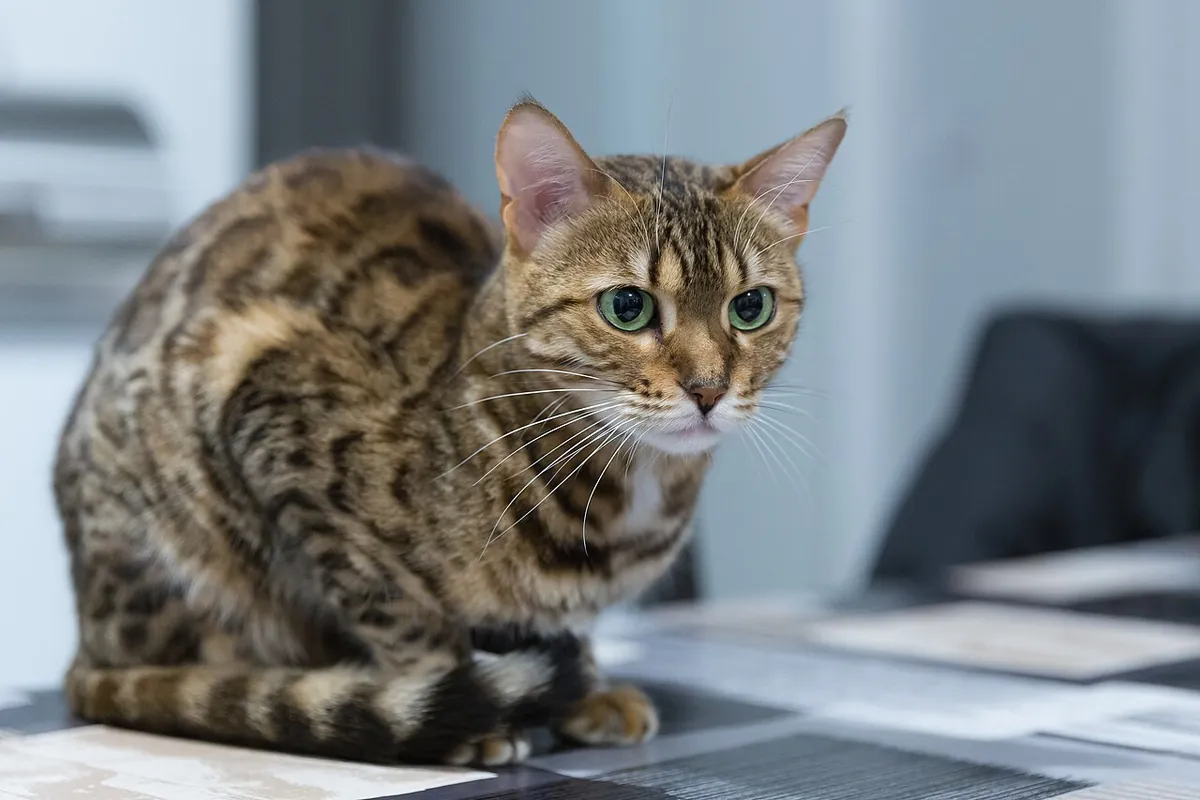
Bengal
Also known as: Bengal cat · Leopard cat hybrid · Spotted Bengal · Snow Bengal · Marble Bengal
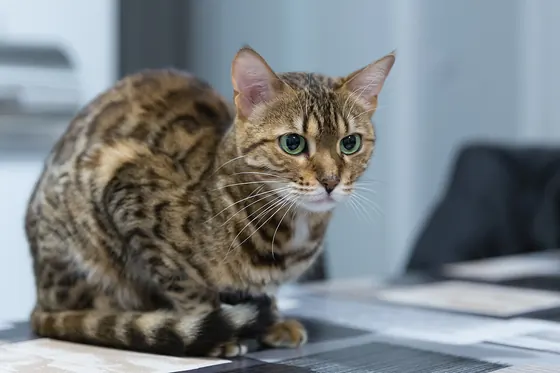
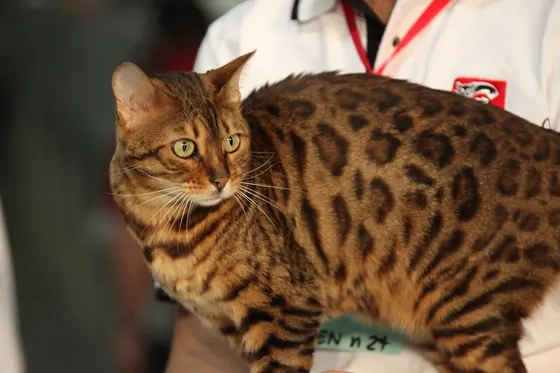
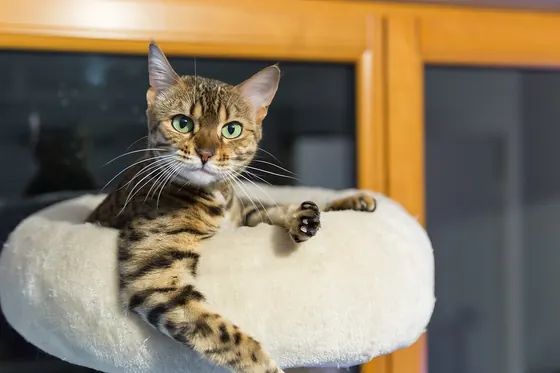
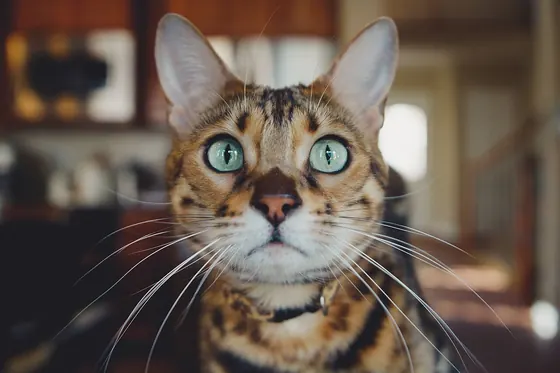
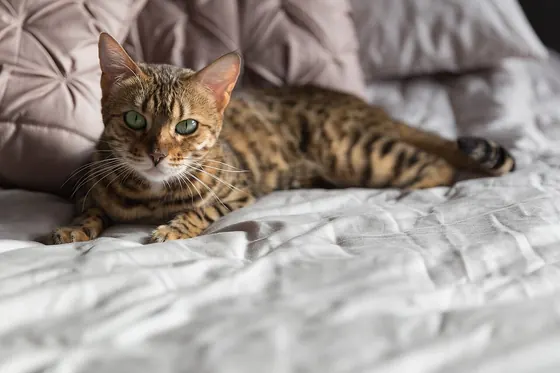
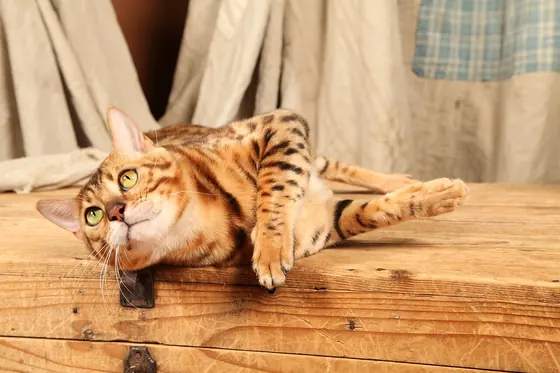
Photos: Medium69 (William Crochot) (CC BY-SA 4.0) · Pieter Lanser from The Netherlands (CC BY 2.0) · Caleb Woods caleb_woods (CC0) · Benjiboy (CC BY-SA 3.0), via Wikimedia Commons.
Breed profile
* An estimate for Spain in 2026 (food, litter, vet and insurance), based on the size, grooming and health needs of the breed, not on measured costs of individual cats.
What it is like
It descends from crosses between domestic cats and the Asian leopard cat (Prionailurus bengalensis), which the American Jean Mill began in 1963 and took up seriously again in the 1980s. The Bengals sold as pets are many generations away from the wild ancestor (F4 onwards) and are domestic cats in every sense. The wild part is in the look, with rosettes and a muscular body, and in the energy: it is one of the most active cats there is. It climbs, opens doors, plays with water and learns tricks easily. Well stimulated, it is affectionate and enormously entertaining; bored in a small flat, it becomes destructive and very vocal.
Coat colours and patterns
Colours and patterns that are common or accepted in this breed. Each page explains where the colour comes from, the myths around it and other breeds that have it.
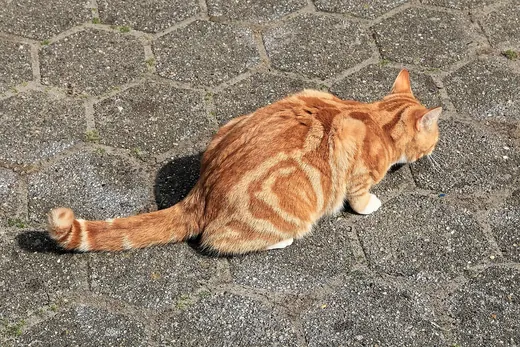 Classic tabby
Pattern · Classic tabby, Blotched tabby
Classic tabby
Pattern · Classic tabby, Blotched tabby
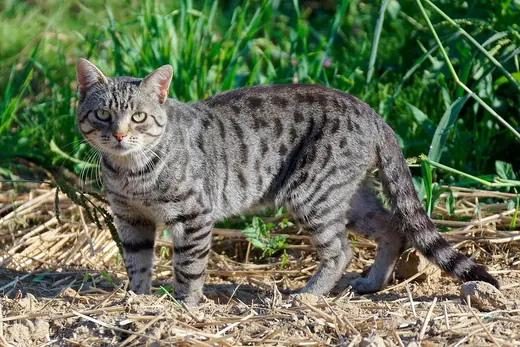 Spotted tabby
Pattern · Spotted tabby, Spotted cat
Spotted tabby
Pattern · Spotted tabby, Spotted cat
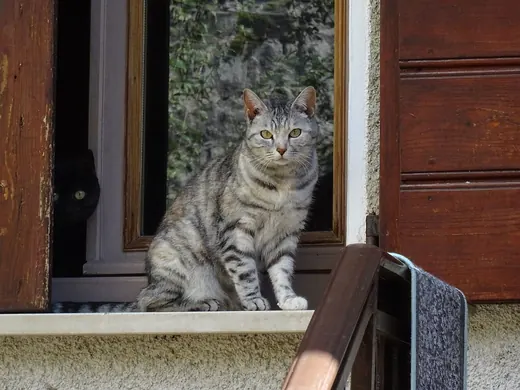 Silver tabby
Colour and pattern · Silver tabby, Silver cat
Silver tabby
Colour and pattern · Silver tabby, Silver cat
All cat coat colours and patterns →
Temperament
Care
The coat is hardly any work: a rubber mitt once a week. What it demands is time: two or three hunting play sessions a day with a wand toy, puzzle feeders, tall scratching posts and wall-mounted climbing routes. It learns to walk on a harness and to work with a clicker. If you are out all day, consider another active cat. Many have a sensitive gut: always change food gradually and keep an eye on its stools.
Health
Pyruvate kinase deficiency (PK-def), which causes anaemia, and the breed's own progressive retinal atrophy (PRA-b): both have DNA tests. HCM is common, so echocardiograms for breeding cats. Also flat-chested kitten syndrome and chronic diarrhoea caused by Tritrichomonas. Ask for the parents' PK-def, PRA-b and echocardiogram results.
Health problems to watch for
These are described more often in this breed. It does not mean a Bengal will have them, nor that a moggy is free of them: they are worth knowing about and discussing with your vet.
Fun facts
Its name comes from the scientific name of the Asian leopard cat, Prionailurus bengalensis.
The “glitter” effect is real: many of its hair fibres reflect light as if dusted with glitter.
Jean Mill started her breeding programme partly to offer a domestic alternative to the trade in wild cat furs.
Many Bengals love water: they dip their paws in the water bowl or climb into the shower.
Frequently asked questions
How big does a Bengal get?
An adult Bengal usually weighs 3.5–7 kg (8–15 lb) and stands about 25–33 cm (10–13 in) at the shoulder, which makes it a large cat.
How long does a Bengal live?
Its usual life expectancy is 12–16 years. Living indoors, being neutered and having regular vet check-ups make the biggest difference.
Is the Bengal hypoallergenic?
No. It produces the usual cat allergens. If someone at home is allergic, spend time with the breed before deciding and talk to an allergist.
Is the Bengal good with children?
Usually yes: it tends to be patient and sociable with children. As with any cat, teach children to let it walk away when it has had enough.
How much play does a Bengal need?
As a guide, 60 min of play a day. Its activity score is 5 out of 5: short daily play sessions with a wand toy work better than one long one.
Similar breeds
All breeds A to Z Cost calculator (Spanish) Food portions (Spanish)