
Spotted tabby cat
Also called: Spotted tabby, Spotted cat, Leopard cat.
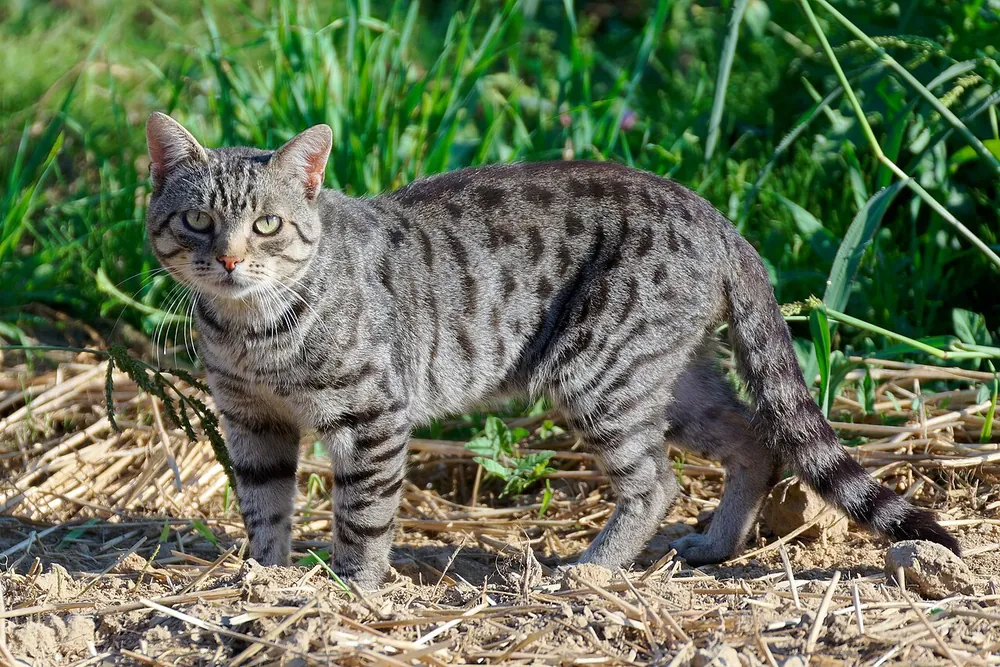
Round or oval spots scattered over the body instead of stripes. It is the coat of the Egyptian Mau, the Ocicat and the Bengal, but plenty of ordinary domestic cats have it too.
What it looks like
Separate dark spots on the sides and back, sometimes lined up where the stripes would be, with the “M” on the forehead, necklaces on the chest and a ringed tail. In the Bengal there are rosettes: spots with a lighter centre, like a leopard’s.
The genetics, made simple
No single spotting gene has been identified. The most widely accepted explanation is that it is a mackerel or classic tabby whose stripes are broken into spots by other modifying genes. That is why there are so many in-between grades from broken stripes to clean spots. The Bengal’s rosettes come from the Asian leopard cat, the wild species used to create the breed.
Myths and what science says
“It has wildcat blood”
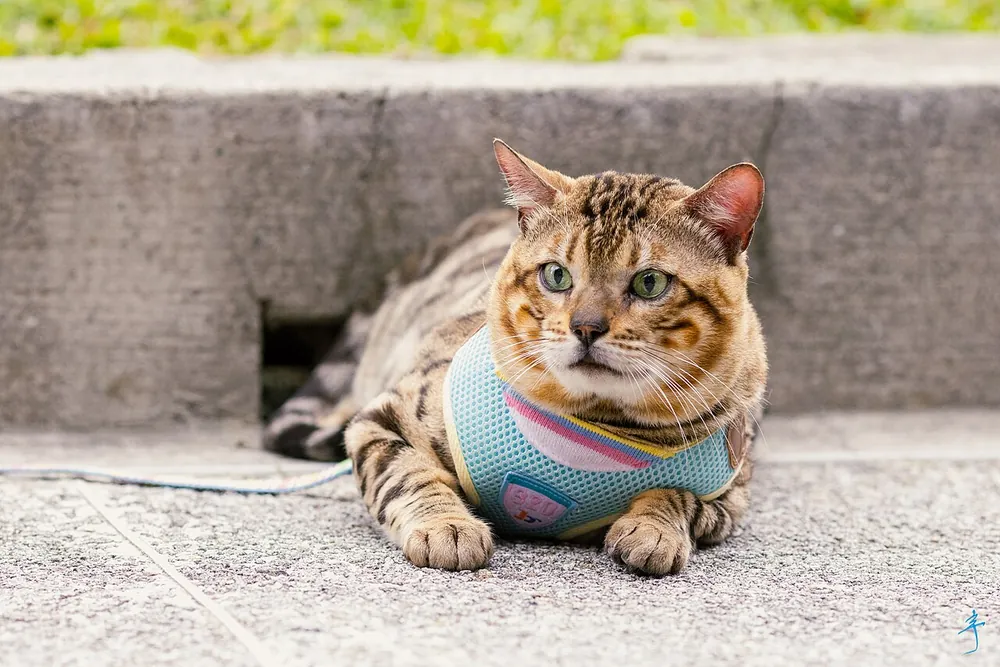
A spotted domestic cat has nothing wild about it: it is a tabby with broken stripes. Only breeds such as the Bengal or the Savannah have ancestors from other species, and you cannot tell that from the coat.
Fun facts
- The Egyptian Mau is one of the few naturally spotted breeds, not created by crossbreeding.
- The Ocicat looks like an ocelot, but it was created by crossing Siamese, Abyssinians and American Shorthairs.
- Spotted tabby markings also show on the belly, where they are usually larger.
Does it affect its health?
The pattern is not linked to any disease. Each spotted breed has its own health profile: see its breed page.
Breeds where it appears or is typical
This coat turns up in plenty of moggies. These are breeds where it is common, characteristic or accepted; under each one, the colours the breed comes in.
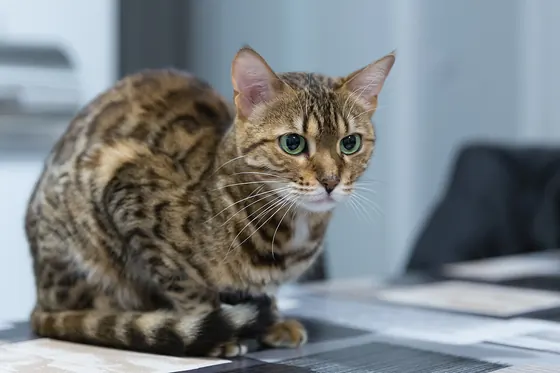 Bengal
Wild-looking · United States
Brown, snow (seal lynx, mink, sepia), silver, charcoal and blue; spotted with rosettes or marbled
Bengal
Wild-looking · United States
Brown, snow (seal lynx, mink, sepia), silver, charcoal and blue; spotted with rosettes or marbled
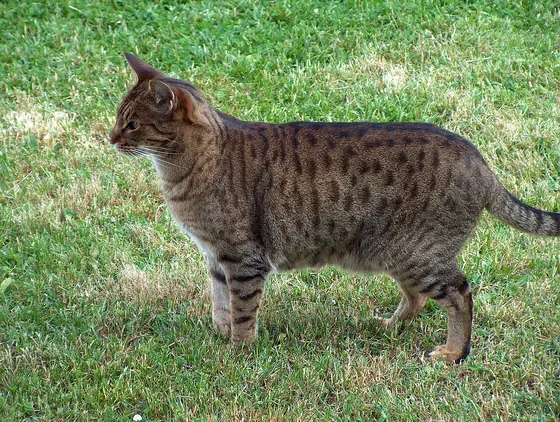 Ocicat
Wild-looking · United States
12 colours: cinnamon, chocolate, blue, lilac, fawn, tawny and their silver versions; always spotted
Ocicat
Wild-looking · United States
12 colours: cinnamon, chocolate, blue, lilac, fawn, tawny and their silver versions; always spotted
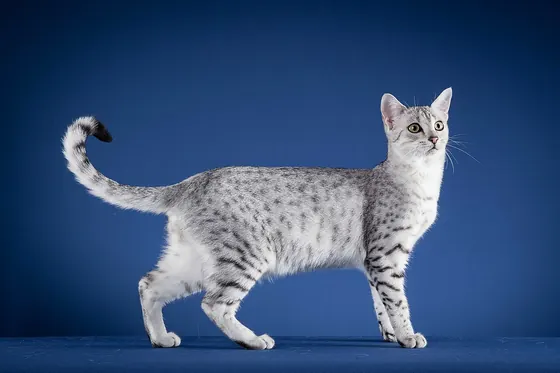 Egyptian Mau
Wild-looking · Egypt / Italy
Silver, bronze and smoke, always spotted; gooseberry green eyes
Egyptian Mau
Wild-looking · Egypt / Italy
Silver, bronze and smoke, always spotted; gooseberry green eyes
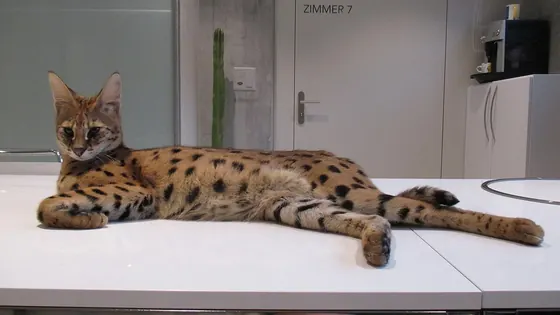 Savannah
Wild-looking · United States
Brown spotted tabby, silver spotted, black and black smoke
Savannah
Wild-looking · United States
Brown spotted tabby, silver spotted, black and black smoke
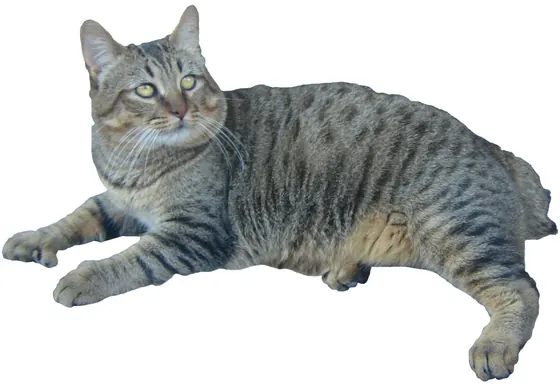 Pixie-bob
Tails & ears · United States
Brown spotted tabby, with a pale belly
Pixie-bob
Tails & ears · United States
Brown spotted tabby, with a pale belly
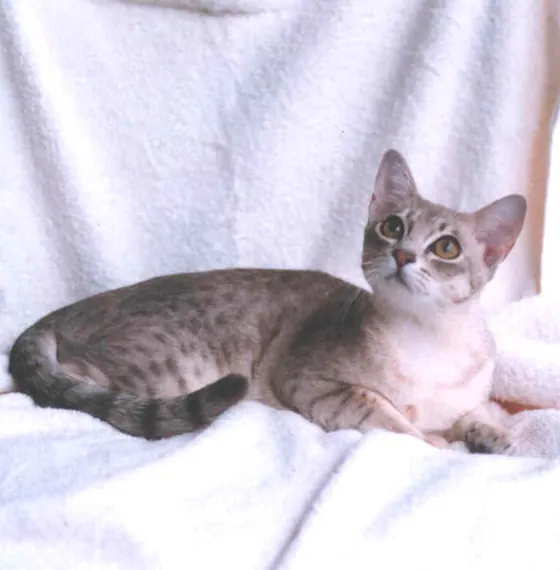 Australian Mist
Shorthair · Australia
Brown, blue, chocolate, lilac, gold or peach, spotted or marbled with a ticked veil
Australian Mist
Shorthair · Australia
Brown, blue, chocolate, lilac, gold or peach, spotted or marbled with a ticked veil
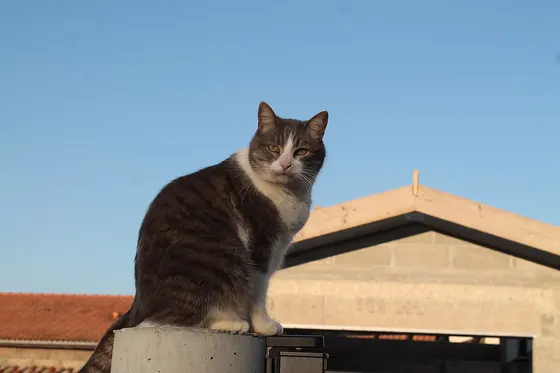 European Shorthair
Shorthair · Europe
Almost all: tabby, black, white, bicolour, tortoiseshell, red…; no colourpoint, chocolate or lilac in pedigree cats
European Shorthair
Shorthair · Europe
Almost all: tabby, black, white, bicolour, tortoiseshell, red…; no colourpoint, chocolate or lilac in pedigree cats
Frequently asked questions
Is a cat with spots a Bengal?
Not necessarily. Many domestic cats are spotted tabbies. A Bengal is recognised by its rosettes, the sheen of its coat (“glitter”), its head and body and, above all, its pedigree.
What is the difference between spots and rosettes?
A spot is a solid dark mark. A rosette has a dark edge and a centre of an intermediate shade, like a leopard’s. Rosettes are typical of the Bengal.
Does the spotted pattern have its own gene?
No single gene has been found. It is thought to be stripes broken into spots by the action of other genes.
Educational content from Michipedia. The genetics of coat colour are simplified so they are easy to follow; colour tells you nothing about the personality of a particular cat.