
Tabby cat
Also called: Tabby, Striped cat, Tiger cat, Brown tabby.
Tabby is not a breed: it is the pattern the cat was born with. All domestic cats descend from the African wildcat, which is a tabby, and that is why this pattern is the most common in the world and appears whenever other genes do not hide it.
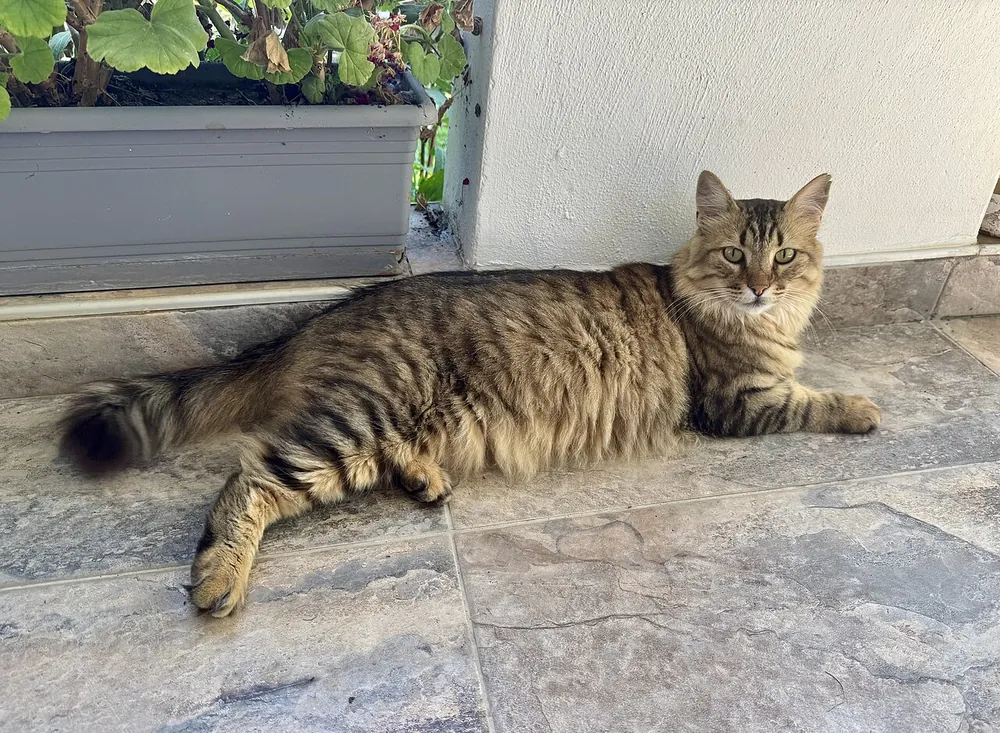
What it looks like
Darker stripes, spots or swirls over a lighter background, a clear “M” on the forehead, fine lines running from the corner of the eye to the cheek (“pencilling”), rings on the tail and legs, and a dark tail tip. There are four patterns: mackerel (fine, parallel stripes, like a tiger), classic (broad swirls with a “bullseye” on the side), spotted (stripes broken into spots) and ticked (almost no pattern on the body, with each hair banded). The background colour varies: brown in the most common tabby, orange, bluish grey, cream or silver.
The genetics, made simple
For the pattern to show, the cat needs the agouti gene, which gives each hair light and dark bands. Its recessive variant, “non-agouti”, colours the hair from root to tip and turns the cat into a solid (black, blue, chocolate…), although the pattern is still there, hidden. Which of the four patterns appears is decided by other genes: the one that separates mackerel from classic (described in 2012 by a team at Stanford University, who named it Taqpep) and the ticked gene, which masks the others. Orange is an exception: it shows stripes even when the cat is “non-agouti”, which is why there are no completely plain orange cats.
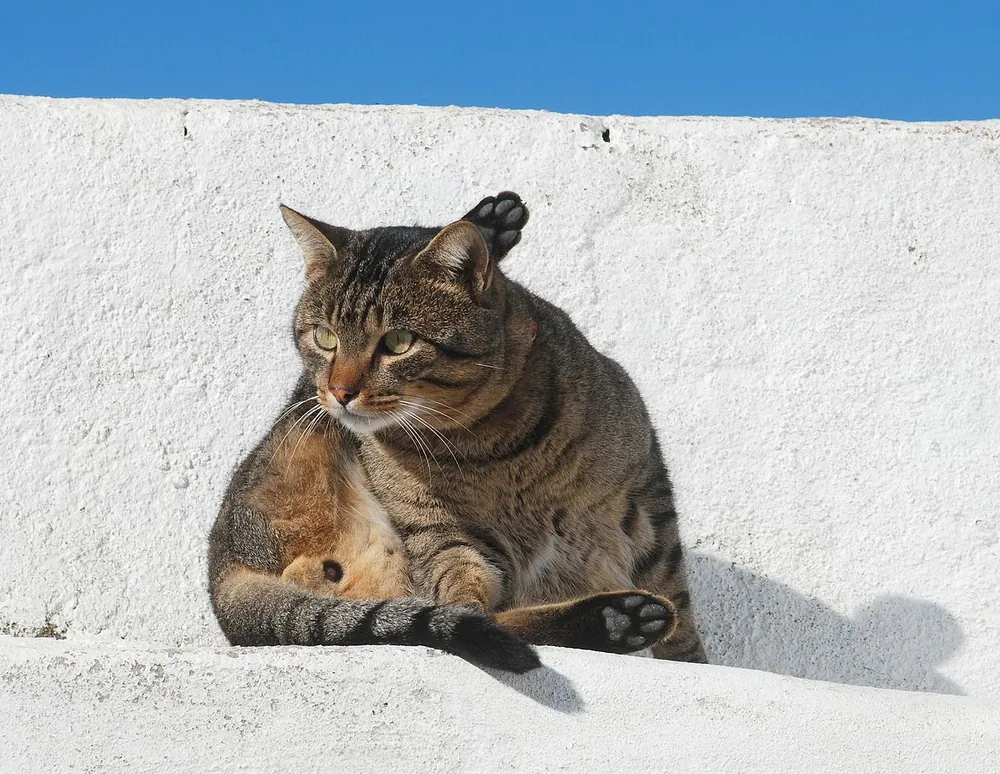
Myths and what science says
The “M” on the forehead
There are legends to suit every taste: that it is the mark of the Virgin Mary, that the Prophet Muhammad left it when he stroked his cat, or that it stands for “mau”, ancient Egyptian for cat. They are lovely stories. The real explanation is simpler: it is part of the tabby pattern and all four types have it.
“Tabbies have more personality”
No studies link the pattern to personality. Because tabby is the most common coat among street cats, it also covers the widest range of characters: there are shy ones, sociable ones, calm ones and troublemakers.
Fun facts
- “Tabby” comes, according to the most repeated explanation, from a watered silk fabric made in the Attabiya quarter of Baghdad.
- Black, blue and other solid-coloured cats often show ghost stripes in sunlight, especially as kittens: it is the tabby they carry hidden.
- In Spain the brown tabby has traditionally been called gato romano (“Roman cat”) or gato tigre (“tiger cat”).
Does it affect its health?
The tabby pattern is not linked to any disease. It is simply the cat’s wild coat.
Breeds where it appears or is typical
This coat turns up in plenty of moggies. These are breeds where it is common, characteristic or accepted; under each one, the colours the breed comes in.
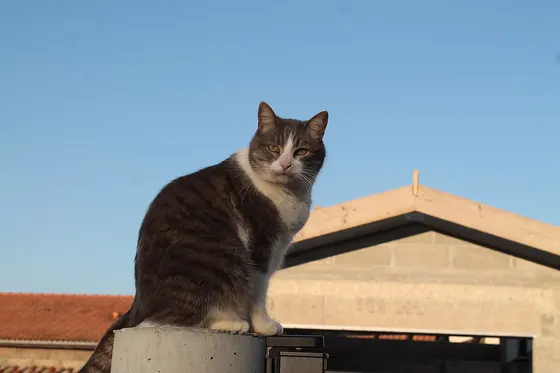 European Shorthair
Shorthair · Europe
Almost all: tabby, black, white, bicolour, tortoiseshell, red…; no colourpoint, chocolate or lilac in pedigree cats
European Shorthair
Shorthair · Europe
Almost all: tabby, black, white, bicolour, tortoiseshell, red…; no colourpoint, chocolate or lilac in pedigree cats
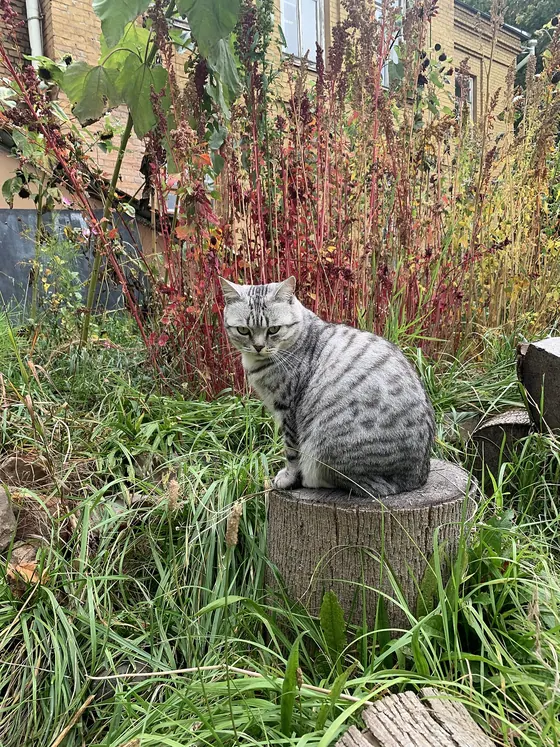 American Shorthair
Shorthair · United States
Dozens of colours; the most famous is the classic silver tabby
American Shorthair
Shorthair · United States
Dozens of colours; the most famous is the classic silver tabby
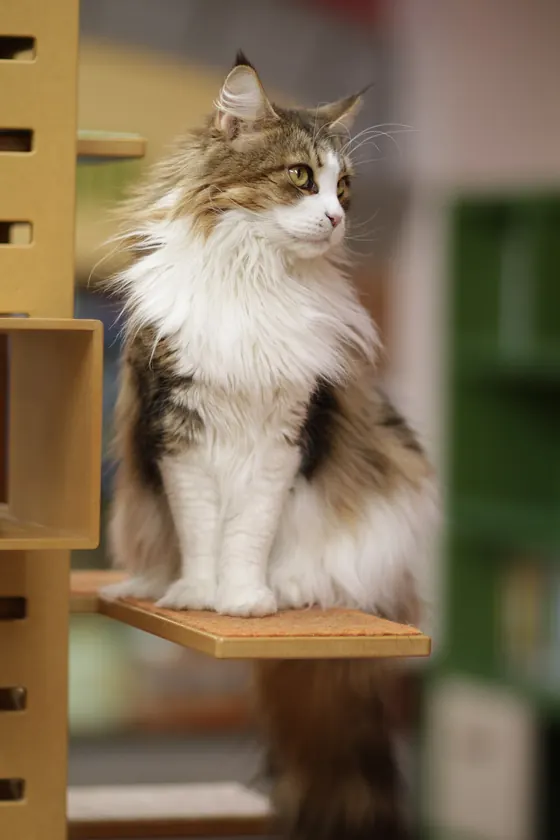 Maine Coon
Forest · United States
Almost all; the classic is brown tabby. No colourpoint in most registries
Maine Coon
Forest · United States
Almost all; the classic is brown tabby. No colourpoint in most registries
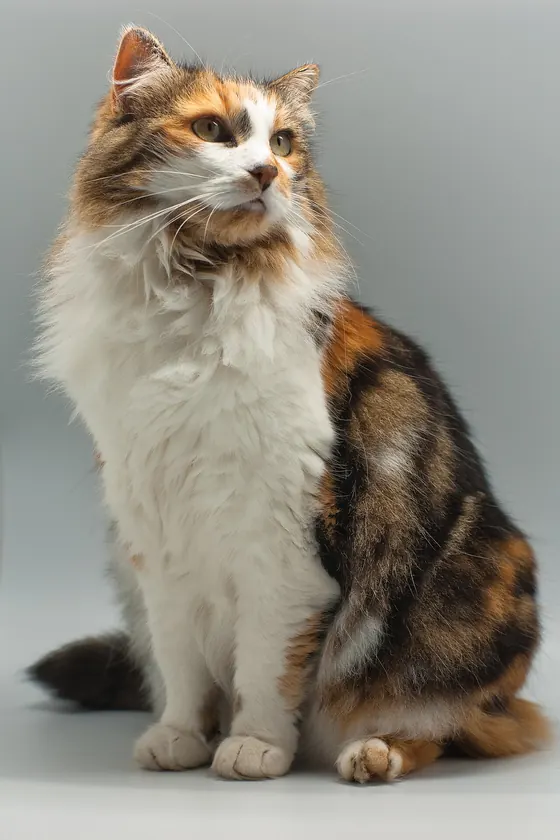 Norwegian Forest Cat
Forest · Norway
Almost all except colourpoint, chocolate, lilac, cinnamon and fawn; lots of white and tabby
Norwegian Forest Cat
Forest · Norway
Almost all except colourpoint, chocolate, lilac, cinnamon and fawn; lots of white and tabby
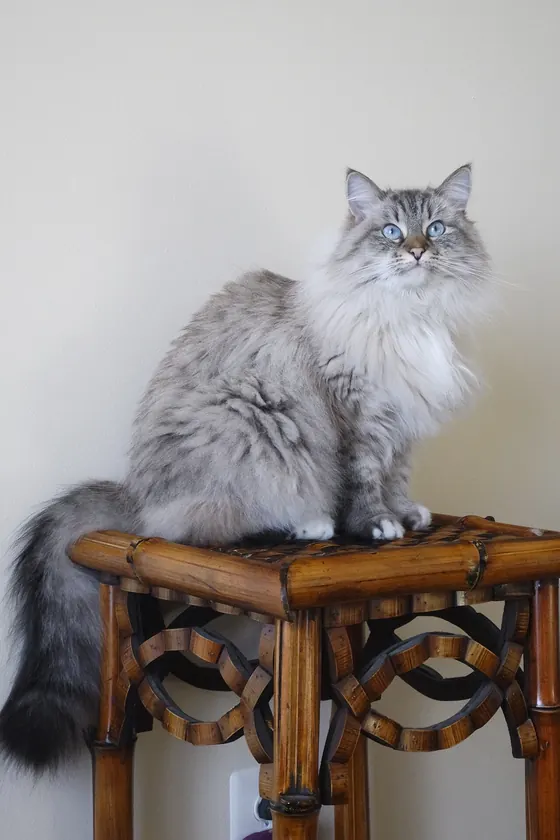 Siberian
Forest · Russia
All; the Neva Masquerade is its colourpoint variety
Siberian
Forest · Russia
All; the Neva Masquerade is its colourpoint variety
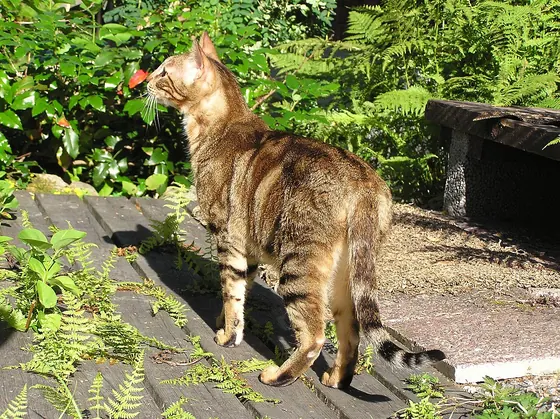 Sokoke
Wild-looking · Kenya
Brown marbled tabby with a ticked effect (agouti classic tabby)
Sokoke
Wild-looking · Kenya
Brown marbled tabby with a ticked effect (agouti classic tabby)
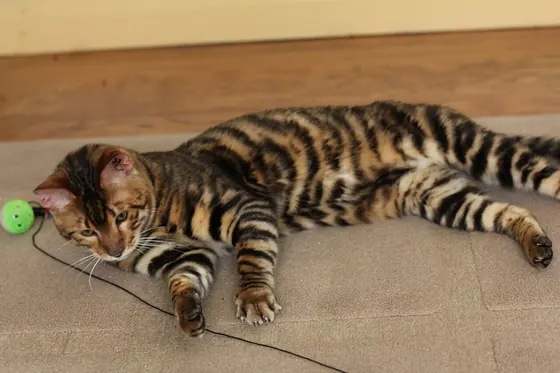 Toyger
Wild-looking · United States
Striped (mackerel) tabby in rich orange on a golden ground, with branching dark stripes
Toyger
Wild-looking · United States
Striped (mackerel) tabby in rich orange on a golden ground, with branching dark stripes
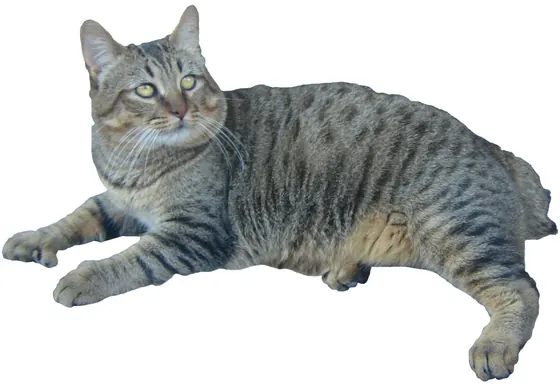 Pixie-bob
Tails & ears · United States
Brown spotted tabby, with a pale belly
Pixie-bob
Tails & ears · United States
Brown spotted tabby, with a pale belly
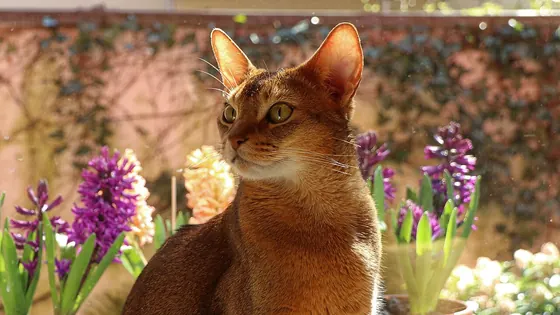 Abyssinian
Wild-looking · Ethiopia / United Kingdom
Ruddy (usual), red (sorrel), blue, fawn and their silver versions
Abyssinian
Wild-looking · Ethiopia / United Kingdom
Ruddy (usual), red (sorrel), blue, fawn and their silver versions
Frequently asked questions
Is a tabby cat a breed?
No. It is a coat pattern that appears in a great many breeds and, above all, in ordinary domestic cats. A tabby without a pedigree is a domestic cat (a moggy), not a “pedigree tabby”.
What does the “M” on a cat’s forehead mean?
It is part of the tabby pattern and all four types have it (mackerel, classic, spotted and ticked). The stories about the Virgin Mary or the Prophet Muhammad are folk legends.
How many types of tabby cat are there?
Four: mackerel (fine parallel stripes), classic (broad swirls), spotted (spots) and ticked (banded hairs with almost no pattern). Each can be brown, orange, grey, cream or silver.
Why does my black cat have stripes?
Because every cat carries a tabby pattern underneath. In black cats the “non-agouti” gene hides it, but in strong light, and especially in kittens, it shows as ghost stripes.
Educational content from Michipedia. The genetics of coat colour are simplified so they are easy to follow; colour tells you nothing about the personality of a particular cat.