
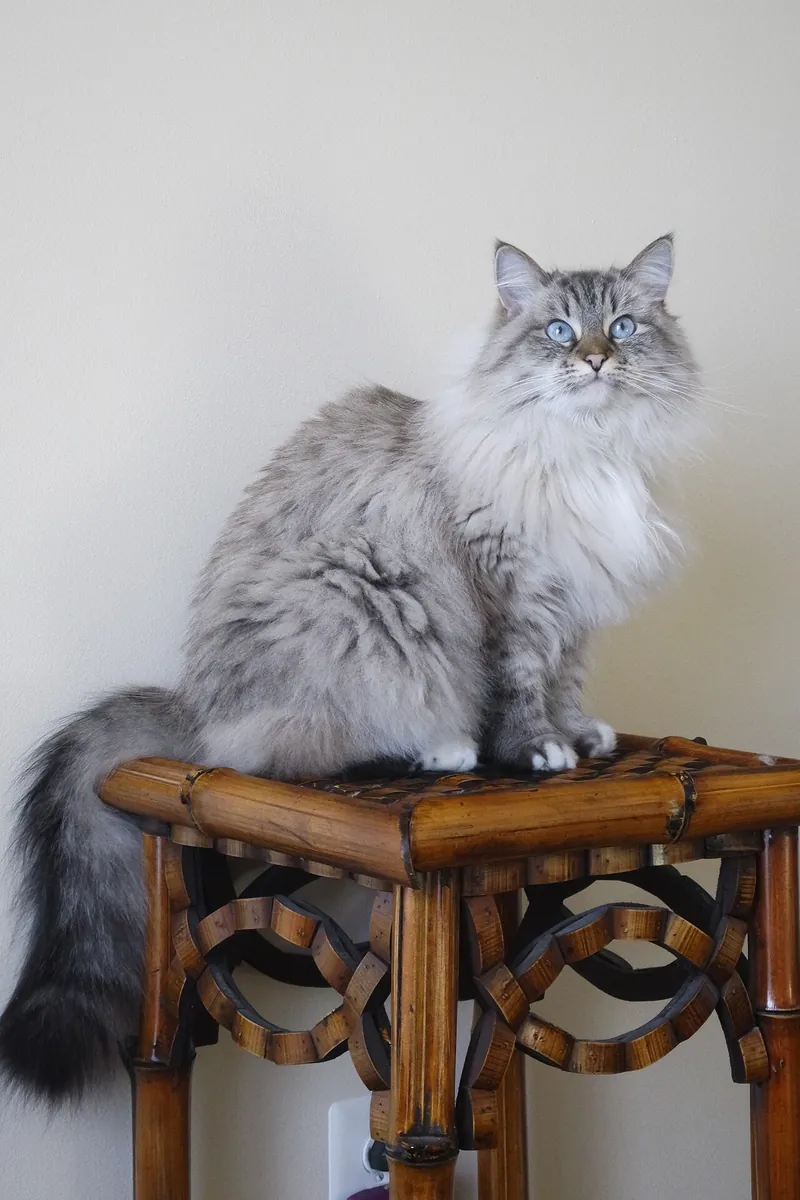
Siberian
Also known as: Siberian cat · Siberian Forest Cat · Neva Masquerade · Colourpoint Siberian · Russian forest cat
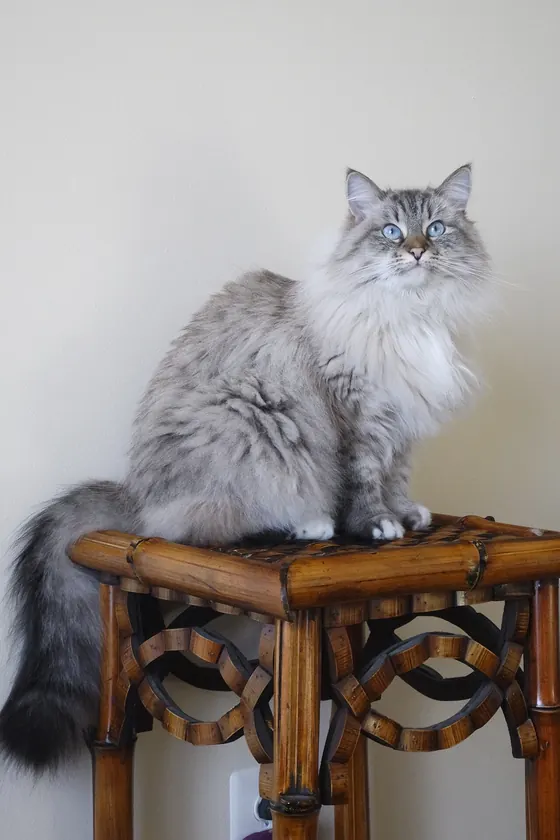
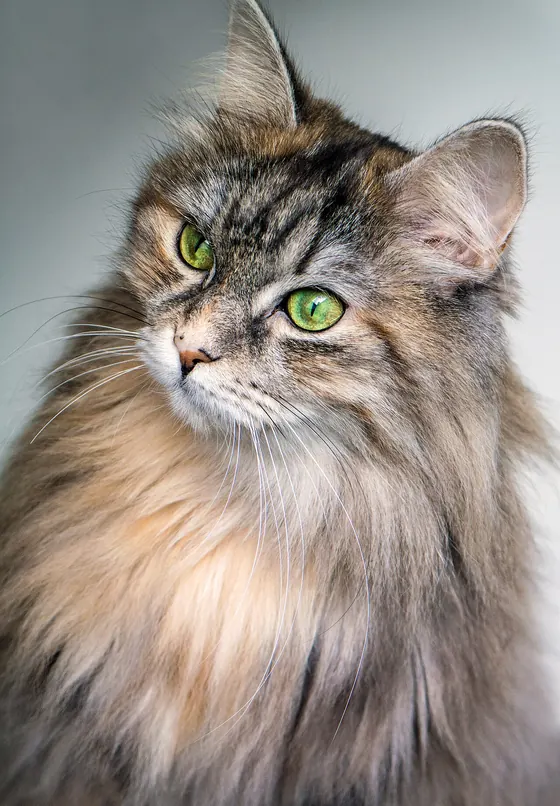
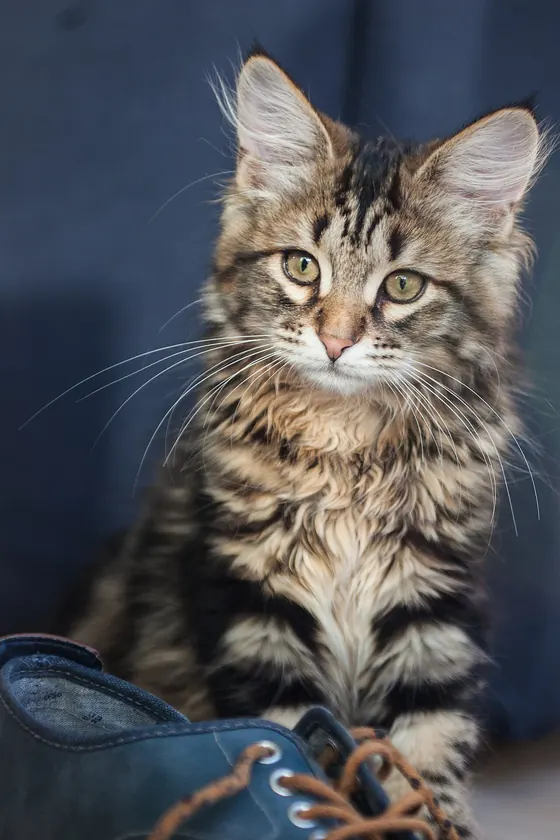
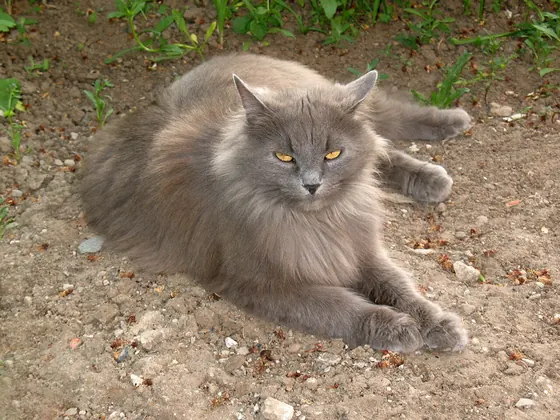
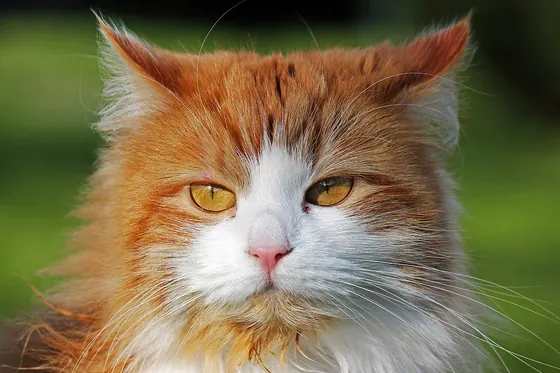
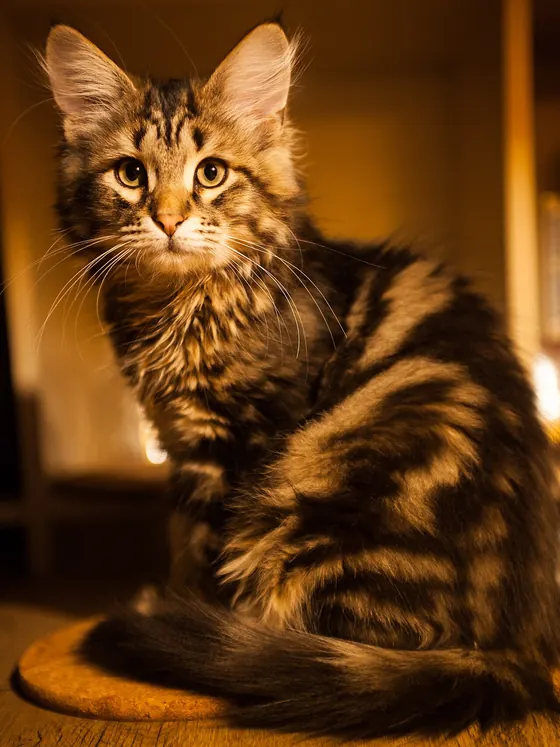
Photos: Joesadlon (CC BY-SA 4.0) · Mona Magnussen kireinamona (CC0) · Tadeáš Bednarz (CC BY-SA 4.0) · Victor Vizu (CC BY-SA 3.0) · Green Yoshi (CC BY-SA 3.0), via Wikimedia Commons.
Breed profile
* An estimate for Spain in 2026 (food, litter, vet and insurance), based on the size, grooming and health needs of the breed, not on measured costs of individual cats.
Varieties
Two varieties, one breed
What it is like
It is the Russian forest cat: a natural cat of the fields and forests of Siberia and northern Russia, bred in an organised way since the late 1980s, when clubs in St Petersburg and Moscow set its standard. It is robust and rounded, with strong legs and a powerful jump, and a three-layer coat that withstands extreme cold. In character it is brave and very sociable: it greets visitors, plays like a kitten into old age and gets on well with children, dogs and other cats. Its “hypoallergenic” reputation comes from the fact that some cats produce less Fel d 1, the main cat allergen protein, but it varies enormously from one individual to another and none is free of it.
Coat colours and patterns
Colours and patterns that are common or accepted in this breed. Each page explains where the colour comes from, the myths around it and other breeds that have it.
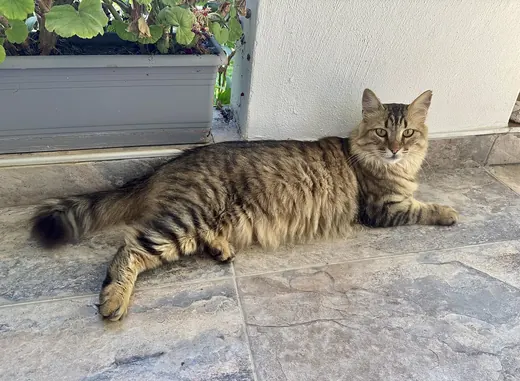 Tabby
Pattern · Tabby, Striped cat
Tabby
Pattern · Tabby, Striped cat
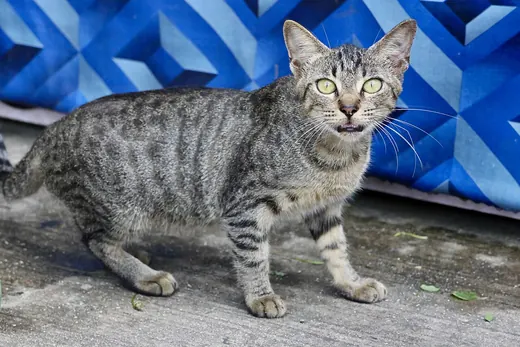 Mackerel tabby
Pattern · Mackerel tabby, Striped tabby
Mackerel tabby
Pattern · Mackerel tabby, Striped tabby
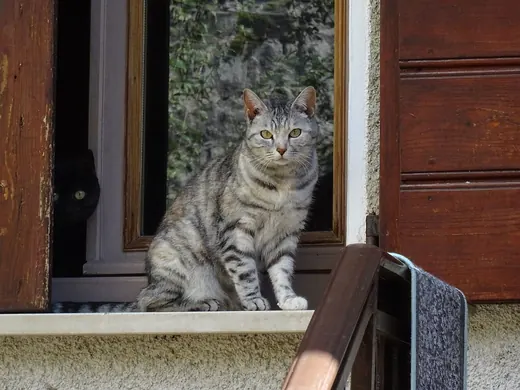 Silver tabby
Colour and pattern · Silver tabby, Silver cat
Silver tabby
Colour and pattern · Silver tabby, Silver cat
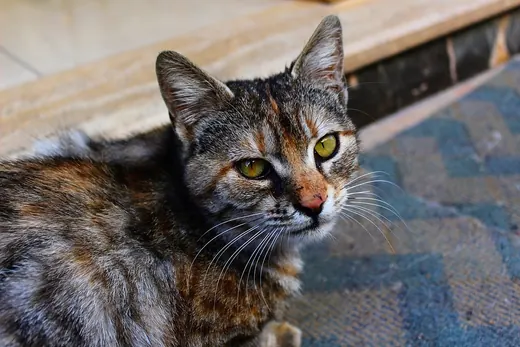 Torbie
Colour and pattern · Torbie, Tortie tabby
Torbie
Colour and pattern · Torbie, Tortie tabby
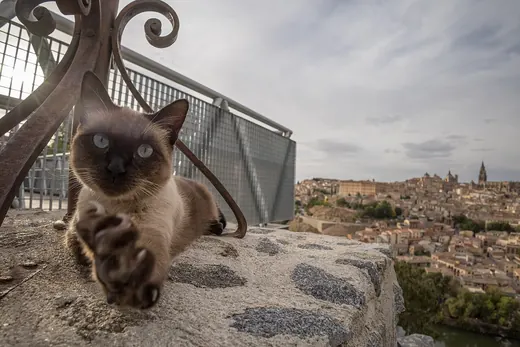 Colourpoint
Pattern · Pointed, Siamese
Colourpoint
Pattern · Pointed, Siamese
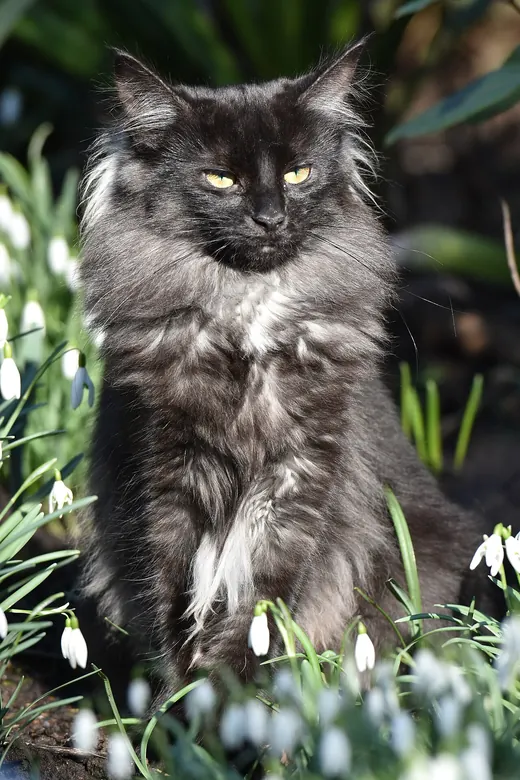 Smoke
Colour · Smoke, Black smoke
Smoke
Colour · Smoke, Black smoke
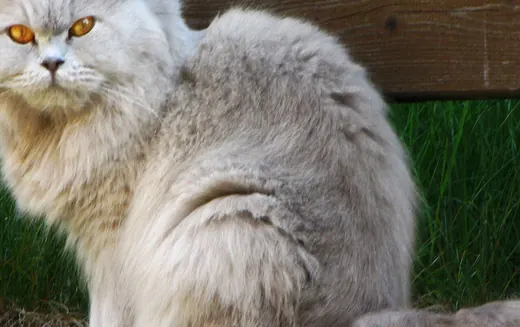 Chinchilla and shaded
Colour · Chinchilla, Shaded
Chinchilla and shaded
Colour · Chinchilla, Shaded
All cat coat colours and patterns →
Temperament
Care
Brushing once or twice a week; in the spring moult it sheds its undercoat in quantity and daily combing is a good idea. It needs vigorous play: it is a great jumper and hunter of toys. If you have allergies, spend several visits with the specific cat (not just the breed) before deciding, and ask the breeder whether the parents' Fel d 1 has been measured. Netting on windows and balconies: it is afraid of nothing.
Health
A generally robust breed. The most relevant disease is hypertrophic cardiomyopathy (HCM): there is no breed-specific DNA test, so the responsible approach is regular echocardiograms of breeding cats. Cases of pyruvate kinase deficiency (PK-def, testable) and polycystic kidney disease have been described. Watch for weight gain after neutering.
Health problems to watch for
These are described more often in this breed. It does not mean a Siberian will have them, nor that a moggy is free of them: they are worth knowing about and discussing with your vet.
Fun facts
It is unofficially considered Russia's national cat.
The first Siberians reached the United States in 1990, imported by the breeder Elizabeth Terrell.
The Neva Masquerade is named after the River Neva, which runs through St Petersburg, where the variety was developed.
No cat is truly hypoallergenic: some Siberians produce as much Fel d 1 as an ordinary cat.
Frequently asked questions
How big does a Siberian get?
An adult Siberian usually weighs 4–9 kg (9–20 lb) and stands about 25–35 cm (10–14 in) at the shoulder, which makes it a large cat.
How long does a Siberian live?
Its usual life expectancy is 12–18 years. Living indoors, being neutered and having regular vet check-ups make the biggest difference.
Is the Siberian hypoallergenic?
It is often described as hypoallergenic, but no cat is free of the main cat allergen (Fel d 1). Some people with mild allergies react less to it; spend time with the breed before deciding.
Is the Siberian good with children?
Usually yes: it tends to be patient and sociable with children. As with any cat, teach children to let it walk away when it has had enough.
How much play does a Siberian need?
As a guide, 40 min of play a day. Its activity score is 4 out of 5: short daily play sessions with a wand toy work better than one long one.
Similar breeds
All breeds A to Z Cost calculator (Spanish) Food portions (Spanish)