
Colourpoint (Siamese) cat
Also called: Pointed, Siamese, Cat with points, Himalayan, Seal point, Blue point.
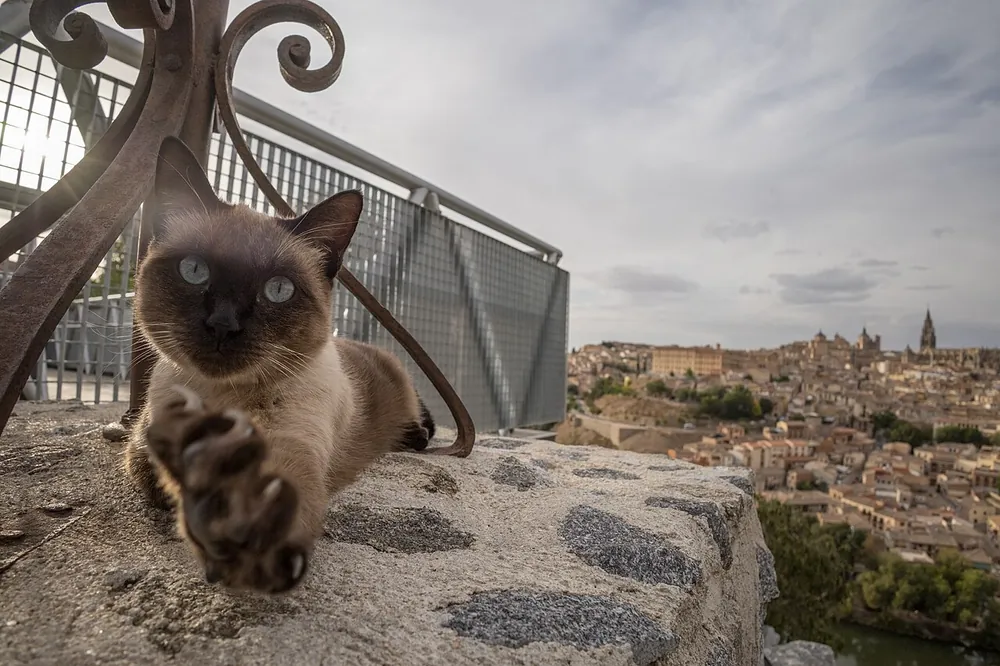
A pale body with dark points: ears, mask, legs and tail. It is the Siamese coat, and the curious thing is that temperature draws it: colour only appears where the body is cooler.
What it looks like
A creamy white or beige body and darker extremities (the “points”), with eyes that are always blue. The colours have their own names: seal (very dark brown, which is genetically black), chocolate, blue, lilac, red, cream, tortie point and tabby (lynx) point. With age, the body darkens.
The genetics, made simple
It is caused by a version of the tyrosinase gene, the enzyme that makes pigment. The Siamese version only works below normal body temperature, so it colours only the cooler areas: ears, face, legs and tail. That is why kittens are born almost white (the womb is warm) and darken in the first weeks; why cats in cold climates are darker; and why, if an area is shaved, the hair can grow back darker. It is recessive: two copies are needed. Another version of the same gene gives the Burmese sepia, and the combination of the two, the Tonkinese mink.
Myths and what science says
“All Siamese are cross-eyed”
Squints (strabismus) and nystagmus (trembling eyes) are more common in Siamese and other colourpoints because the same gene alters how the optic nerves cross. It used to be very common; breeding has reduced squints, although they still appear.
“A cat with points is a Siamese”
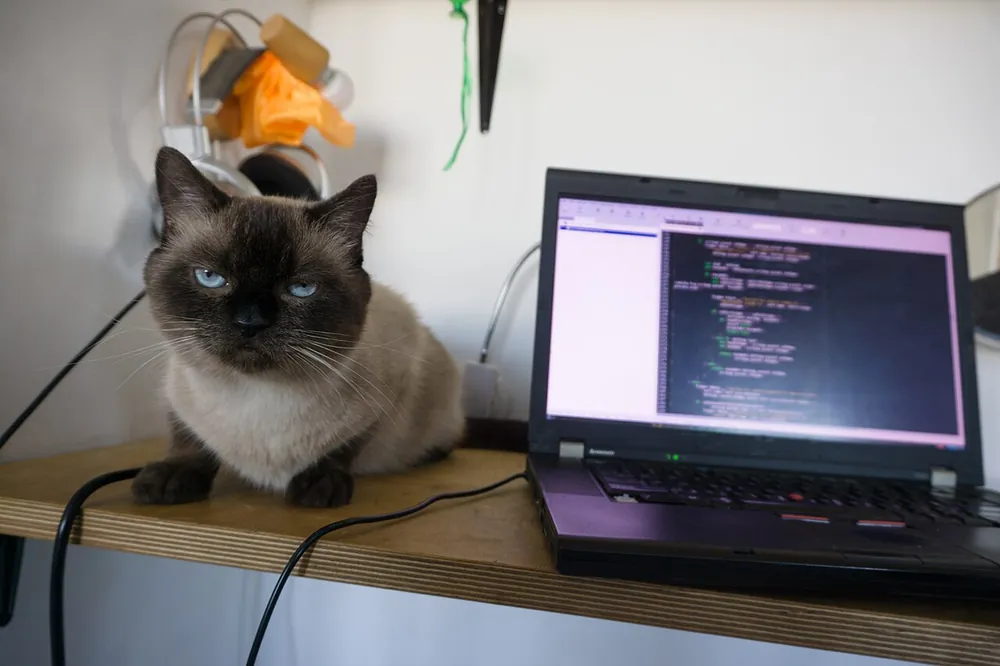
Many domestic cats are colourpoints without being Siamese. The Siamese is a breed with a specific body type; the pattern also appears in the Himalayan, the Ragdoll, the Birman and many mixed-breed cats.
Fun facts
- It is called “Himalayan” after the Himalayan rabbit, which has the same pattern from the same gene.
- In the Siberian, the colourpoint variety is called Neva Masquerade.
- A wound or a fever can change the colour of the hair that grows back in that area.
Does it affect its health?
The colourpoint gene is linked to squints and nystagmus because of the abnormal crossing of optic nerve fibres, and depth perception may be slightly poorer; normally it does not stop them leading a normal life. Also, sudden darkening in particular areas can be due to wounds or inflammation. Each colourpoint breed has its own health profile: see its breed page.
Breeds where it appears or is typical
This coat turns up in plenty of moggies. These are breeds where it is common, characteristic or accepted; under each one, the colours the breed comes in.
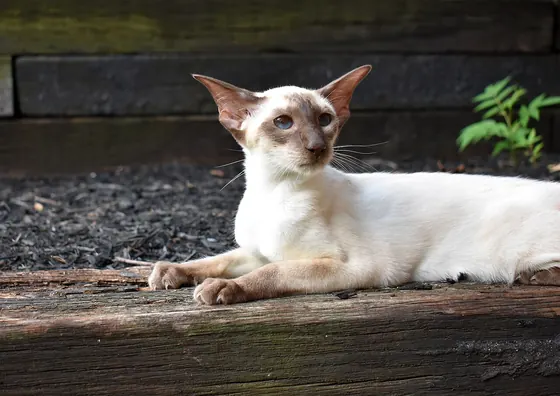 Siamese
Oriental · Thailand
Colourpoint: seal, chocolate, blue and lilac (plus others depending on the registry)
Siamese
Oriental · Thailand
Colourpoint: seal, chocolate, blue and lilac (plus others depending on the registry)
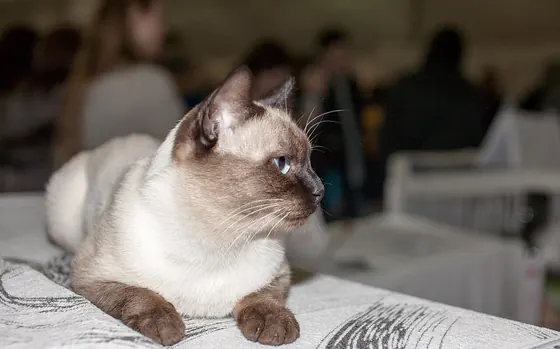 Thai (traditional Siamese)
Oriental · Thailand
Colourpoint: seal, chocolate, blue, lilac, red, tortie and tabby point
Thai (traditional Siamese)
Oriental · Thailand
Colourpoint: seal, chocolate, blue, lilac, red, tortie and tabby point
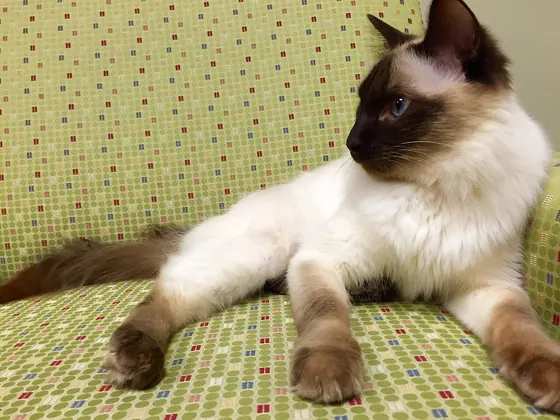 Balinese
Oriental · United States
Colourpoint: seal, chocolate, blue and lilac (plus more depending on the registry)
Balinese
Oriental · United States
Colourpoint: seal, chocolate, blue and lilac (plus more depending on the registry)
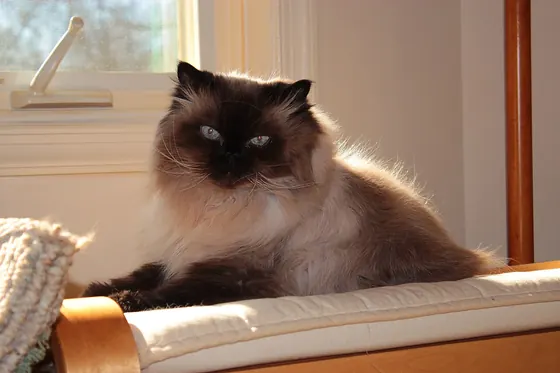 Himalayan
Persian · United Kingdom / United States
Colourpoint: seal, blue, chocolate, lilac, red, cream, tortie and lynx; blue eyes
Himalayan
Persian · United Kingdom / United States
Colourpoint: seal, blue, chocolate, lilac, red, cream, tortie and lynx; blue eyes
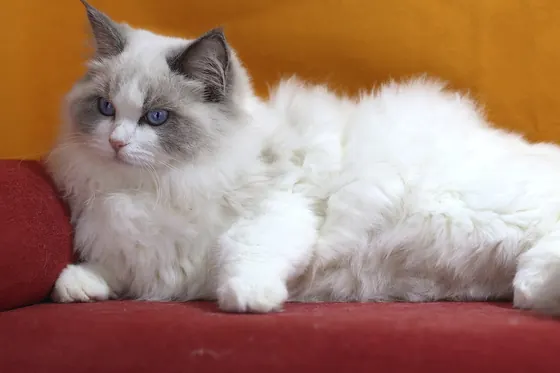 Ragdoll
Semi-longhair · United States
Colourpoint, mitted and bicolour, in seal, blue, chocolate, lilac, red, cream, tortie and lynx; blue eyes
Ragdoll
Semi-longhair · United States
Colourpoint, mitted and bicolour, in seal, blue, chocolate, lilac, red, cream, tortie and lynx; blue eyes
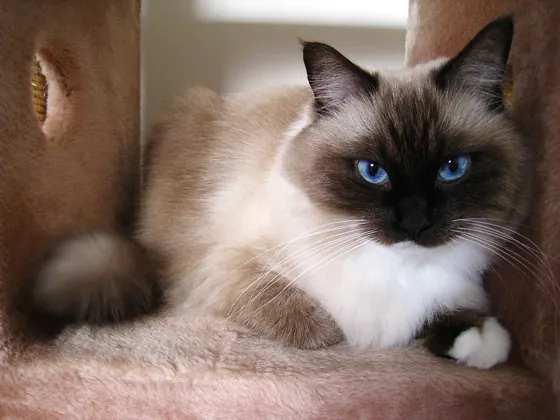 Sacred Birman
Semi-longhair · France (Burma, according to legend)
Colourpoint with all four feet white (gloves): seal, blue, chocolate, lilac, red, cream, tortie…; blue eyes
Sacred Birman
Semi-longhair · France (Burma, according to legend)
Colourpoint with all four feet white (gloves): seal, blue, chocolate, lilac, red, cream, tortie…; blue eyes
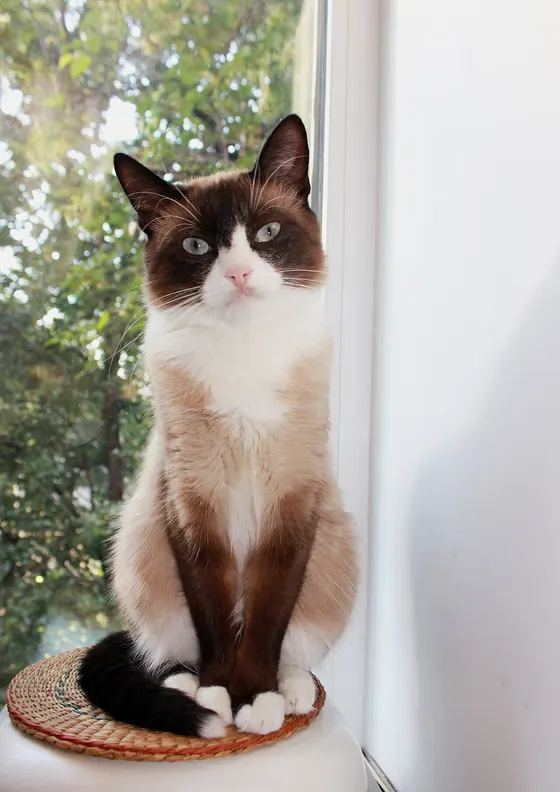 Snowshoe
Oriental · United States
Seal point or blue point with white feet and muzzle (mitted or bicolour); blue eyes
Snowshoe
Oriental · United States
Seal point or blue point with white feet and muzzle (mitted or bicolour); blue eyes
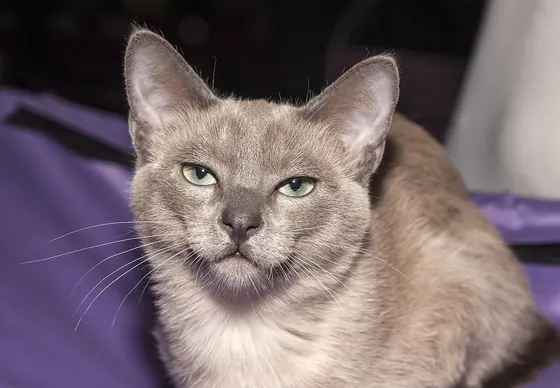 Tonkinese
Oriental · Canada / United States
Natural, champagne, blue and platinum in three patterns: mink, point and solid
Tonkinese
Oriental · Canada / United States
Natural, champagne, blue and platinum in three patterns: mink, point and solid
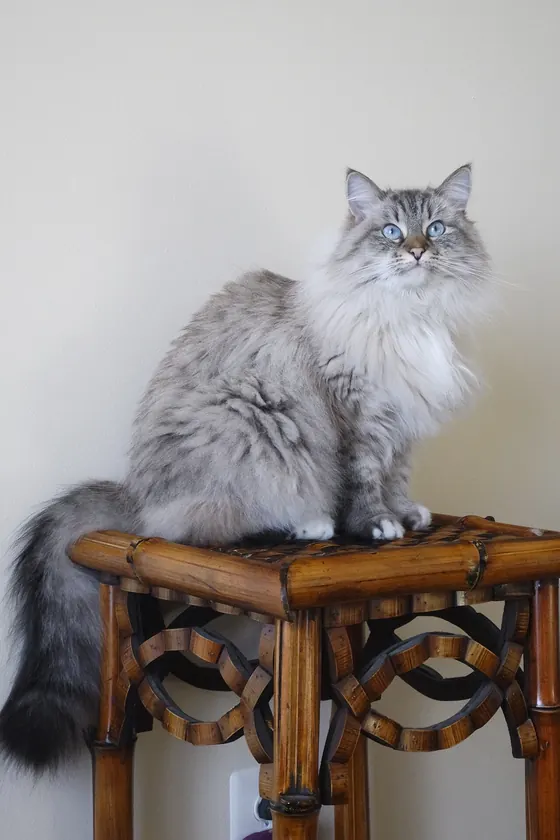 Siberian
Forest · Russia
All; the Neva Masquerade is its colourpoint variety
Siberian
Forest · Russia
All; the Neva Masquerade is its colourpoint variety
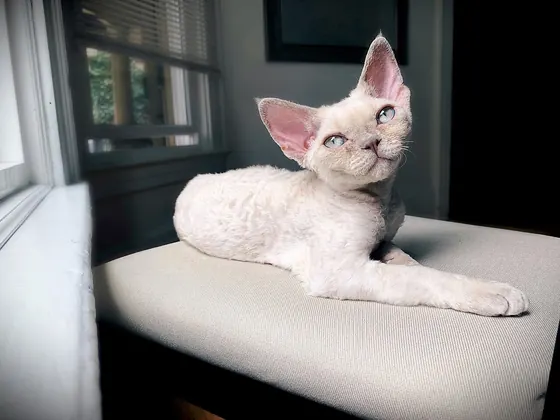 Devon Rex
Rex & hairless · United Kingdom
All, including colourpoint
Devon Rex
Rex & hairless · United Kingdom
All, including colourpoint
Frequently asked questions
Why do Siamese cats have dark ears and faces?
Because their pigment enzyme only works in the cooler parts of the body. The ears, face, legs and tail are a few degrees cooler.
Why are Siamese kittens born white?
Because in the womb the whole body is warm and the enzyme does not work. The points darken in the first weeks.
Do all colourpoints have blue eyes?
Yes. The same gene reduces pigment in the iris, and blue is the result.
Is my cat with points a Siamese?
It may be a colourpoint domestic cat. The Siamese is a breed with a specific body, head and pedigree.
Educational content from Michipedia. The genetics of coat colour are simplified so they are easy to follow; colour tells you nothing about the personality of a particular cat.