
Siamese
Also known as: Siamese cat · Modern Siamese · Show Siamese · Wichienmaat
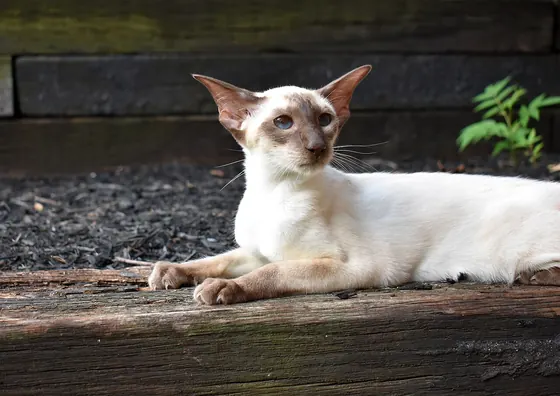
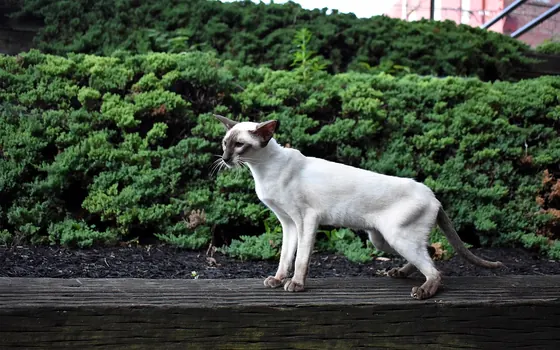
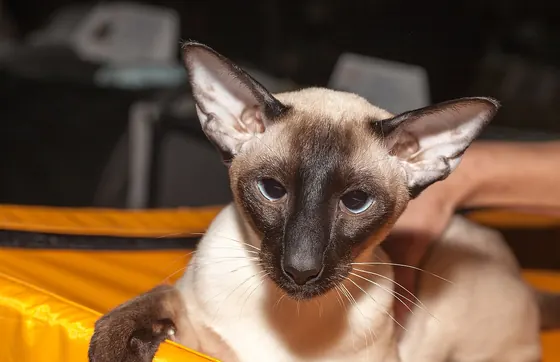
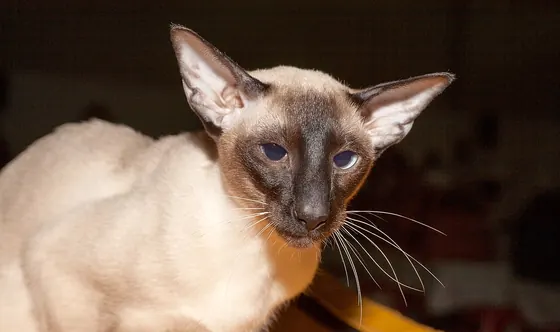
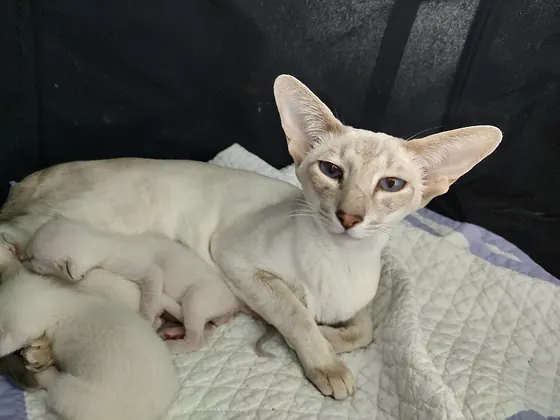
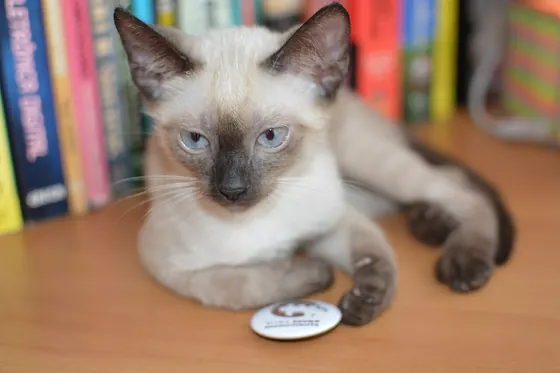
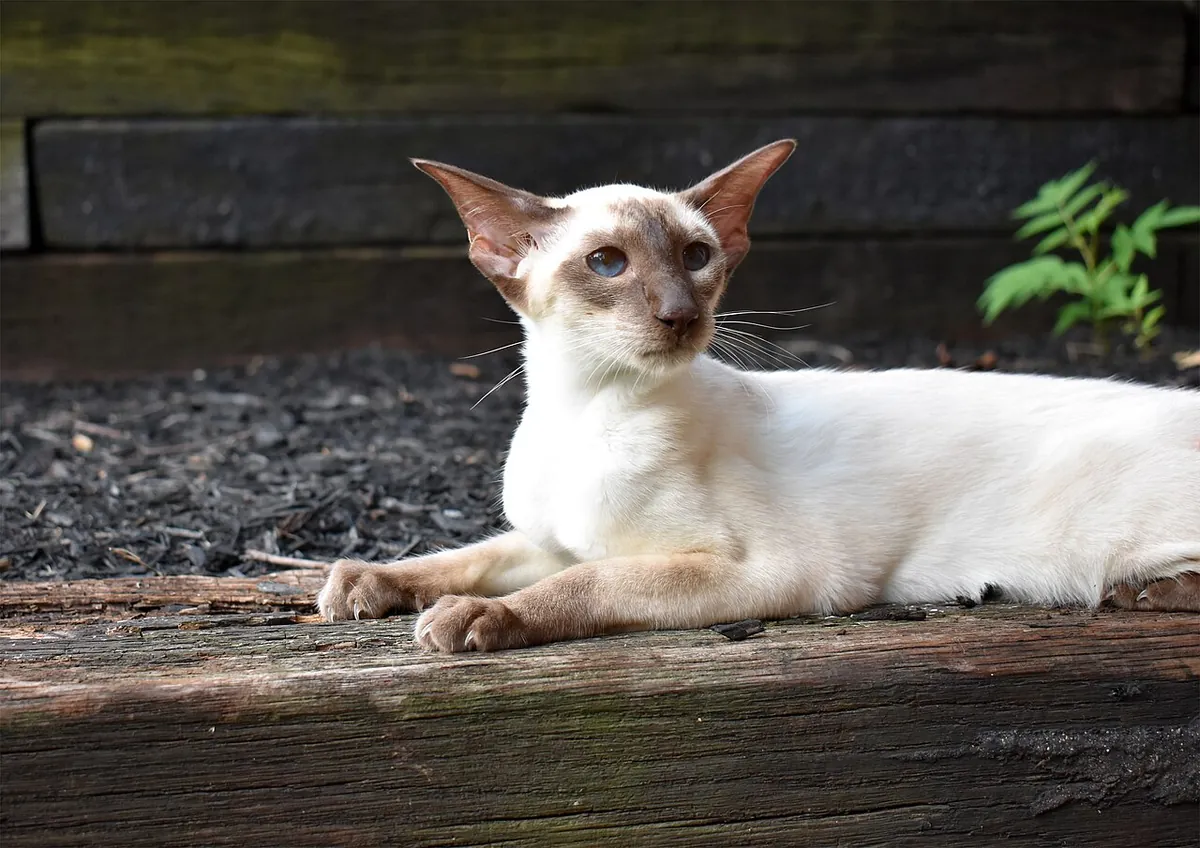
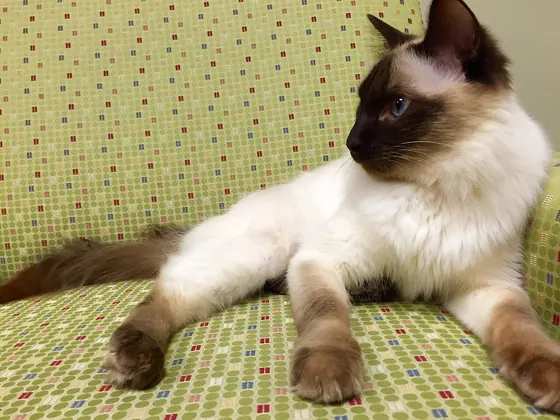
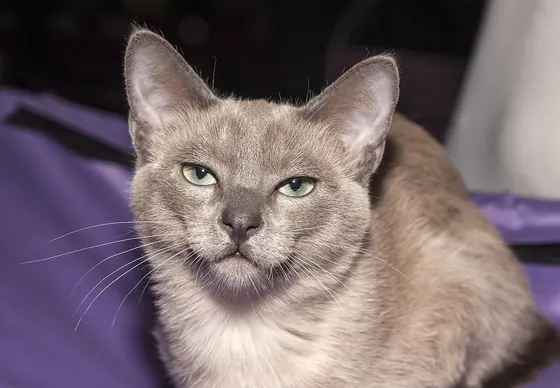
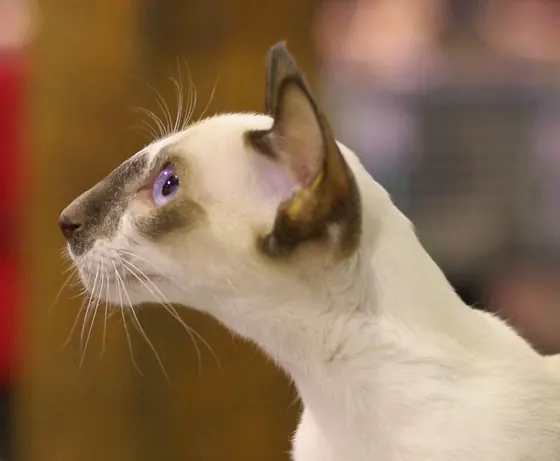
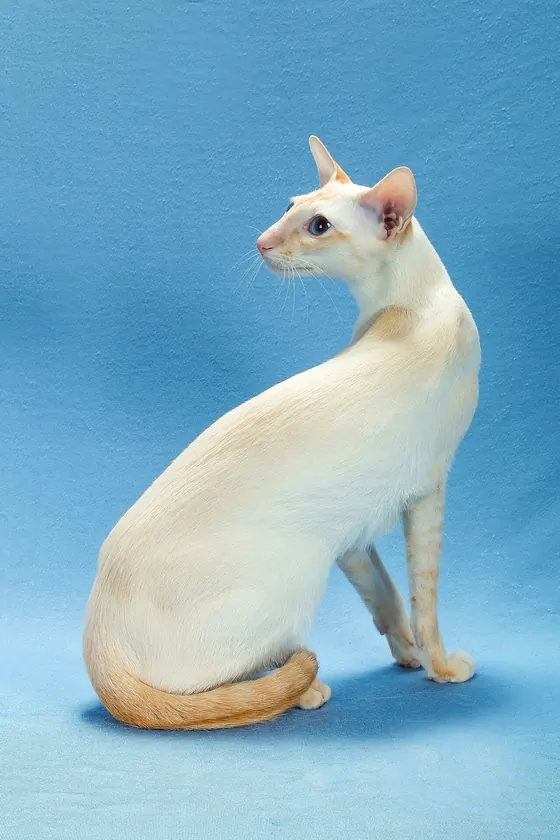
Photos: Felinlove (CC BY-SA 4.0) · Nickolas Titkov from Moscow, Russian Federation (CC BY-SA 2.0) · Kathryn Smith (CC BY 4.0) · Rodrigo Padula (CC BY-SA 3.0), via Wikimedia Commons.
Breed profile
* An estimate for Spain in 2026 (food, litter, vet and insurance), based on the size, grooming and health needs of the breed, not on measured costs of individual cats.
Varieties
Two kinds of Siamese: the modern show type and the traditional one
What it is like
It reached Europe from the old kingdom of Siam in the late 19th century and was already on show at the first big cat show in London, at the Crystal Palace, in 1871. Its dark points come from a heat-sensitive variant of the tyrosinase gene: pigment only develops on the coolest parts of the body, that is, the ears, face, legs and tail. Today's show Siamese is very refined, with a tubular body, a wedge-shaped head and enormous ears. In temperament it is pure theatre: it follows you round the house, has an opinion on everything in a loud, raspy voice and learns routines, doors and fetch games. It is not the cat for anyone who wants a quiet ornament.
Coat colours and patterns
Colours and patterns that are common or accepted in this breed. Each page explains where the colour comes from, the myths around it and other breeds that have it.
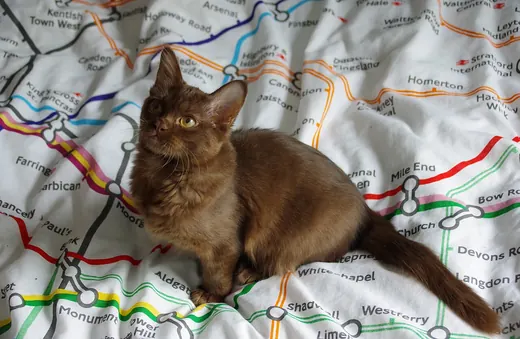 Chocolate
Colour · Brown cat, Havana
Chocolate
Colour · Brown cat, Havana
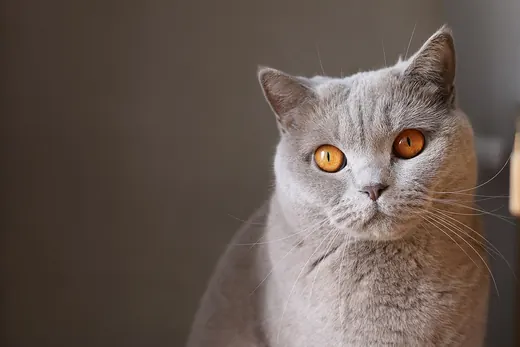 Lilac
Colour · Lavender, Lilac
Lilac
Colour · Lavender, Lilac
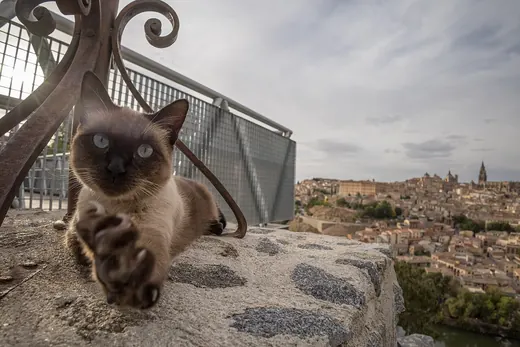 Colourpoint
Pattern · Pointed, Siamese
Colourpoint
Pattern · Pointed, Siamese
All cat coat colours and patterns →
Temperament
Care
The short coat looks after itself: a weekly once-over with a rubber grooming mitt is enough. What it does demand is attention. It copes very badly with long hours alone, and a bored Siamese yowls, knocks things over and invents its own games. Tall scratching posts, wand toys, puzzle feeders and, if you are all out during the day, a second active cat all help. It can learn to walk on a harness and respond to a clicker. Check its mouth every year, as gingivitis is common.
Health
Progressive retinal atrophy (rdAc, CEP290 gene, DNA test available), hepatic amyloidosis, feline asthma, megaoesophagus and a higher risk of mammary tumours in unspayed females. Squint and nystagmus are linked to the colourpoint gene, which affects the visual pathways, although selective breeding has reduced them a great deal. Ask the breeder for the parents' PRA test results.
Health problems to watch for
These are described more often in this breed. It does not mean a Siamese will have them, nor that a moggy is free of them: they are worth knowing about and discussing with your vet.
Fun facts
Siamese kittens are born almost white: the points darken over the first few weeks because the pigment depends on skin temperature.
If a patch is shaved and the fur grows back in cold weather, it can come in darker than the rest.
It is described in the Tamra Maew, a Thai book of cat poems that different authors date to somewhere between the 14th and 18th centuries.
In 1878 the US consul in Bangkok gave a Siamese female called Siam to Lucy Hayes, wife of the American president.
Frequently asked questions
How big does a Siamese get?
An adult Siamese usually weighs 2.5–5 kg (6–11 lb) and stands about 20–25 cm (8–10 in) at the shoulder, which makes it a medium cat.
How long does a Siamese live?
Its usual life expectancy is 12–15 years. Living indoors, being neutered and having regular vet check-ups make the biggest difference.
Is the Siamese hypoallergenic?
No. It produces the usual cat allergens. If someone at home is allergic, spend time with the breed before deciding and talk to an allergist.
Is the Siamese good with children?
Usually yes: it tends to be patient and sociable with children. As with any cat, teach children to let it walk away when it has had enough.
How much play does a Siamese need?
As a guide, 40 min of play a day. Its activity score is 5 out of 5: short daily play sessions with a wand toy work better than one long one.
Similar breeds
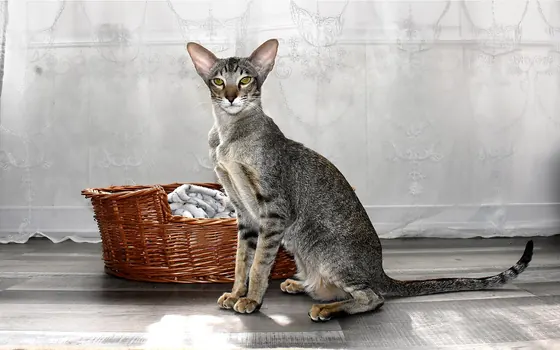
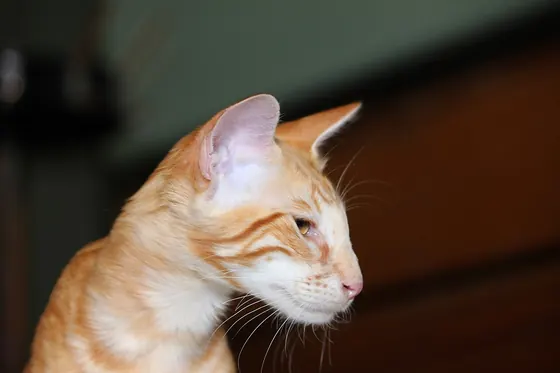
All breeds A to Z Cost calculator (Spanish) Food portions (Spanish)