
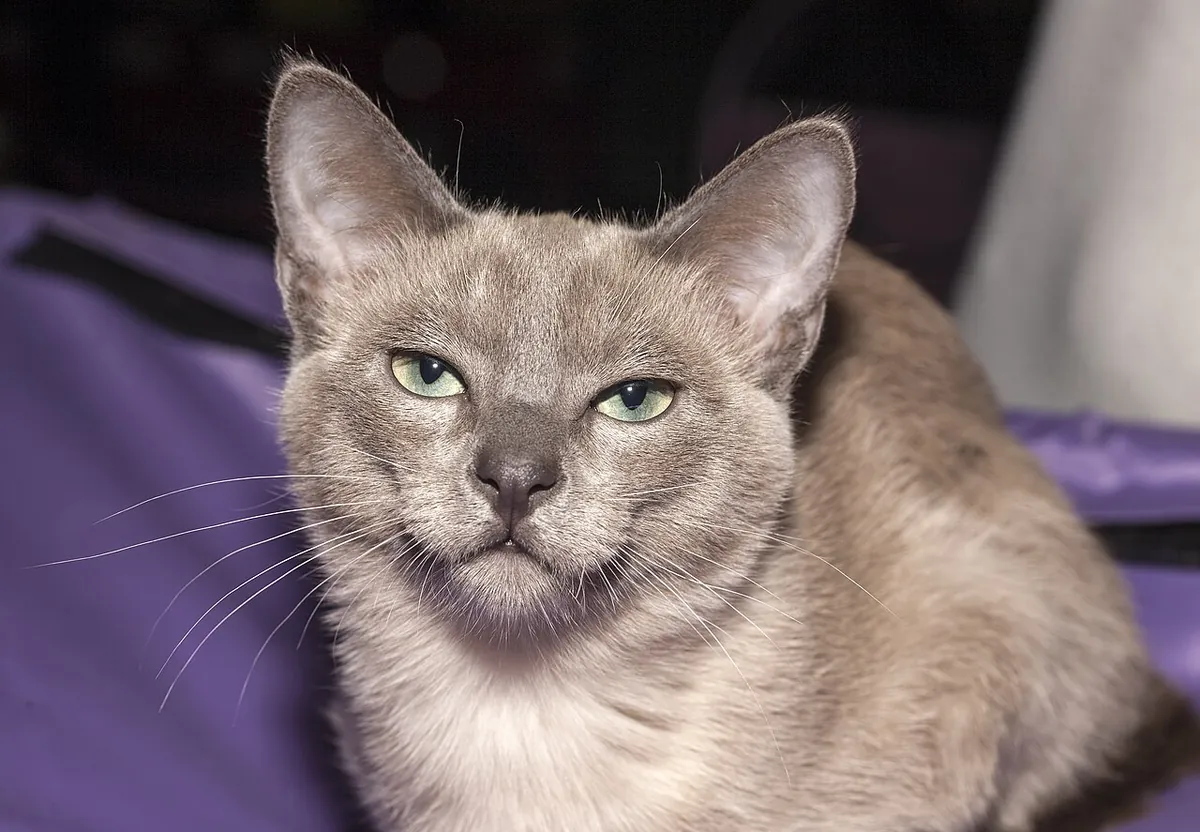
Tonkinese
Also known as: Tonkinese cat · Tonk · Tonkanese · Golden Siamese
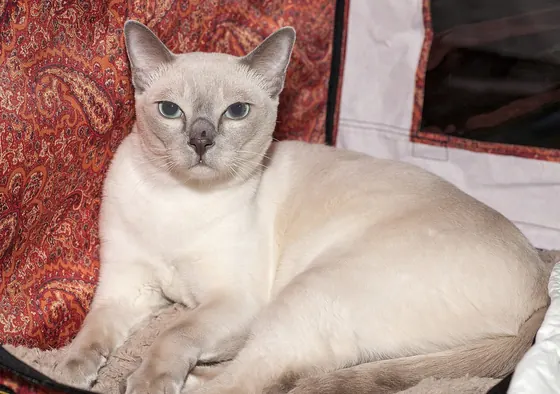
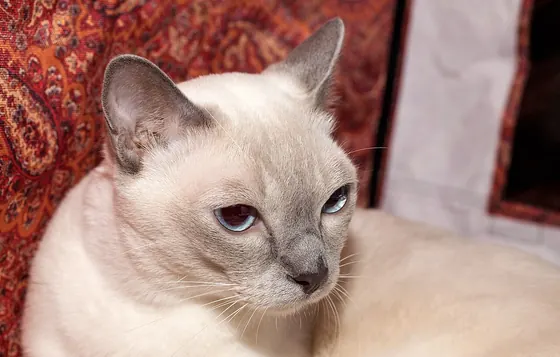
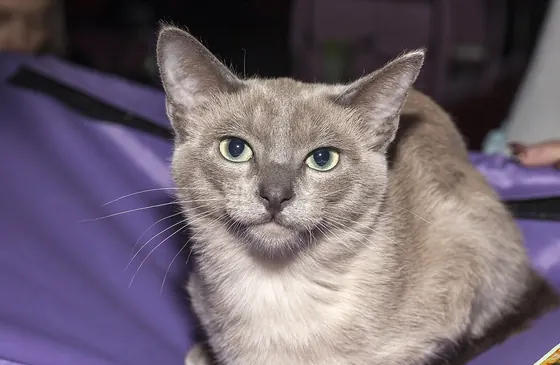
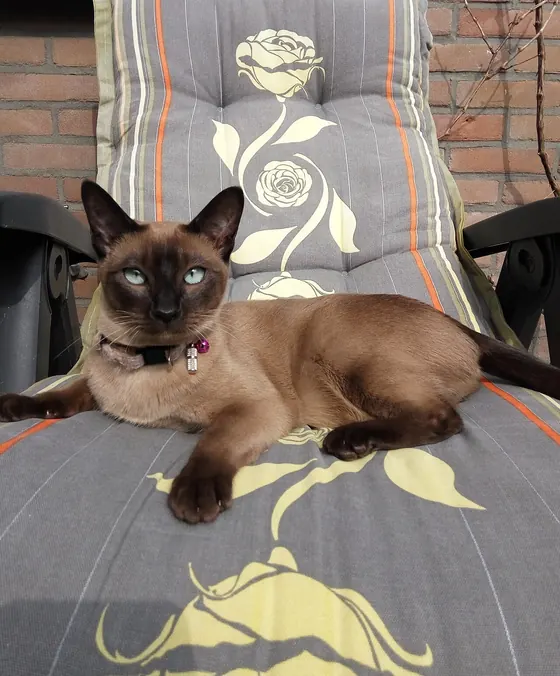
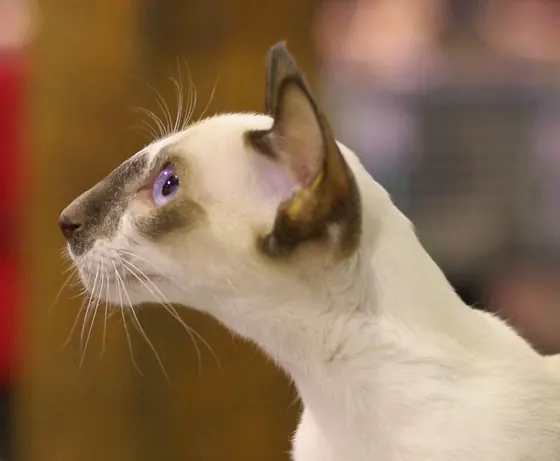
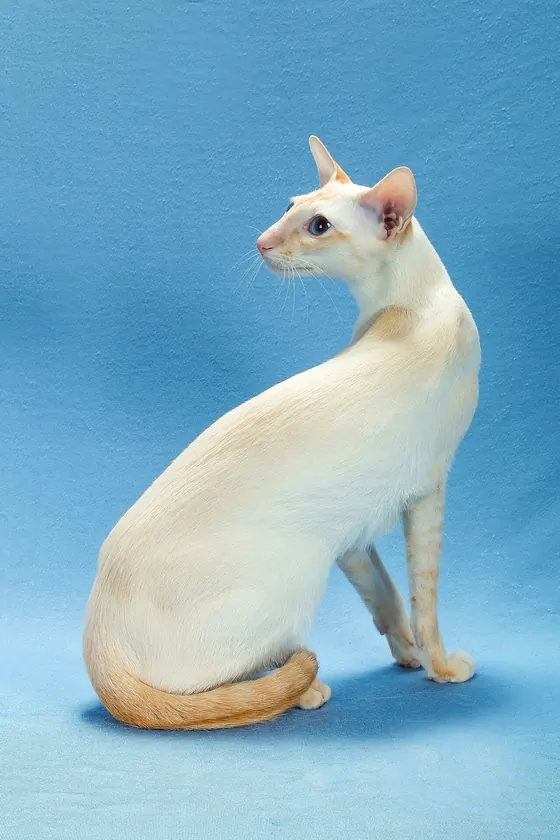
Photos: Nickolas Titkov from Moscow, Russian Federation (CC BY-SA 2.0) · Van Zuylenhove (CC BY-SA 4.0), via Wikimedia Commons.
Breed profile
* An estimate for Spain in 2026 (food, litter, vet and insurance), based on the size, grooming and health needs of the breed, not on measured costs of individual cats.
What it is like
It is the Siamese and Burmese mix turned into a breed. In the 1960s, breeders in Canada and the United States began crossing the two systematically in search of a cat halfway between them, and the CFA eventually recognised it in 1984. It has a muscular but not heavy body, a slightly rounded head and a pattern all its own, mink, with soft points on a slightly lighter body and distinctive aquamarine eyes. It is outgoing and playful, very people-focused, greets visitors at the door and gets on with almost everyone, dogs included. It talks, but less than a Siamese.
Coat colours and patterns
Colours and patterns that are common or accepted in this breed. Each page explains where the colour comes from, the myths around it and other breeds that have it.
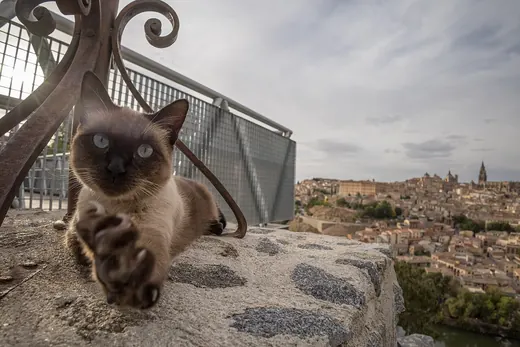
All cat coat colours and patterns →
Temperament
Care
Minimal coat care: a rubber mitt once a week. What it asks for is play and company; it is the kind of cat that learns to fetch a ball and open doors. It needs scratching posts, shelves to climb and toys that are rotated so it does not get bored. It does not do well alone: if you are out for many hours, a feline companion helps a lot. Because it trusts strangers, it is best kept indoors or on a netted balcony.
Health
It is usually a sturdy, long-lived cat. It can inherit the gingivitis and dental problems of its Oriental relatives, and progressive retinal atrophy rdAc (DNA test available) appears in some lines. Hypokalaemia, also testable, has been described through its Burmese side. Ask for the parents' test results and book annual dental checks.
Fun facts
The aquamarine eyes of the mink pattern are unique to this breed.
Two mink Tonkinese can produce point, mink and solid kittens, because mink combines one Siamese gene and one Burmese gene.
Wong Mau, the founding female of the Burmese, was probably a Tonkinese.
Its name evokes the Tonkin region of Vietnam, although the breed has nothing to do with it.
Frequently asked questions
How big does a Tonkinese get?
An adult Tonkinese usually weighs 3–5.5 kg (7–12 lb) and stands about 23–28 cm (9–11 in) at the shoulder, which makes it a medium cat.
How long does a Tonkinese live?
Its usual life expectancy is 12–16 years. Living indoors, being neutered and having regular vet check-ups make the biggest difference.
Is the Tonkinese hypoallergenic?
No. It produces the usual cat allergens. If someone at home is allergic, spend time with the breed before deciding and talk to an allergist.
Is the Tonkinese good with children?
Usually yes: it tends to be patient and sociable with children. As with any cat, teach children to let it walk away when it has had enough.
How much play does a Tonkinese need?
As a guide, 40 min of play a day. Its activity score is 5 out of 5: short daily play sessions with a wand toy work better than one long one.
Similar breeds
All breeds A to Z Cost calculator (Spanish) Food portions (Spanish)