
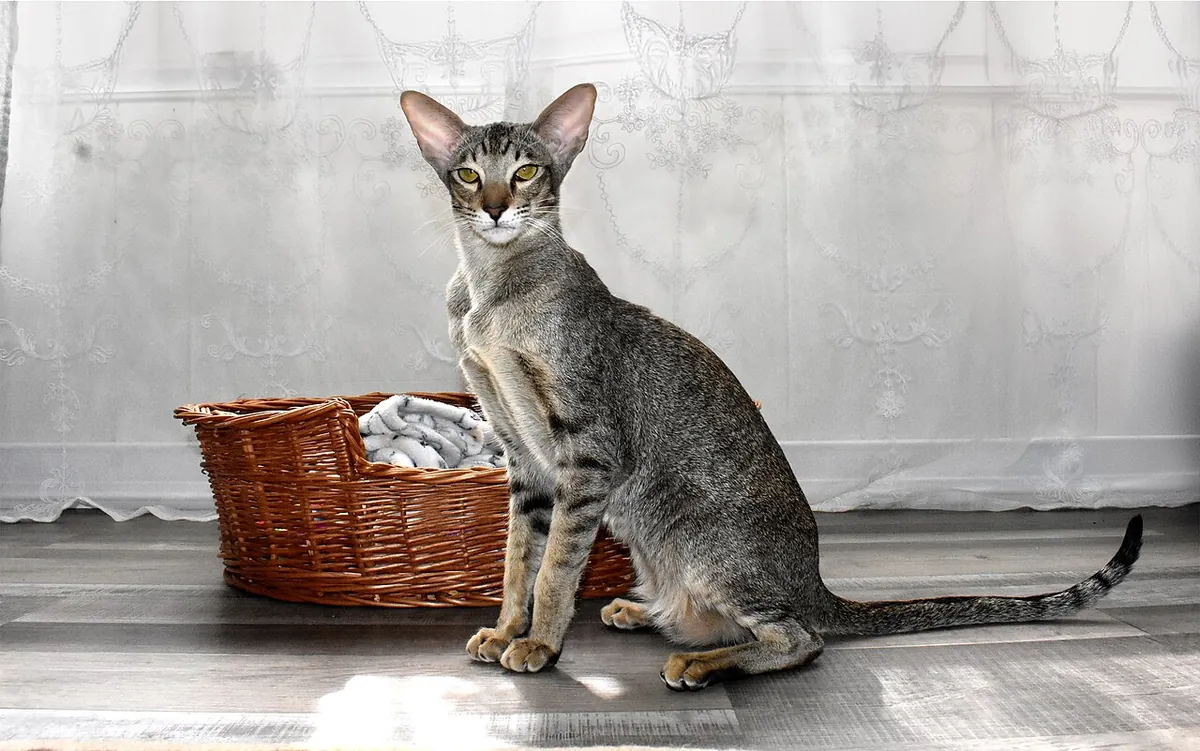
Oriental Shorthair
Also known as: Oriental · Oriental cat · Foreign Shorthair · Foreign · Solid-coloured Siamese
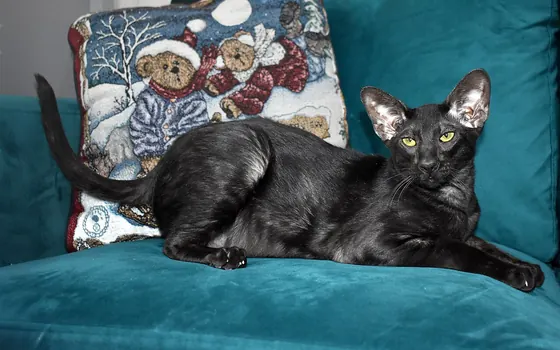
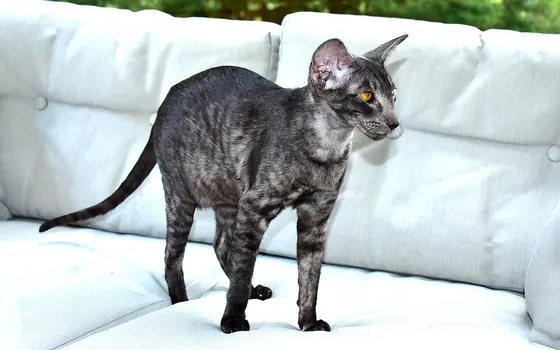
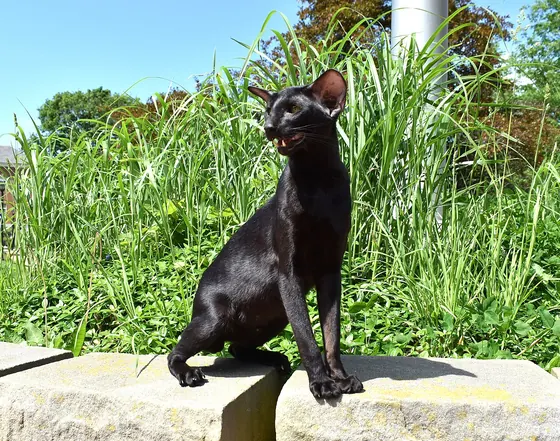
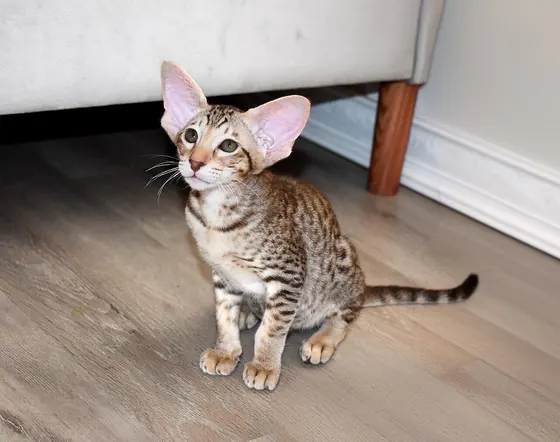
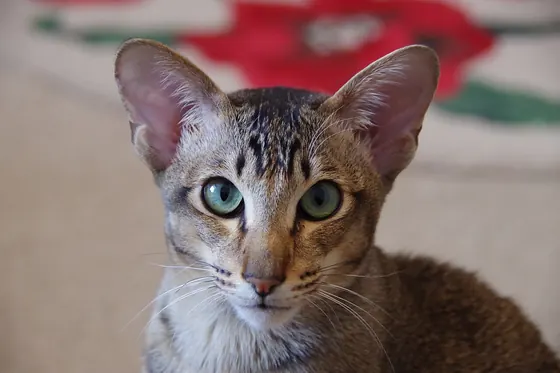
Photos: Felinlove (CC BY-SA 4.0) · Lil Shepherd from United Kingdom (CC BY 2.0), via Wikimedia Commons.
Breed profile
* An estimate for Spain in 2026 (food, litter, vet and insurance), based on the size, grooming and health needs of the breed, not on measured costs of individual cats.
Varieties
The same cat in two coat lengths
What it is like
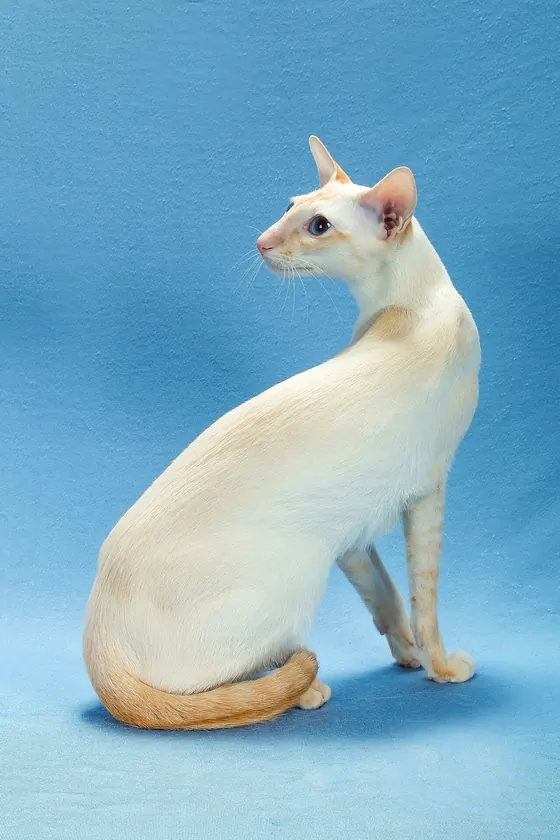
It is, quite literally, a Siamese without the points. From the 1950s, British breeders crossed Siamese with other shorthaired cats to get the same slender body in even, all-over colours, and that produced the Havana, the Foreign White and the rest of the Orientals; the CFA recognised it in 1972. It has a wedge-shaped head, bat-like ears and green eyes, blue in the whites. Its personality is the Siamese with the volume turned up: glued to its person, very vocal and involved in everything you do. It is often called hypoallergenic because it sheds little, but it produces the Fel d 1 allergen like any other cat.
Coat colours and patterns
Colours and patterns that are common or accepted in this breed. Each page explains where the colour comes from, the myths around it and other breeds that have it.
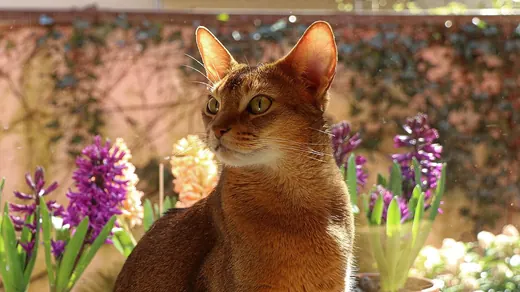 Ticked or agouti
Pattern · Ticked tabby, Abyssinian tabby
Ticked or agouti
Pattern · Ticked tabby, Abyssinian tabby
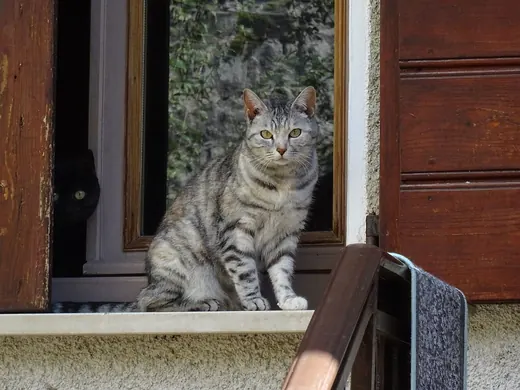 Silver tabby
Colour and pattern · Silver tabby, Silver cat
Silver tabby
Colour and pattern · Silver tabby, Silver cat
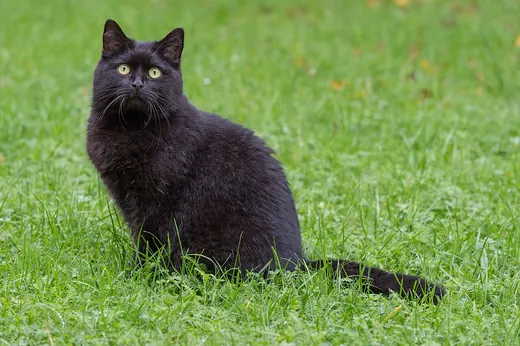 Black
Colour · Solid black cat, Black
Black
Colour · Solid black cat, Black
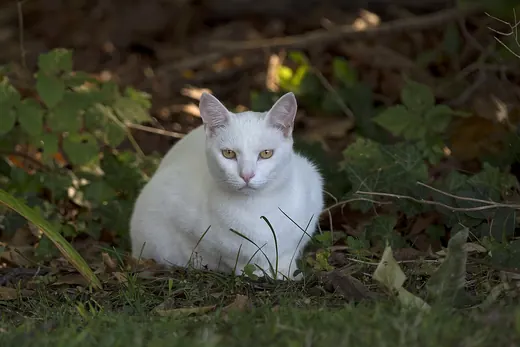 White
Colour · Solid white cat, White
White
Colour · Solid white cat, White
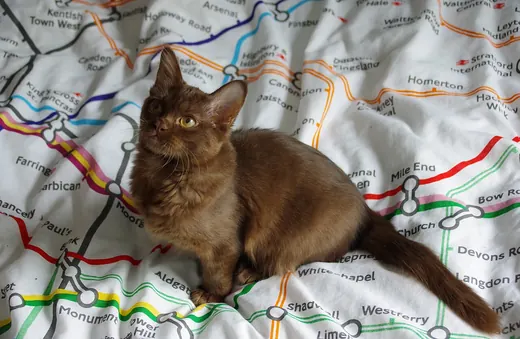 Chocolate
Colour · Brown cat, Havana
Chocolate
Colour · Brown cat, Havana
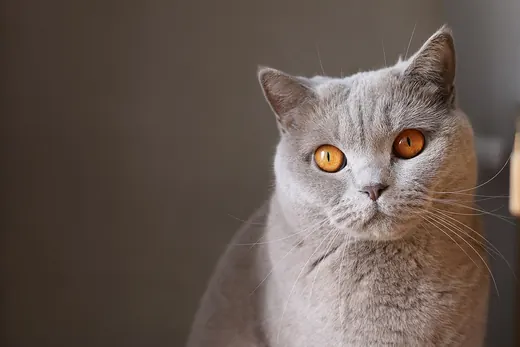 Lilac
Colour · Lavender, Lilac
Lilac
Colour · Lavender, Lilac
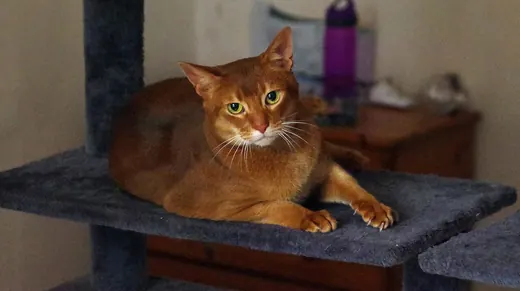 Cinnamon and fawn
Colour · Cinnamon, Sorrel
Cinnamon and fawn
Colour · Cinnamon, Sorrel
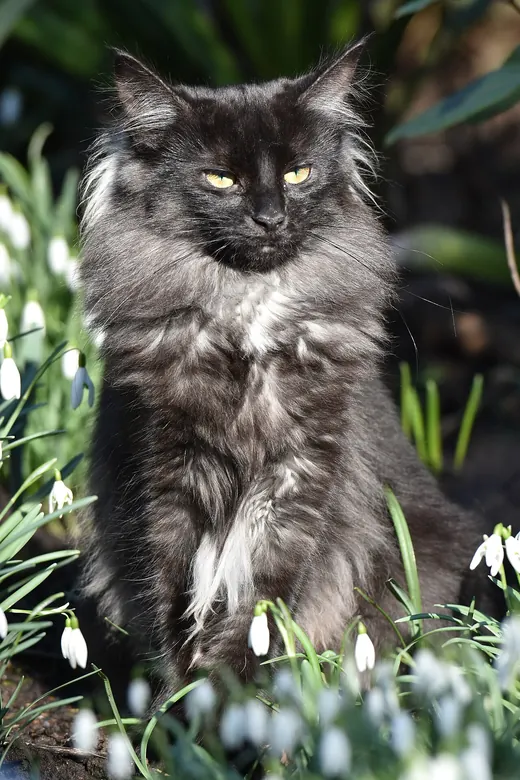 Smoke
Colour · Smoke, Black smoke
Smoke
Colour · Smoke, Black smoke
All cat coat colours and patterns →
Temperament
Care
The coat could not be easier: a rubber mitt once a week. The demands lie in company. It needs daily interaction, hunting games with a wand toy and mental challenges such as puzzle feeders or learning tricks. It copes poorly with long stretches alone; if you work away from home all day, two cats are better. Being slim with little body fat, it seeks out warmth: blankets, heated beds or your lap. Brush its teeth and have its mouth checked every year.
Health
It shares with the Siamese progressive retinal atrophy (rdAc, DNA test available), hepatic amyloidosis, asthma and a tendency to gingivitis and dental problems. Cases of megaoesophagus have also been described. A complete diet, annual check-ups and the parents' PRA test are the basics. If you have allergies, spend time with the breed first: reactions vary from person to person.
Health problems to watch for
These are described more often in this breed. It does not mean a Oriental Shorthair will have them, nor that a moggy is free of them: they are worth knowing about and discussing with your vet.
Fun facts
Genetically it is a Siamese without two copies of the colourpoint gene, which is why two Orientals can have pointed kittens.
The whites have blue eyes; all the others have green.
In the UK the first ones were called Foreign, a name still used for some colours.
Registries recognise more than 300 colour and pattern combinations, one of the widest ranges in the cat world.
Frequently asked questions
How big does a Oriental Shorthair get?
An adult Oriental Shorthair usually weighs 2.5–5 kg (6–11 lb) and stands about 20–25 cm (8–10 in) at the shoulder, which makes it a medium cat.
How long does a Oriental Shorthair live?
Its usual life expectancy is 12–15 years. Living indoors, being neutered and having regular vet check-ups make the biggest difference.
Is the Oriental Shorthair hypoallergenic?
It is often described as hypoallergenic, but no cat is free of the main cat allergen (Fel d 1). Some people with mild allergies react less to it; spend time with the breed before deciding.
Is the Oriental Shorthair good with children?
Usually yes: it tends to be patient and sociable with children. As with any cat, teach children to let it walk away when it has had enough.
How much play does a Oriental Shorthair need?
As a guide, 45 min of play a day. Its activity score is 5 out of 5: short daily play sessions with a wand toy work better than one long one.
Similar breeds
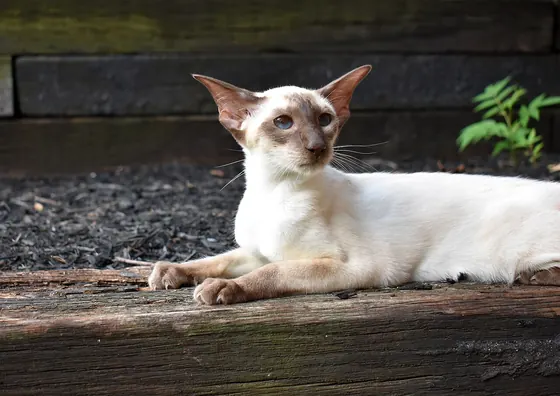
All breeds A to Z Cost calculator (Spanish) Food portions (Spanish)