
Silver tabby cat
Also called: Silver tabby, Silver cat, Grey tabby.
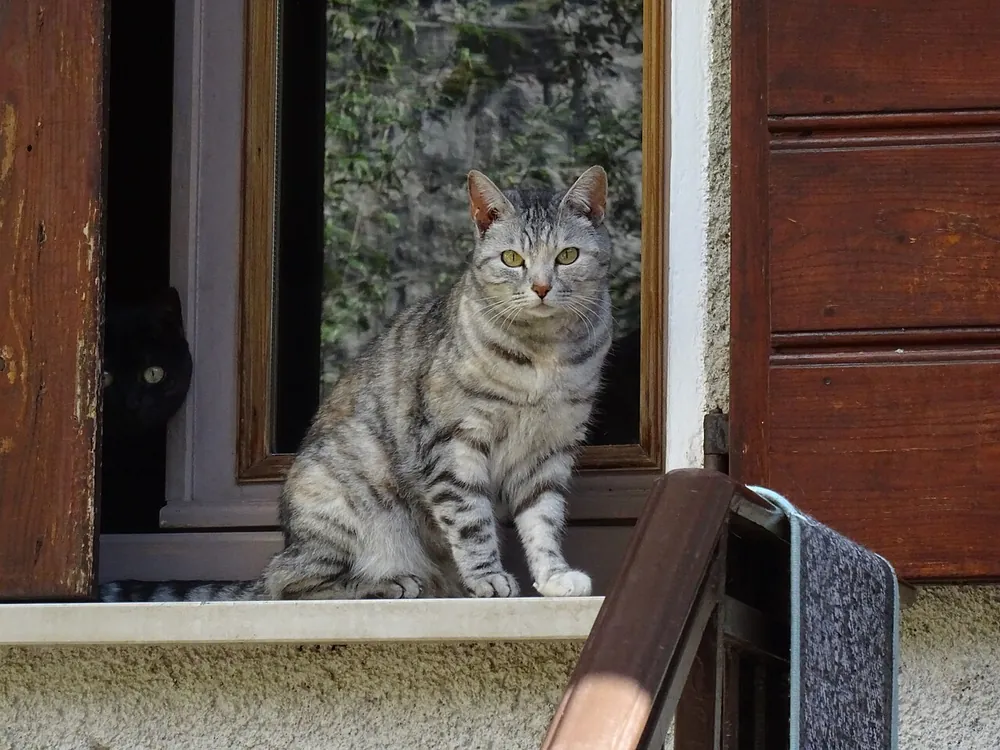
Black stripes or swirls on a silvery white background, with a contrast few coats can match. It is not a grey cat: it is a tabby that a gene has stripped of the warm colour in its background.
What it looks like
The background, which in an ordinary tabby is brownish or golden, is white or very pale, shiny grey here. Over it runs the pattern (mackerel, classic, spotted or ticked) in black, or in blue in the dilute version. The eyes are usually green or hazel, with the rims of the eyes and nose clearly outlined.
The genetics, made simple
It is caused by the inhibitor gene, which is dominant: it stops pigment reaching the base of the hair and, above all, removes the warm tones (yellows and reds). One copy is enough, so a silver cat must have at least one silver parent. The specific gene behind it has not yet been confirmed. If the cat is also “non-agouti”, the same gene gives smoke; and with other genes that widen the pale band, the result is shaded or chinchilla.
Myths and what science says
“Silver and grey are the same”
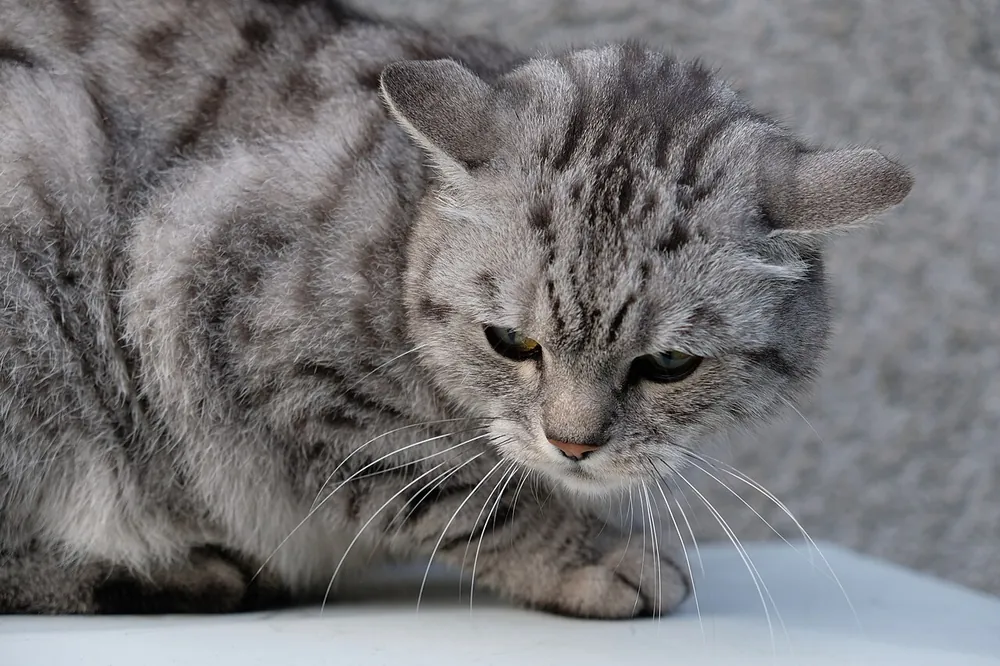
No. A grey (blue) cat is a dilute black, of an even shade. A silver has a white hair base and a strongly contrasting black pattern. There is also blue silver, which combines the two.
Fun facts
- The silver classic American Shorthair is the best-known image of this coat.
- The silver spotted Egyptian Mau is one of the few naturally spotted cats.
- In orange cats, the inhibitor gives “cameo”, a very pale pinkish cream.
Does it affect its health?
The colour is not linked to any disease.
Breeds where it appears or is typical
This coat turns up in plenty of moggies. These are breeds where it is common, characteristic or accepted; under each one, the colours the breed comes in.
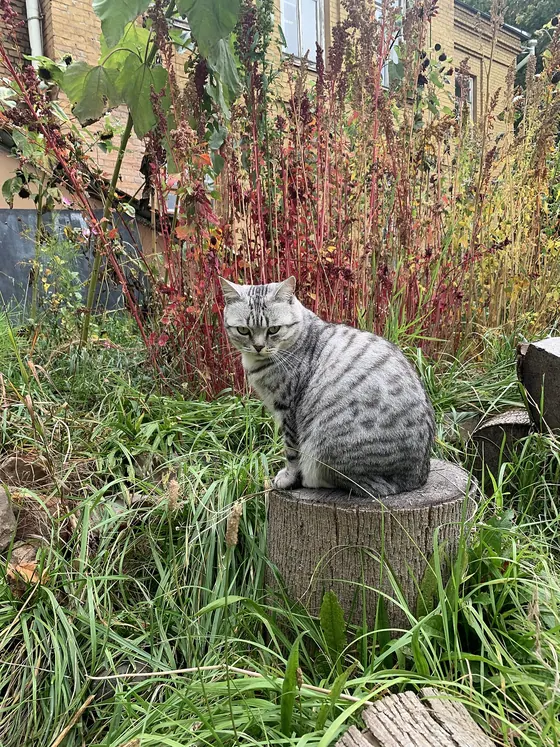 American Shorthair
Shorthair · United States
Dozens of colours; the most famous is the classic silver tabby
American Shorthair
Shorthair · United States
Dozens of colours; the most famous is the classic silver tabby
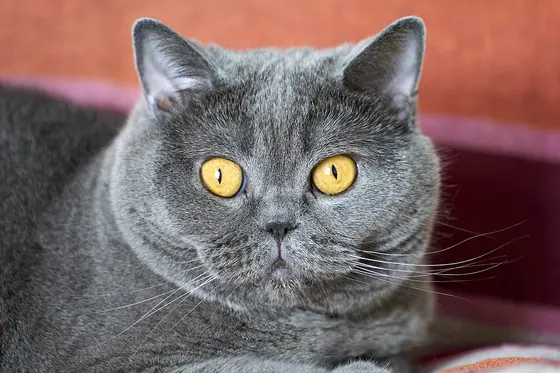 British Shorthair
Shorthair · United Kingdom
Blue (the classic), black, white, cream, lilac, chocolate, silver, golden, bicolours, colourpoint…
British Shorthair
Shorthair · United Kingdom
Blue (the classic), black, white, cream, lilac, chocolate, silver, golden, bicolours, colourpoint…
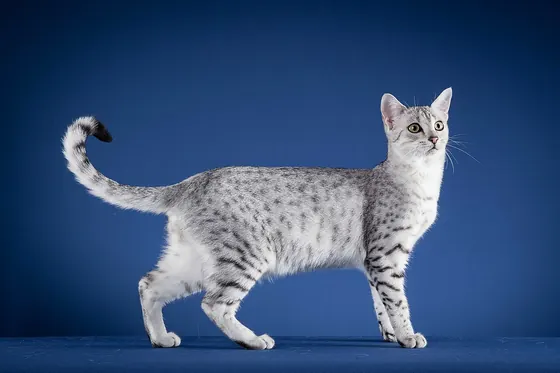 Egyptian Mau
Wild-looking · Egypt / Italy
Silver, bronze and smoke, always spotted; gooseberry green eyes
Egyptian Mau
Wild-looking · Egypt / Italy
Silver, bronze and smoke, always spotted; gooseberry green eyes
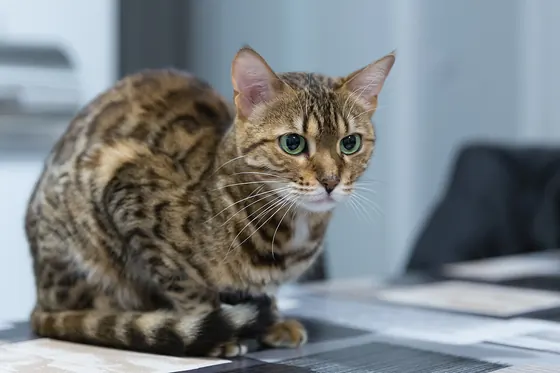 Bengal
Wild-looking · United States
Brown, snow (seal lynx, mink, sepia), silver, charcoal and blue; spotted with rosettes or marbled
Bengal
Wild-looking · United States
Brown, snow (seal lynx, mink, sepia), silver, charcoal and blue; spotted with rosettes or marbled
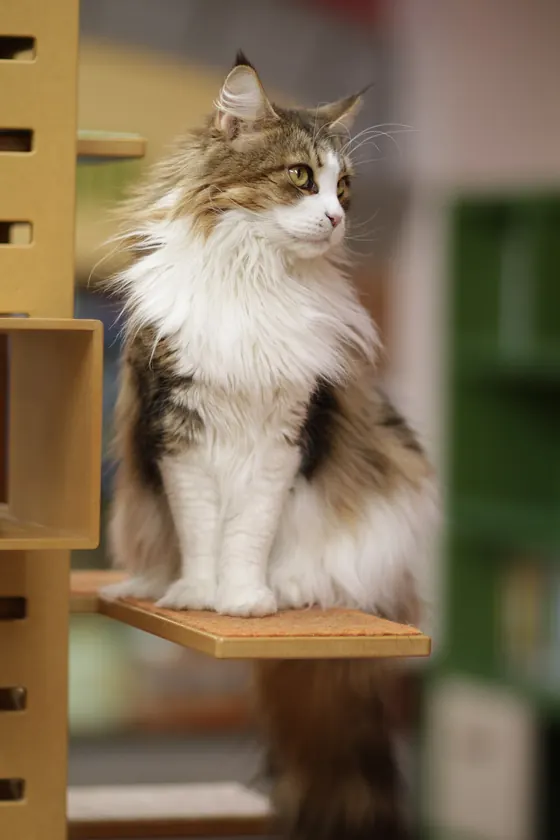 Maine Coon
Forest · United States
Almost all; the classic is brown tabby. No colourpoint in most registries
Maine Coon
Forest · United States
Almost all; the classic is brown tabby. No colourpoint in most registries
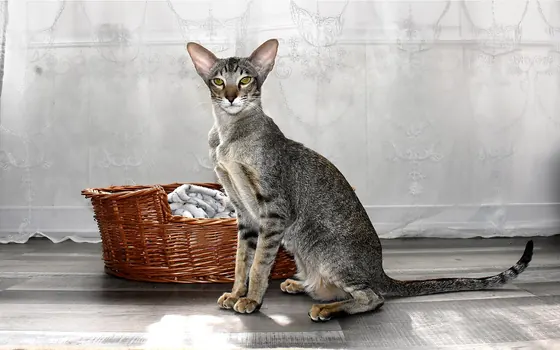 Oriental Shorthair
Oriental · United Kingdom
Over 300 combinations: solids, tabby, smoke, silver, bicolours…
Oriental Shorthair
Oriental · United Kingdom
Over 300 combinations: solids, tabby, smoke, silver, bicolours…
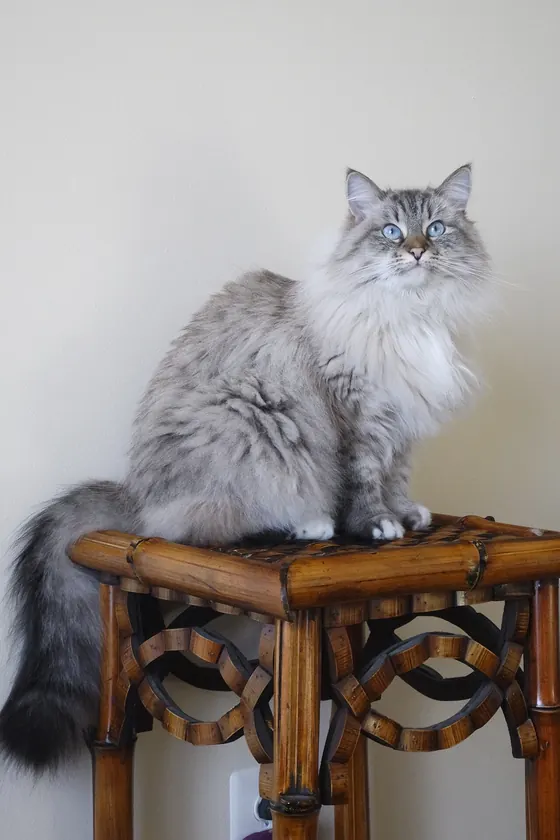 Siberian
Forest · Russia
All; the Neva Masquerade is its colourpoint variety
Siberian
Forest · Russia
All; the Neva Masquerade is its colourpoint variety
Frequently asked questions
What is a silver cat?
A cat with the inhibitor gene, which leaves the base of the hair white. In tabbies it gives a silvery white background with a black pattern.
Can a silver cat be born to two non-silver parents?
No. The inhibitor is dominant: at least one parent has to be silver (silver tabby, smoke, shaded or chinchilla).
What is the difference between silver, smoke and chinchilla?
All three carry the inhibitor gene. The silver tabby has a pattern; the smoke is a solid with a white hair base; the chinchilla has colour only on the tips of the hairs.
Educational content from Michipedia. The genetics of coat colour are simplified so they are easy to follow; colour tells you nothing about the personality of a particular cat.