
Grey (blue) cat
Also called: Blue cat, Grey cat, Solid grey cat, Blue, Bluish grey cat.
What most people call a grey cat, breeders call blue. It is a dilute black: the same pigment, clumped differently inside the hair, which looks grey with a bluish sheen. Some of the most elegant breeds share it.
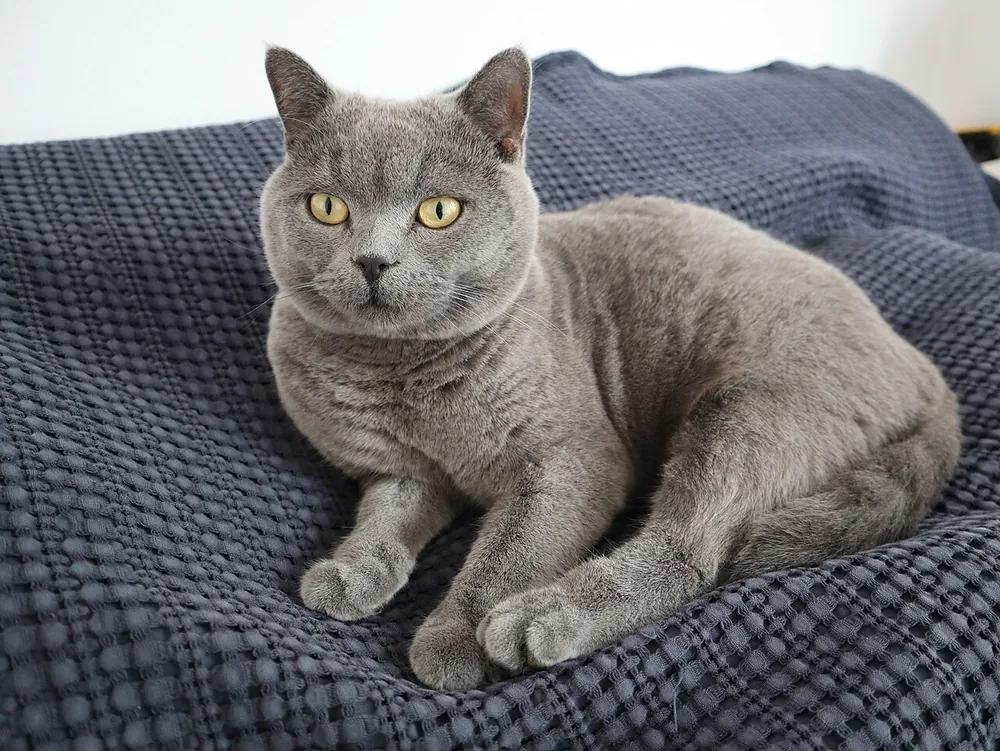
What it looks like
Even grey, from pale to slate, with a bluish grey nose and paw pads. Kittens often show ghost stripes that fade with age. It varies a lot by breed: silver tips in the Russian Blue, woolly grey in the Chartreux, a silver sheen in the Korat and the Nebelung, plush grey in the British Shorthair.
The genetics, made simple
It takes a black (non-agouti) cat with two copies of the recessive version of the dilution gene. That gene makes the pigment clump inside the hair instead of spreading out, and the light reflects it as bluish grey. Because it is recessive, two black parents can have a blue kitten if both carry it hidden. If the cat is a tabby and dilute, the result is a blue tabby, with grey stripes on a beige background.
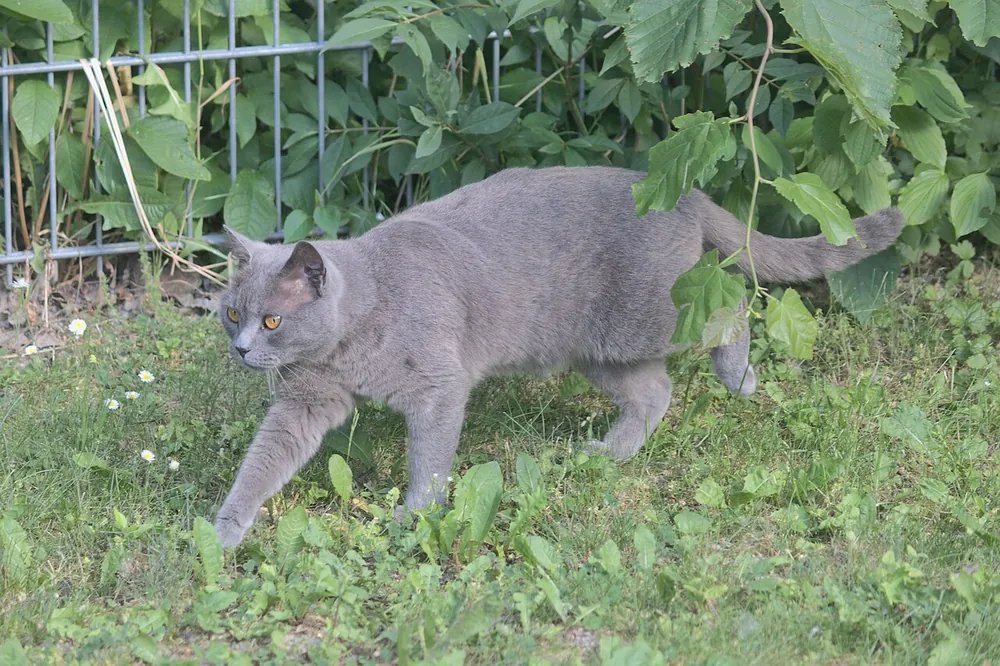
Myths and what science says
“Grey and blue are different colours”
They are the same. “Blue” is the name cat registries use for plain grey.
The monks of the Chartreux
It is often said that the Chartreux was bred by the Carthusian monks of the Grande Chartreuse. It is a lovely legend, but no documents back it up.
Fun facts
- In Thailand the Korat was considered a lucky cat and given as a wedding gift.
- The Russian Blue, the Chartreux and the Korat look very alike, but they can be told apart by their eyes (green, copper and green respectively) and by very different bodies and coats.
- Blue is the most classic colour of the British Shorthair and the one in most of its photos.
Does it affect its health?
The colour does not cause any disease. Each blue breed has its own health profile: see its breed page.
Breeds where it appears or is typical
This coat turns up in plenty of moggies. These are breeds where it is common, characteristic or accepted; under each one, the colours the breed comes in.
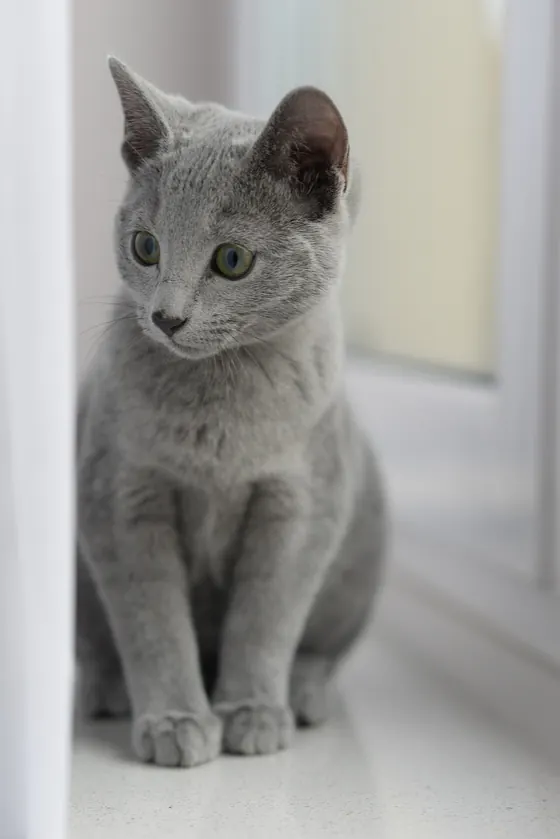 Russian Blue
Shorthair · Russia
Blue with silver tips only; green eyes
Russian Blue
Shorthair · Russia
Blue with silver tips only; green eyes
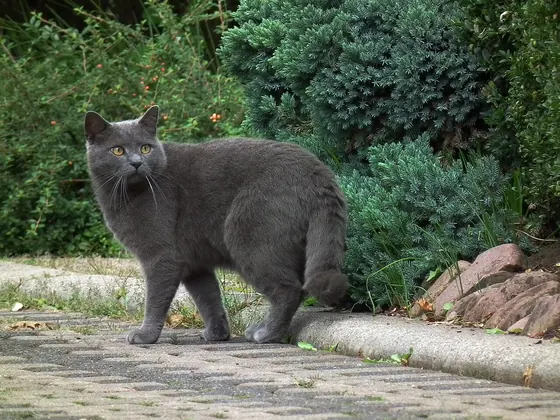 Chartreux
Shorthair · France
Blue only, from light grey to slate grey; copper or orange eyes
Chartreux
Shorthair · France
Blue only, from light grey to slate grey; copper or orange eyes
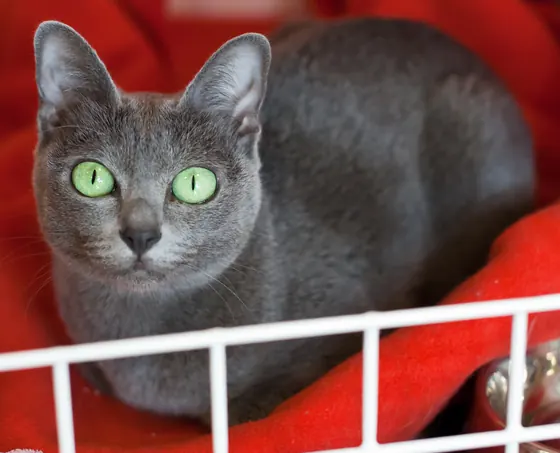 Korat
Oriental · Thailand
Silver-blue only; green eyes
Korat
Oriental · Thailand
Silver-blue only; green eyes
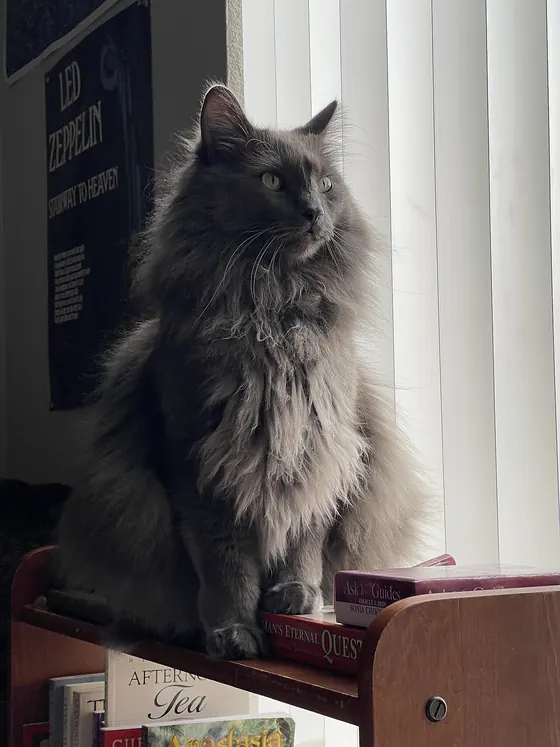 Nebelung
Semi-longhair · United States
Blue with a silver sheen only; green eyes
Nebelung
Semi-longhair · United States
Blue with a silver sheen only; green eyes
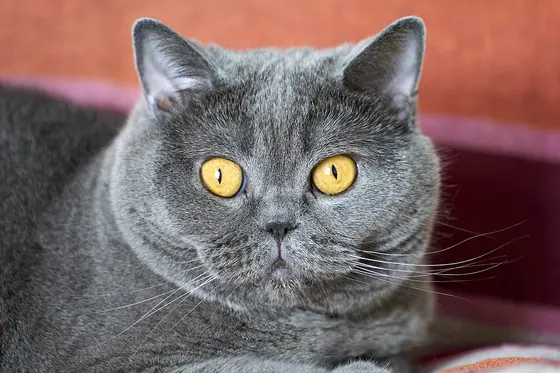 British Shorthair
Shorthair · United Kingdom
Blue (the classic), black, white, cream, lilac, chocolate, silver, golden, bicolours, colourpoint…
British Shorthair
Shorthair · United Kingdom
Blue (the classic), black, white, cream, lilac, chocolate, silver, golden, bicolours, colourpoint…
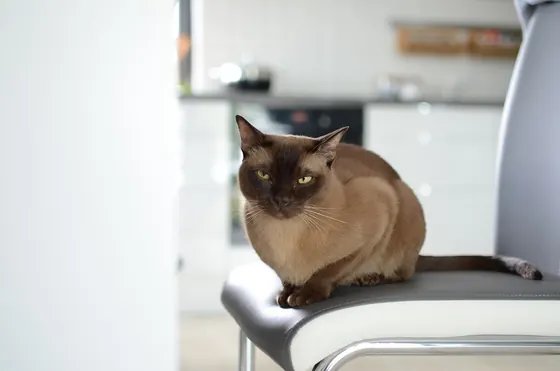 Burmese
Oriental · Myanmar (Burma) / United States
Sable (brown), chocolate, blue and lilac; in Europe also red, cream and tortie
Burmese
Oriental · Myanmar (Burma) / United States
Sable (brown), chocolate, blue and lilac; in Europe also red, cream and tortie
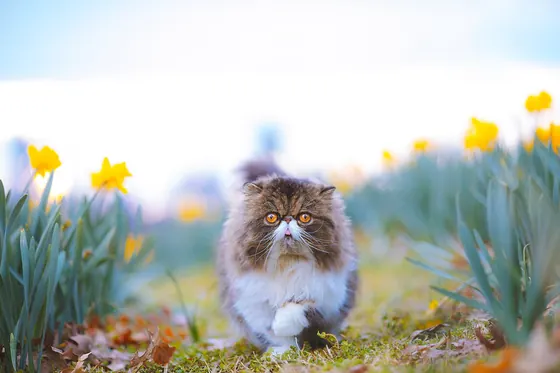 Persian
 · Iran / United Kingdom
Almost all: white, black, blue, cream, chinchilla, golden, bicolour, tortoiseshell…
Persian
Persian · Iran / United Kingdom
Almost all: white, black, blue, cream, chinchilla, golden, bicolour, tortoiseshell…
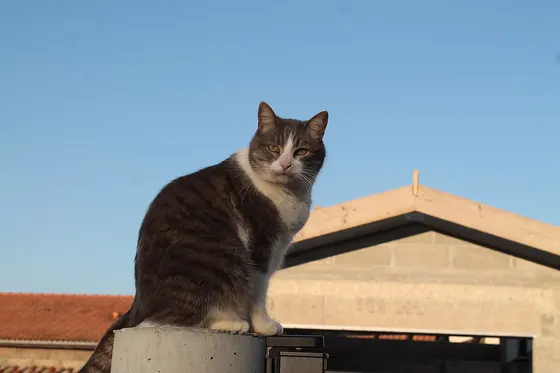 European Shorthair
Shorthair · Europe
Almost all: tabby, black, white, bicolour, tortoiseshell, red…; no colourpoint, chocolate or lilac in pedigree cats
European Shorthair
Shorthair · Europe
Almost all: tabby, black, white, bicolour, tortoiseshell, red…; no colourpoint, chocolate or lilac in pedigree cats
Frequently asked questions
Why is a grey cat called blue?
It is the technical name for plain grey in cat registries, because of the bluish sheen of dilute black pigment.
Is my grey cat a Russian Blue?
Most likely it is a blue domestic cat. The Russian Blue is a specific breed, with a pedigree, green eyes, a very dense double coat and silver tips.
Can two black cats have a grey kitten?
Yes, if both carry the recessive version of dilution hidden.
Educational content from Michipedia. The genetics of coat colour are simplified so they are easy to follow; colour tells you nothing about the personality of a particular cat.