
Chartreux
Also known as: Chartreux cat · Carthusian cat · French blue cat · Blue Chartreux
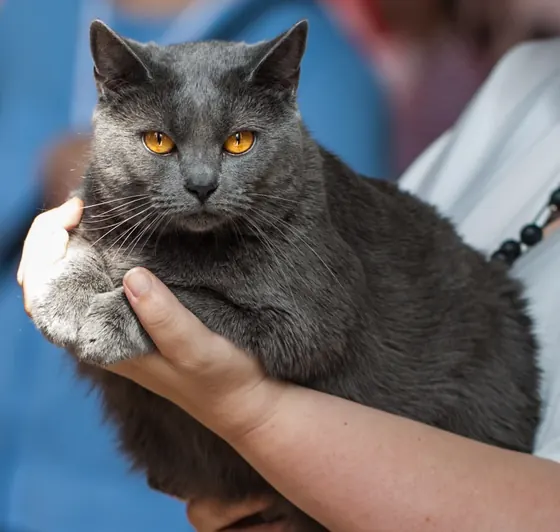
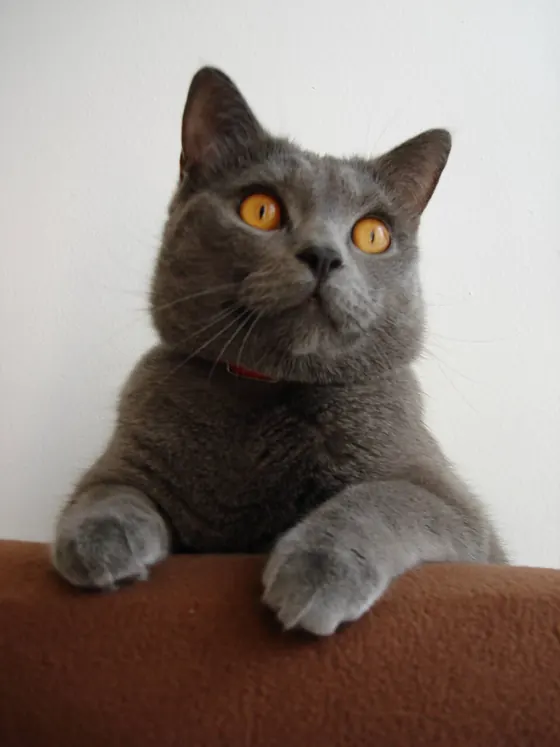
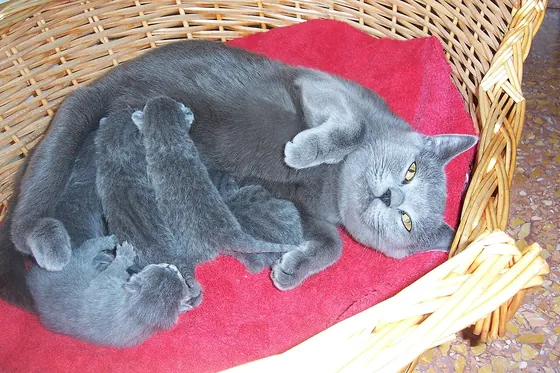
Photos: 4028mdk09 (CC BY-SA 3.0) · Heikki Siltala - Catza.net (CC BY 3.0) · Heikki Siltala (CC BY 3.0) · Evil woolf78 at German Wikipedia (Original text: Wolfgang Steinkläubl, w.steinklaeubl@inode.at) (Public domain) · Alexvirtualweb at Italian Wikipedia (Public domain), via Wikimedia Commons.
Breed profile
* An estimate for Spain in 2026 (food, litter, vet and insurance), based on the size, grooming and health needs of the breed, not on measured costs of individual cats.
What it is like
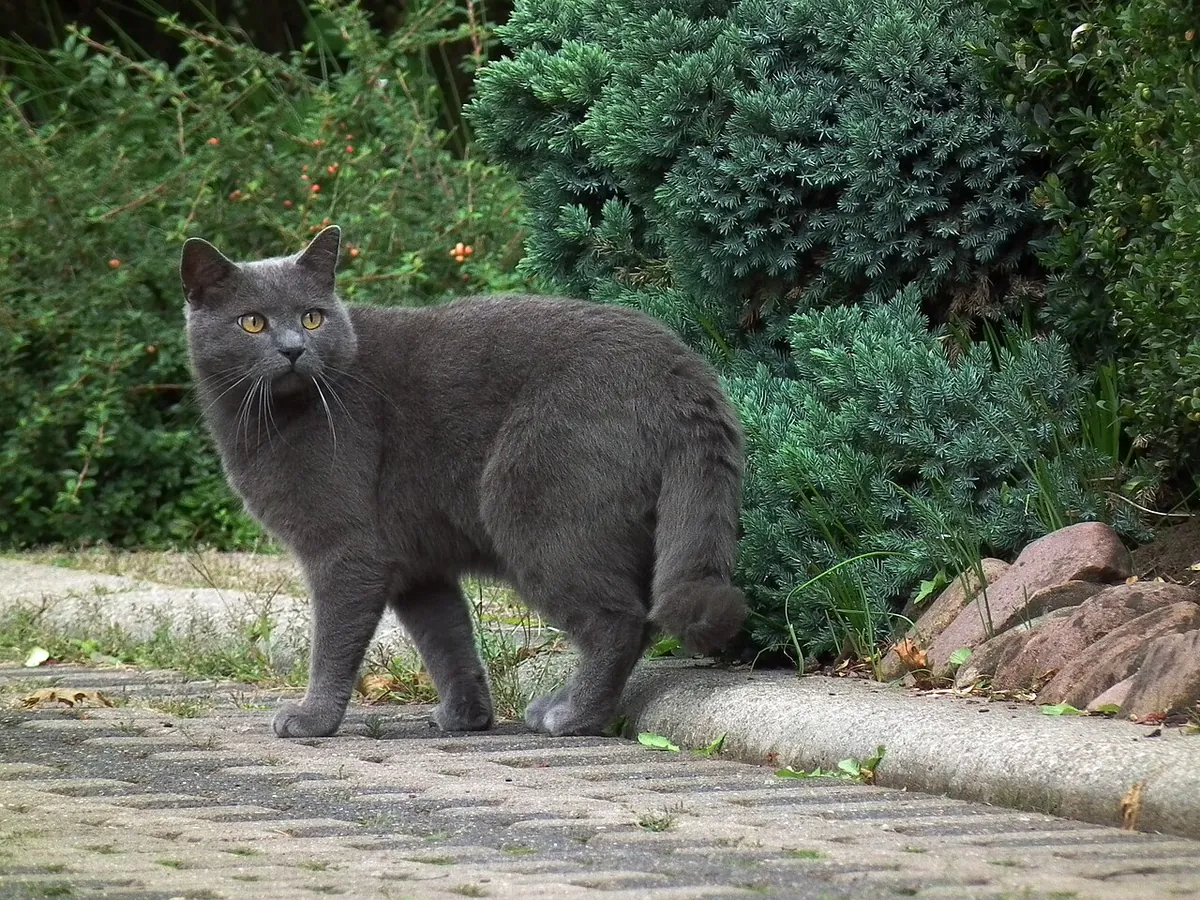
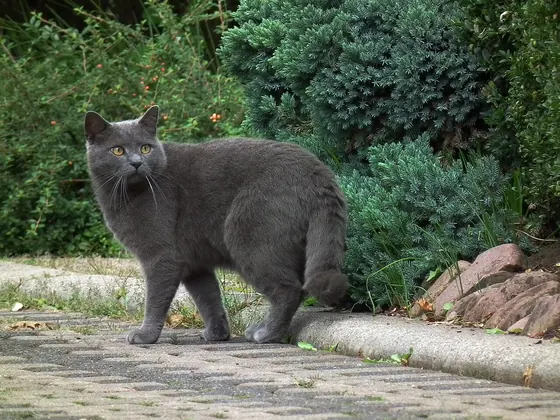
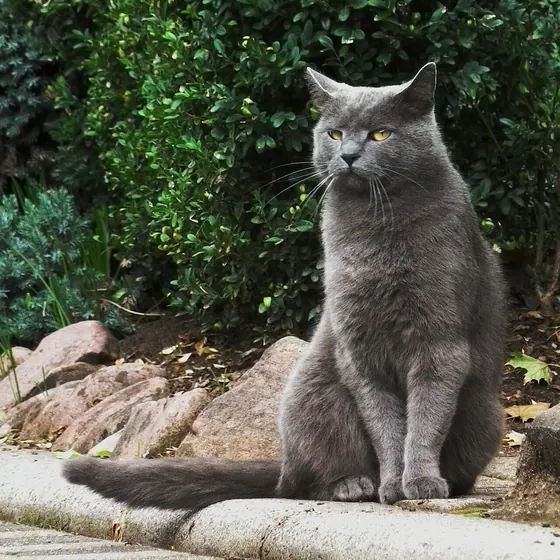
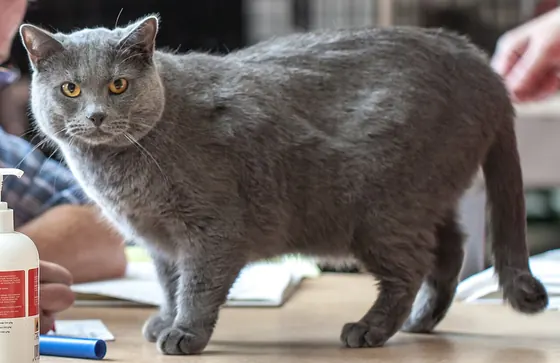
It is one of France's oldest cats. The naturalist Buffon was already describing it in the 18th century, and legend links it with the Carthusian monks, although there is no evidence that it lived with them. Modern breeding began in the 1920s, when the Léger sisters found a population of blue cats on Belle-Île, in Brittany. It is robust and muscular, with fine legs for its body, a broad head, copper or orange eyes and a woolly blue coat reminiscent of an otter's. Its muzzle gives it a smiling face. It is calm, observant and very loyal, and usually chooses one person in the household. It meows little and softly.
Coat colours and patterns
Colours and patterns that are common or accepted in this breed. Each page explains where the colour comes from, the myths around it and other breeds that have it.
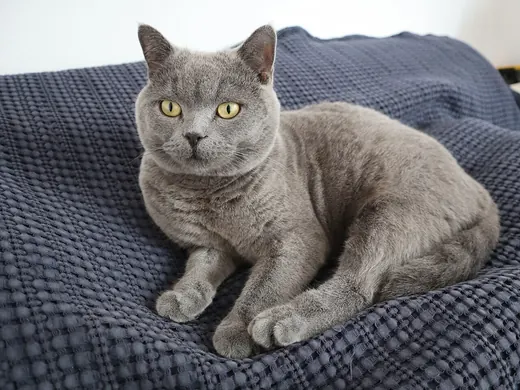
All cat coat colours and patterns →
Temperament
Care
Its dense, woolly coat needs weekly brushing and almost daily brushing during the moult, when it sheds a lot. It likes hunting games in short sessions. It is calm and adapts well to flat life and working hours, but does not like sudden changes. It matures slowly: it does not have its final build until three or four years of age. Weigh its portions, as it tends to put on weight.
Health
It is a robust breed. Patellar luxation has been described and should be ruled out in breeding cats. Otherwise, its risks are those of any cat: excess weight, tartar, urinary stones and kidney disease in old age. Annual check-ups and blood tests from the age of seven.
Fun facts
Saha, the cat in Colette's novel “The Cat” (1933), is a Chartreux.
Kittens may have grey or bluish eyes that turn copper with age.
After the Second World War it nearly disappeared and was partly rebuilt with crosses to British Blues and blue Persians.
It meows so little that many owners describe its voice more as a chirp than a meow.
Frequently asked questions
How big does a Chartreux get?
An adult Chartreux usually weighs 3–7.5 kg (7–17 lb) and stands about 28–33 cm (11–13 in) at the shoulder, which makes it a medium cat.
How long does a Chartreux live?
Its usual life expectancy is 12–15 years. Living indoors, being neutered and having regular vet check-ups make the biggest difference.
Is the Chartreux hypoallergenic?
No. It produces the usual cat allergens. If someone at home is allergic, spend time with the breed before deciding and talk to an allergist.
Is the Chartreux good with children?
Usually yes: it tends to be patient and sociable with children. As with any cat, teach children to let it walk away when it has had enough.
How much play does a Chartreux need?
As a guide, 15 min of play a day. Its activity score is 2 out of 5: short daily play sessions with a wand toy work better than one long one.
Similar breeds
All breeds A to Z Cost calculator (Spanish) Food portions (Spanish)