
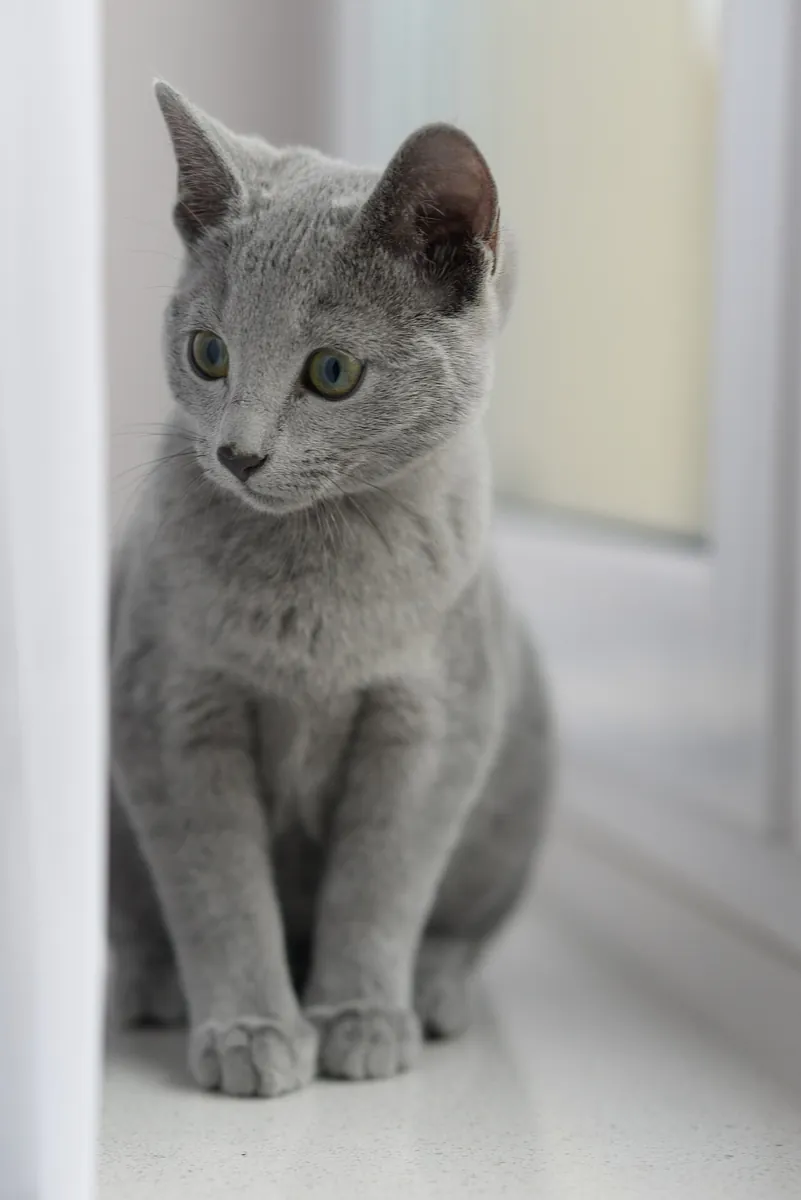
Russian Blue
Also known as: Russian Blue cat · Archangel cat · Archangel Blue · Russian Shorthair
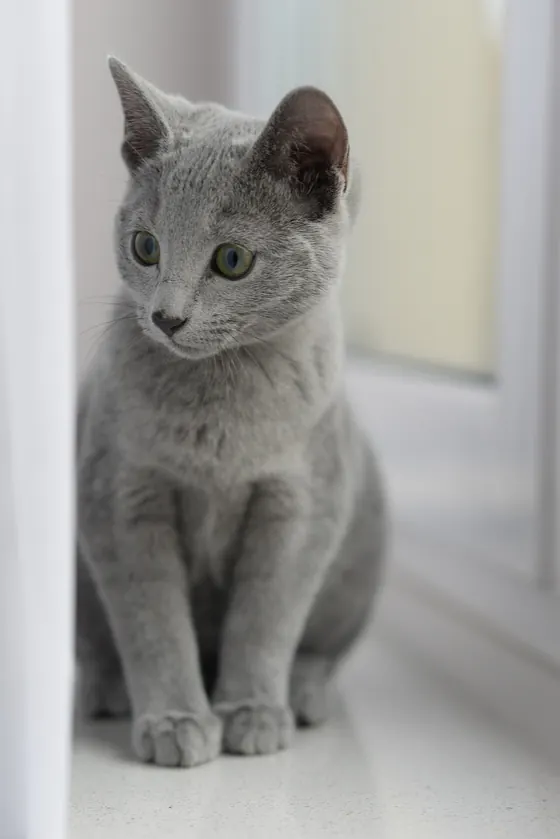
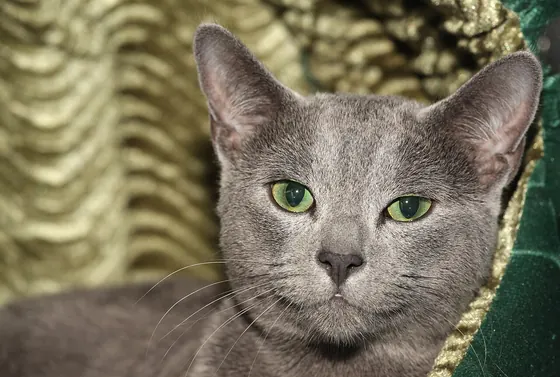
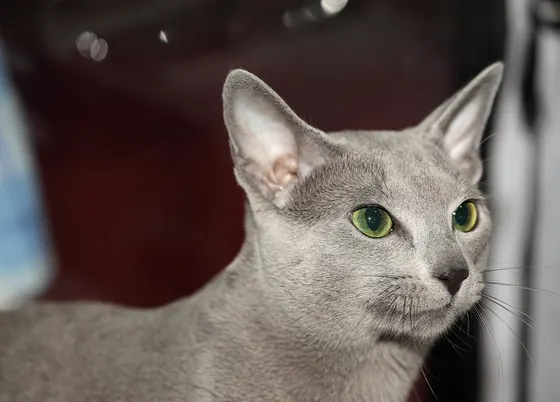
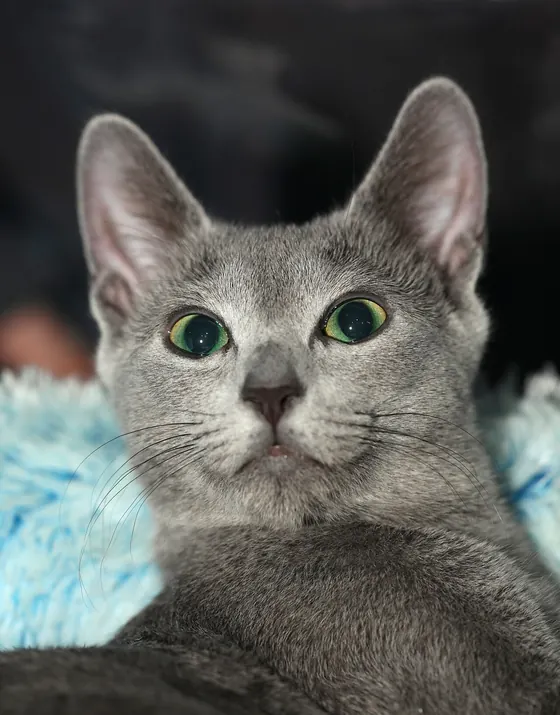
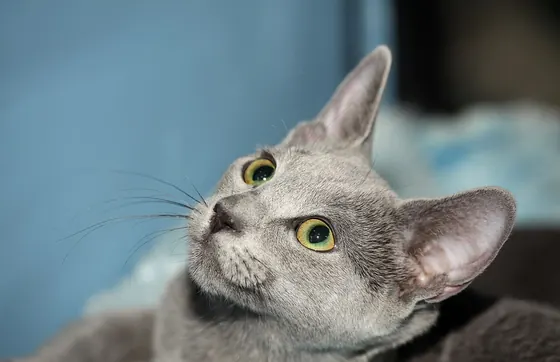
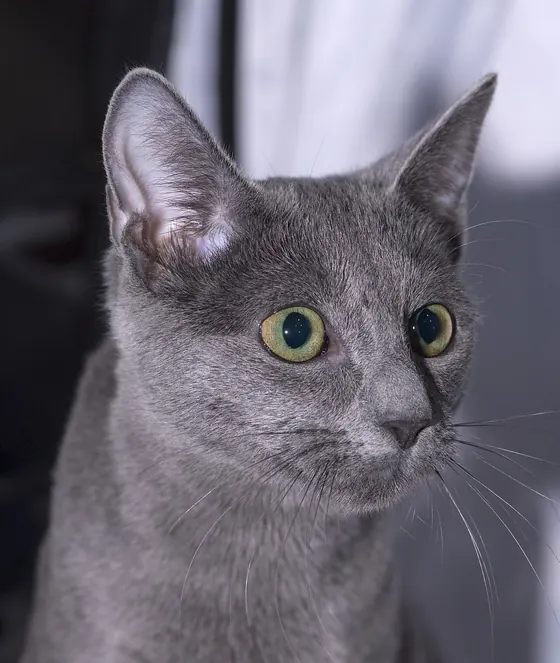
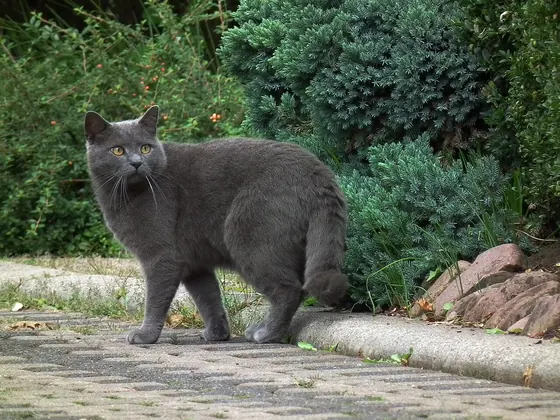
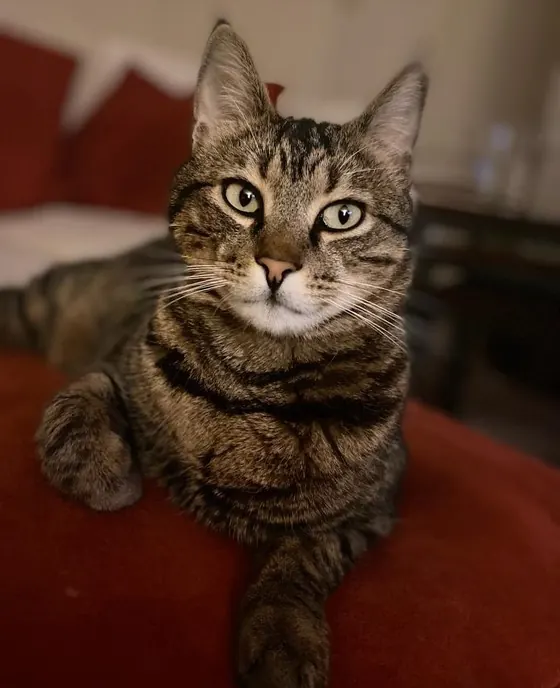
Photos: Kakej (CC BY-SA 4.0) · Nickolas Titkov from Moscow, Russian Federation (CC BY-SA 2.0), via Wikimedia Commons.
Breed profile
* An estimate for Spain in 2026 (food, litter, vet and insurance), based on the size, grooming and health needs of the breed, not on measured costs of individual cats.
What it is like
According to tradition, it reached Britain in the 19th century on merchant ships from the Russian port of Arkhangelsk, and in 1875 it was shown at the Crystal Palace as the “Archangel cat”. It has a slender, elegant body, intense green eyes and a double blue coat with silver tips, so dense that it holds a mark if you run your finger through it. The corners of its mouth give it a smiling expression. It is reserved with strangers and very affectionate with its own people, a creature of fixed routines with a soft voice. It is often cited as suitable for allergy sufferers, but no cat is free of Fel d 1 and reactions vary from person to person.
Coat colours and patterns
Colours and patterns that are common or accepted in this breed. Each page explains where the colour comes from, the myths around it and other breeds that have it.
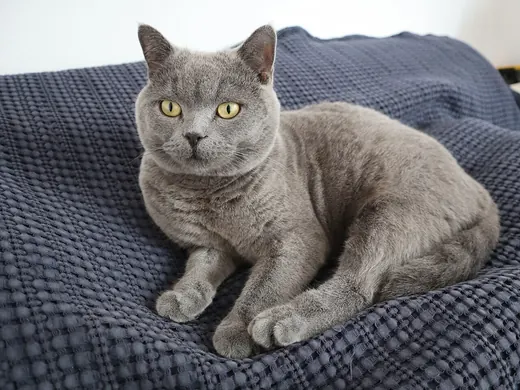
All cat coat colours and patterns →
Temperament
Care
Weekly brushing; it sheds little except during the moult. It likes calm and routine: regular mealtimes, high spots to watch from and quiet hunting games. It copes well with being alone during the working day, although it hides from visitors or noise, so give it time and a hiding place. It learns with treats. Keep an eye on portions, as it is greedy and gains weight easily.
Health
It is one of the healthiest and longest-lived breeds, with no well-documented serious inherited diseases. Its most common weak spot is obesity, and as with any cat, the mouth, kidneys and urinary tract need watching with age. Annual check-ups and blood tests from the age of seven or eight.
Fun facts
Its coat is so dense that if you draw on it with your finger, the line stays visible for a while.
Kittens have blue eyes, go through a yellowish stage and end up green at around two years.
The Nebelung is essentially a semi-longhaired Russian Blue.
Before it was called the Russian Blue it was known as the Archangel cat, the Foreign Blue or the Maltese.
Frequently asked questions
How big does a Russian Blue get?
An adult Russian Blue usually weighs 3–5.5 kg (7–12 lb) and stands about 23–28 cm (9–11 in) at the shoulder, which makes it a medium cat.
How long does a Russian Blue live?
Its usual life expectancy is 13–18 years. Living indoors, being neutered and having regular vet check-ups make the biggest difference.
Is the Russian Blue hypoallergenic?
It is often described as hypoallergenic, but no cat is free of the main cat allergen (Fel d 1). Some people with mild allergies react less to it; spend time with the breed before deciding.
Is the Russian Blue good with children?
It can be, with calm children who respect its space. As with any cat, teach children to let it walk away when it has had enough.
How much play does a Russian Blue need?
As a guide, 20 min of play a day. Its activity score is 3 out of 5: short daily play sessions with a wand toy work better than one long one.
Similar breeds
All breeds A to Z Cost calculator (Spanish) Food portions (Spanish)