
Korat
Also known as: Si-Sawat · Good luck cat · Blue cat of Thailand · Korat cat
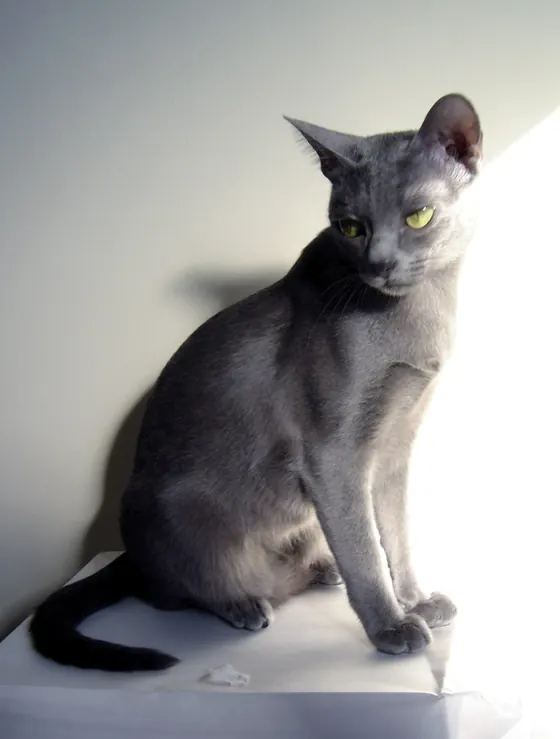
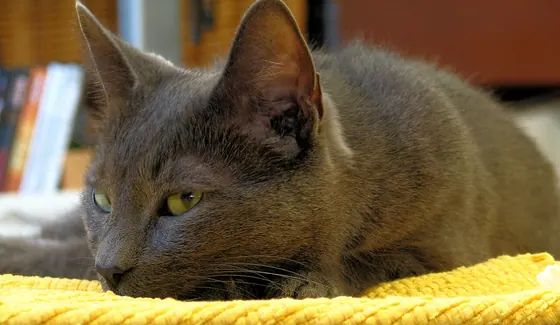
Photos: Heikki Siltala, catza.net (CC BY 3.0) · Therealbs2002 (CC BY-SA 3.0) · Veda Napha Naramit (Public domain) · Parvati Napha Naramit (CC BY-SA 2.5) · Goele (CC BY-SA 3.0), via Wikimedia Commons.
Breed profile
* An estimate for Spain in 2026 (food, litter, vet and insurance), based on the size, grooming and health needs of the breed, not on measured costs of individual cats.
What it is like
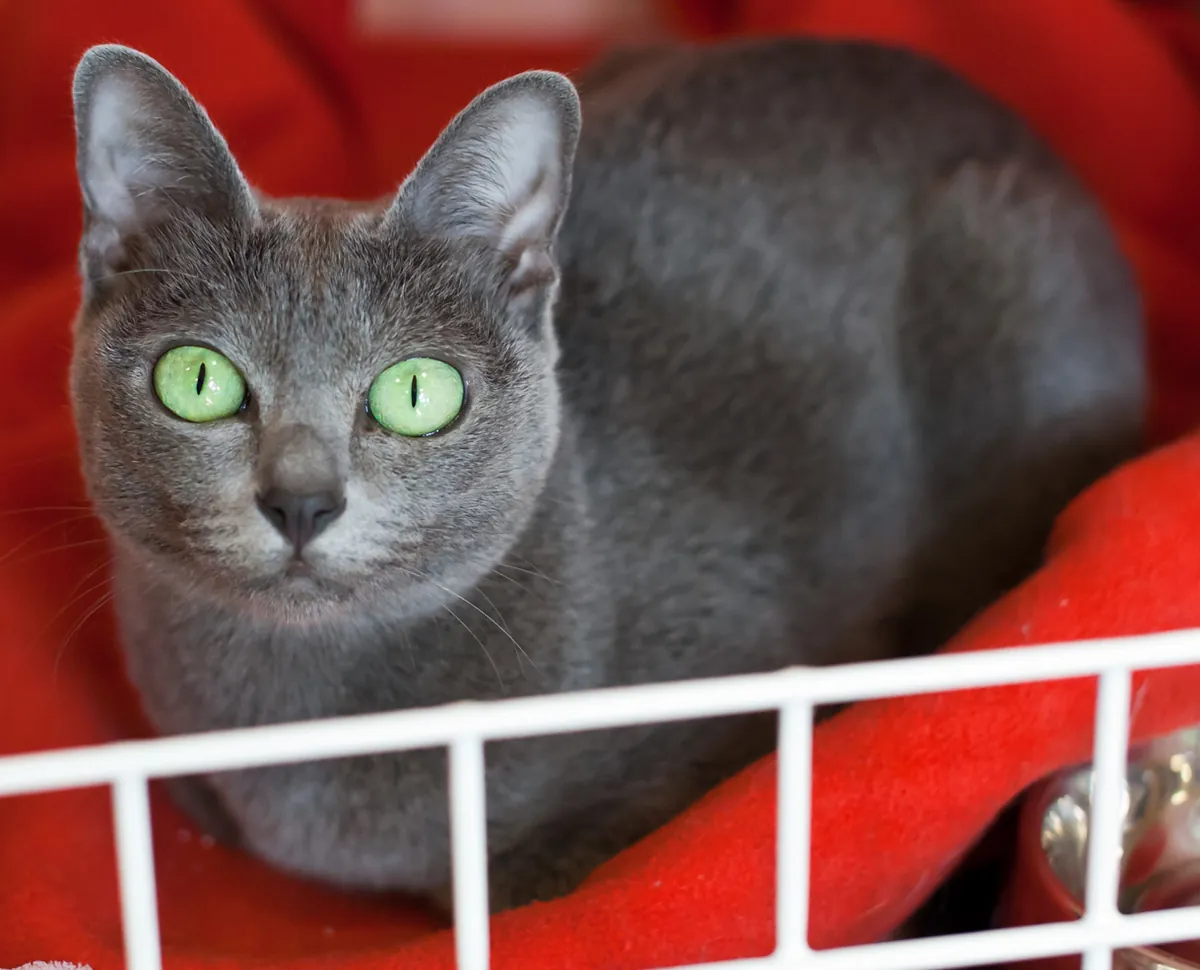
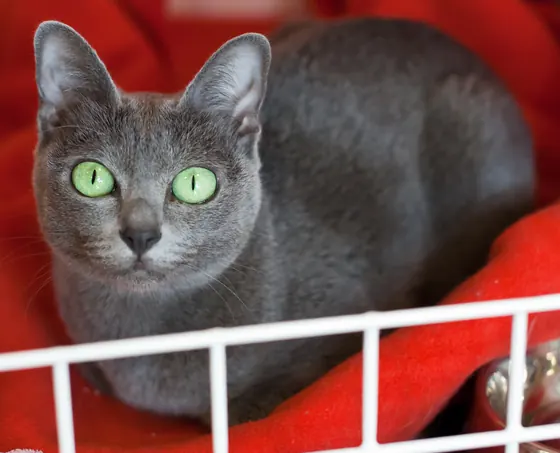
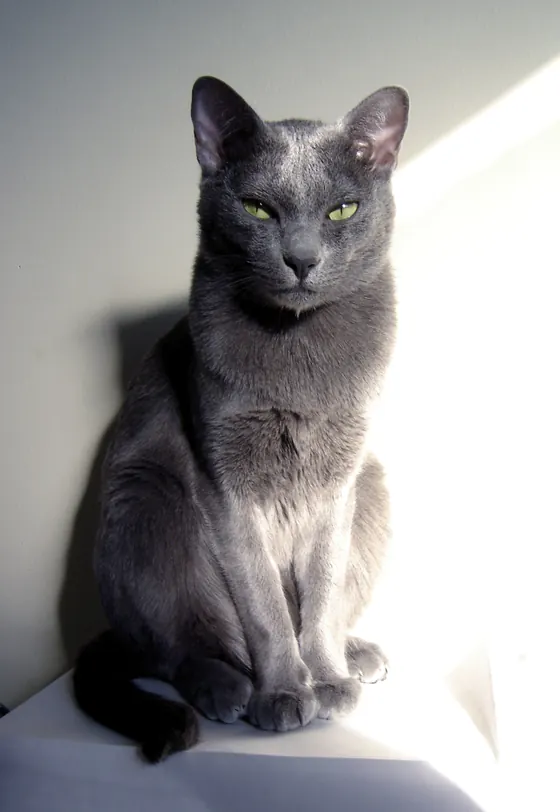
It already appears in the Tamra Maew, the old Thai book of cat poems, as one of the cats that bring good luck. Its name comes from the province of Korat (Nakhon Ratchasima), and in Thailand it is called Si-Sawat. It reached the United States in 1959 and the CFA recognised it in 1966. It is a medium-sized but surprisingly heavy cat, with a heart-shaped head, very large green eyes and a blue coat with silver tips that shimmers in the light. It is deeply attached to its family and somewhat dominant about its territory; it has extremely sharp hearing and copes badly with noise and sudden changes.
Coat colours and patterns
Colours and patterns that are common or accepted in this breed. Each page explains where the colour comes from, the myths around it and other breeds that have it.
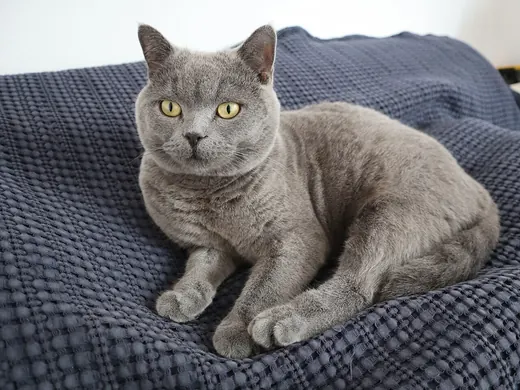
All cat coat colours and patterns →
Temperament
Care
Its coat, with no undercoat, is kept in order by running a hand or mitt over it once a week; it hardly sheds. A quiet home suits it better than a busy one, and it values a stable routine. It plays hunting games with gusto and learns with treats. It can be bossy with other cats, so introductions need to be slow. Get it used to handling and the carrier from kittenhood.
Health
It is a long-lived and generally healthy breed. GM1 and GM2 gangliosidosis, serious inherited neurological diseases, do exist, but there is a DNA test and responsible breeders use it on their breeding cats. As it has little body fat and no undercoat, make sure it does not get cold. Annual check-ups, and ask for the parents' gangliosidosis test results.
Fun facts
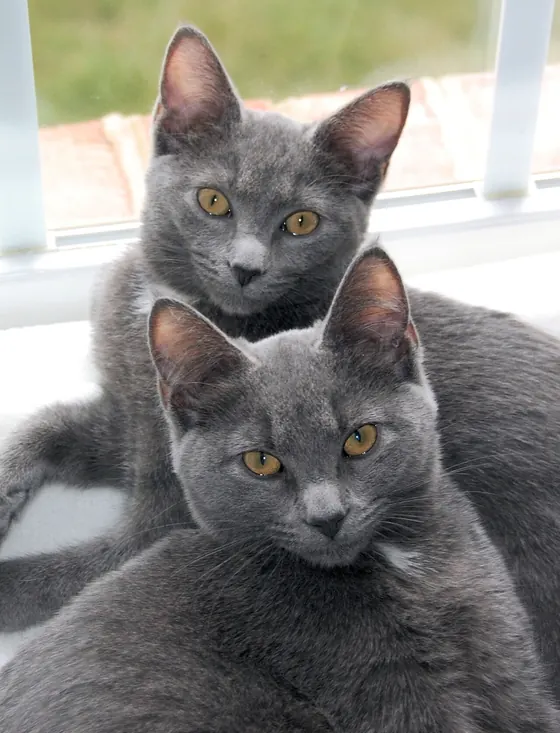
In Thailand a pair of Korats was traditionally given to newlyweds as a sign of prosperity.
Kittens have amber eyes, which do not reach their final green until two to four years of age.
Only one colour is accepted: blue with silver tips.
Seen from the front, its head is heart-shaped, a feature written into the standard.
Frequently asked questions
How big does a Korat get?
An adult Korat usually weighs 2.5–4.5 kg (6–10 lb) and stands about 22–28 cm (9–11 in) at the shoulder, which makes it a small cat.
How long does a Korat live?
Its usual life expectancy is 12–16 years. Living indoors, being neutered and having regular vet check-ups make the biggest difference.
Is the Korat hypoallergenic?
No. It produces the usual cat allergens. If someone at home is allergic, spend time with the breed before deciding and talk to an allergist.
Is the Korat good with children?
It can be, with calm children who respect its space. As with any cat, teach children to let it walk away when it has had enough.
How much play does a Korat need?
As a guide, 20 min of play a day. Its activity score is 3 out of 5: short daily play sessions with a wand toy work better than one long one.
Similar breeds
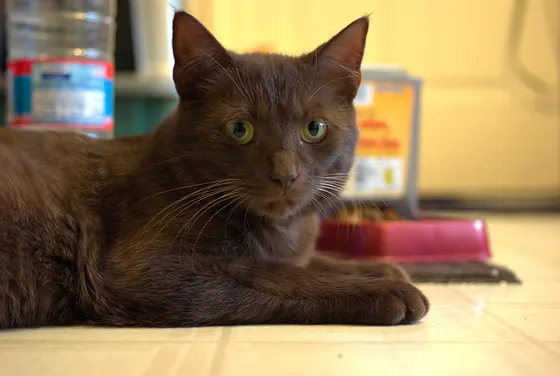
All breeds A to Z Cost calculator (Spanish) Food portions (Spanish)