
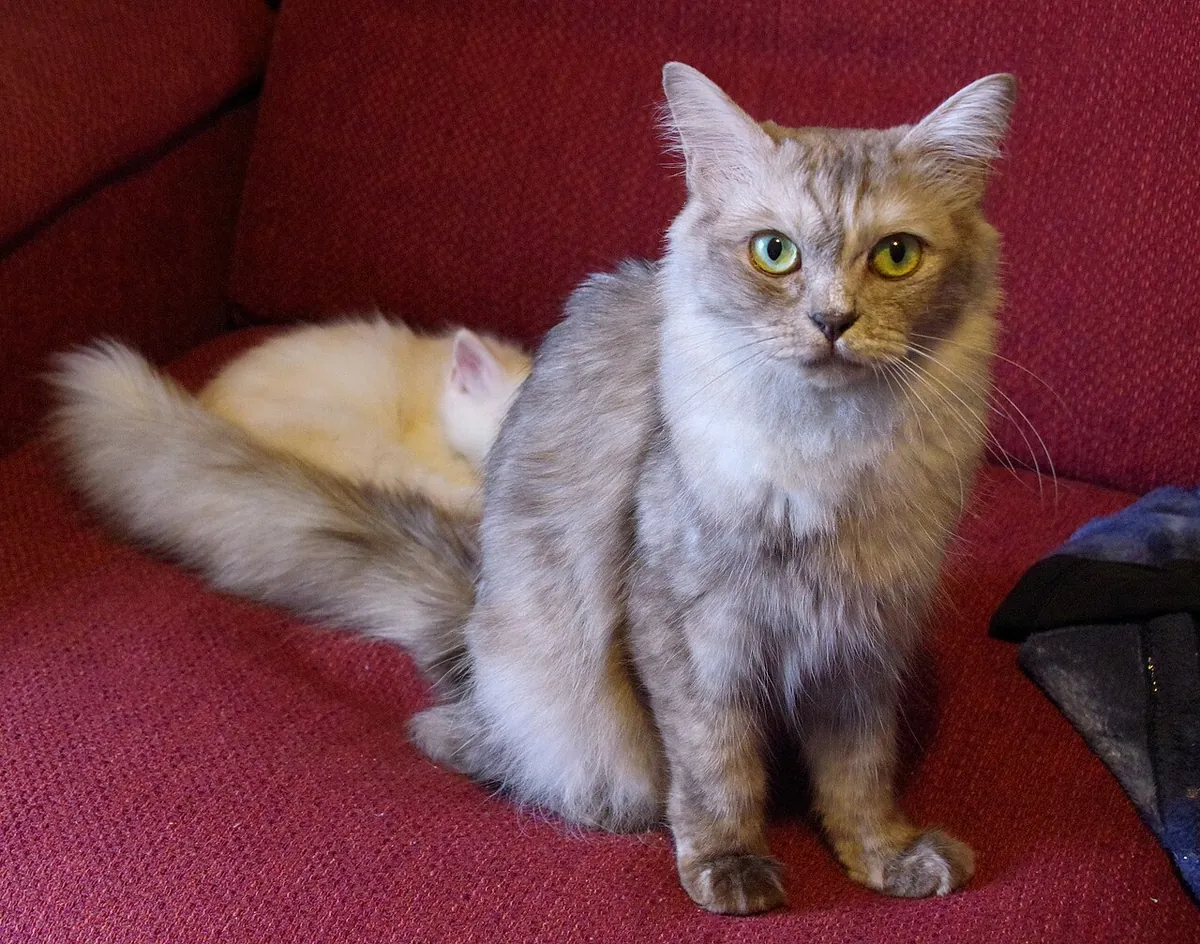
Tiffanie
Also known as: Asian Semi-longhair · Asian Longhair · British Tiffanie · Tiffanie cat
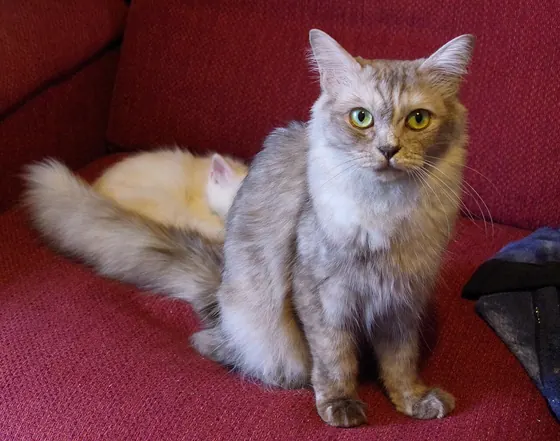
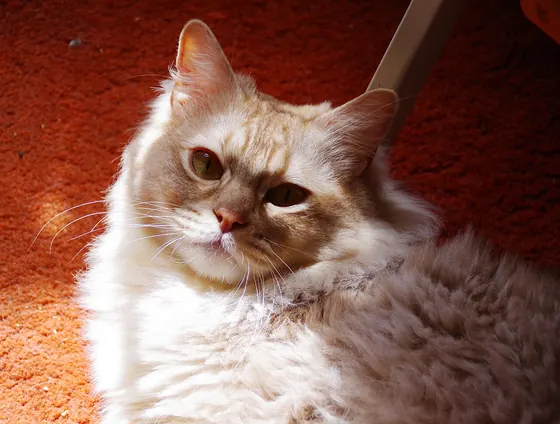
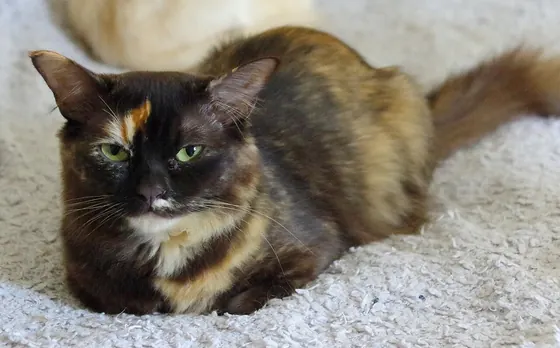
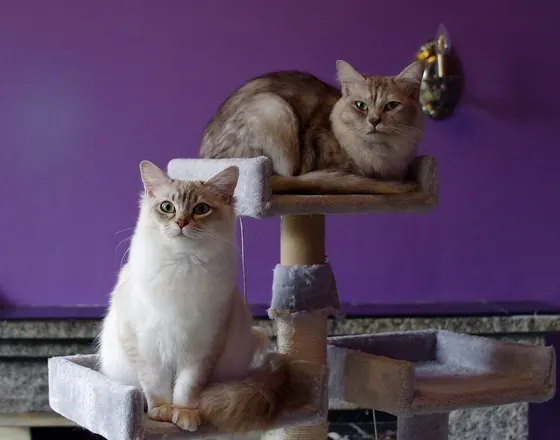
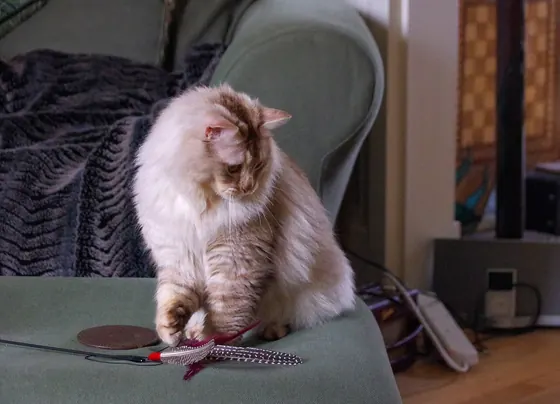
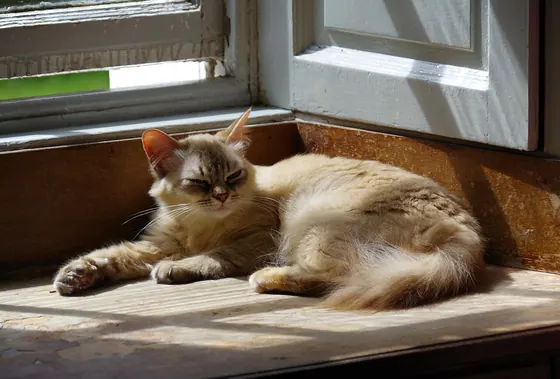
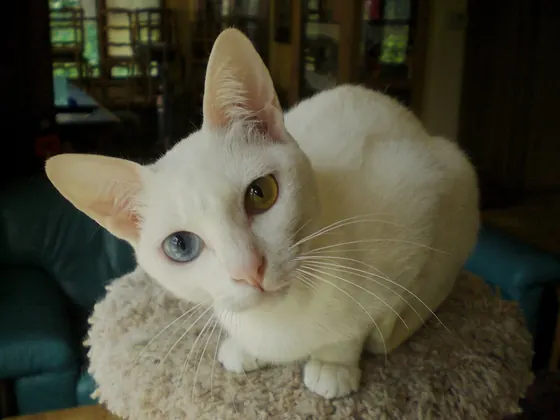
Photos: Matt Buck from London, United Kingdom (CC BY-SA 2.0), via Wikimedia Commons.
Breed profile
* An estimate for Spain in 2026 (food, litter, vet and insurance), based on the size, grooming and health needs of the breed, not on measured costs of individual cats.
What it is like
It is the semi-longhaired version of the Asian group, and it comes from the same Chinchilla Persian and Burmese cross that gave rise to the Burmilla in 1981. It has the slender, muscular body of the European Burmese, a rounded face with large eyes and a silky coat that forms a ruff, britches and a plumed tail. The British GCCF granted it championship status in 2003, and the French LOOF and South Africa's SACC also recognise it; the WCF has it at preliminary status and TICA only registers it. In character it is the calmest of the family: affectionate, curious without being frantic and easy to live with. Mind the name: it has no connection with the North American Chantilly-Tiffany.
Temperament
Care
Despite the coat, it tangles little because it has hardly any undercoat: brush it once or twice a week with a long-toothed comb and go over the areas behind the ears, under the legs and the britches, which is where knots form. A bit more during the spring moult. Calm daily play, a stable scratching post and a reasonable amount of company; it copes better than other Orientals with a household where people work away from home, although it would rather not spend the whole day alone.
Health
It shares risks with the rest of the Asian group: polycystic kidney disease (PKD) from its Persian side and hypokalaemia from its Burmese side, both with DNA tests. As it is a very minority breed, choose breeders who show those tests and avoid high inbreeding. Otherwise, the usual cat problems: tartar, excess weight and kidney disease in old age.
Fun facts
It was the last variety of the Asian group to achieve GCCF championship status, in 2003.
It has nothing to do with the North American Chantilly-Tiffany, a different and now almost vanished breed, despite the almost identical name.
In Australia, “Australian Tiffanie” means something else: a longhaired cat in silver or golden only, with much more Persian blood.
Its coat sheds a good deal less than it looks, precisely because it lacks undercoat.
Frequently asked questions
How big does a Tiffanie get?
An adult Tiffanie usually weighs 3.5–6.5 kg (8–14 lb) and stands about 23–28 cm (9–11 in) at the shoulder, which makes it a medium cat.
How long does a Tiffanie live?
Its usual life expectancy is 12–16 years. Living indoors, being neutered and having regular vet check-ups make the biggest difference.
Is the Tiffanie hypoallergenic?
No. It produces the usual cat allergens. If someone at home is allergic, spend time with the breed before deciding and talk to an allergist.
Is the Tiffanie good with children?
Usually yes: it tends to be patient and sociable with children. As with any cat, teach children to let it walk away when it has had enough.
How much play does a Tiffanie need?
As a guide, 20 min of play a day. Its activity score is 3 out of 5: short daily play sessions with a wand toy work better than one long one.
Similar breeds
All breeds A to Z Cost calculator (Spanish) Food portions (Spanish)