
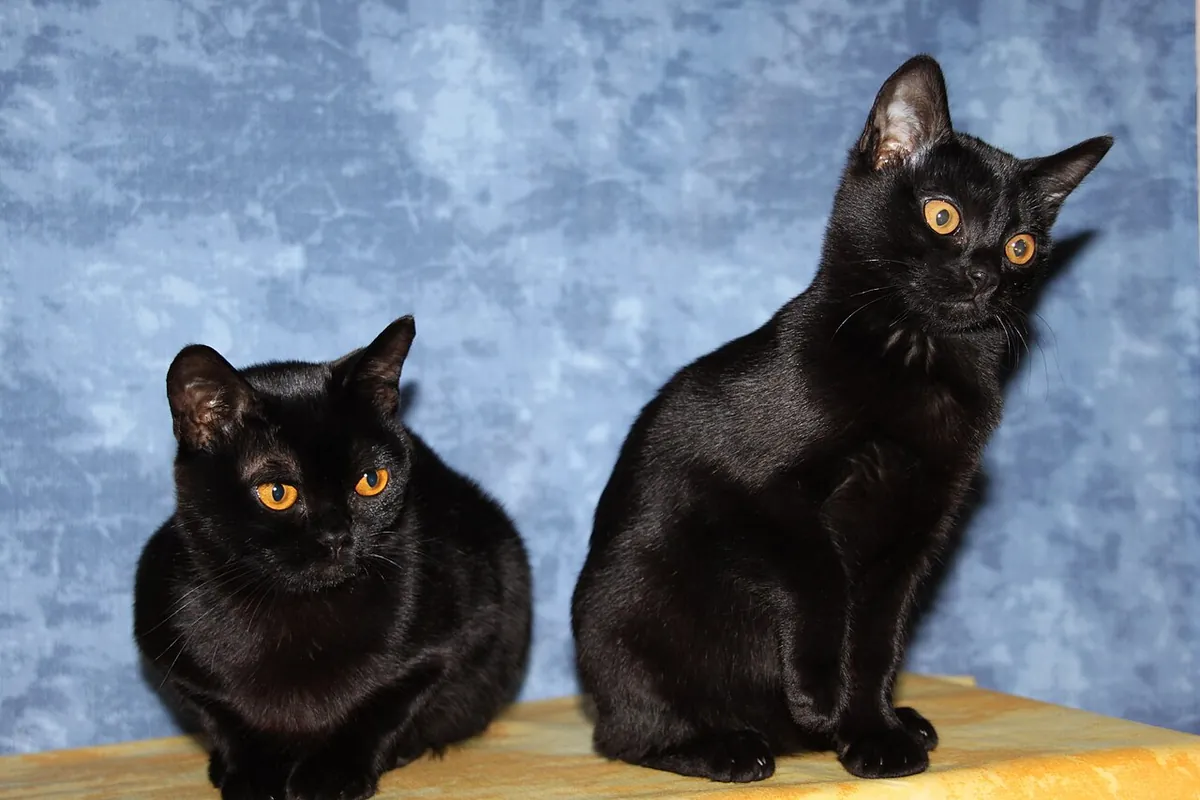
Bombay
Also known as: Bombay cat · Parlour panther · Mini panther · American Bombay
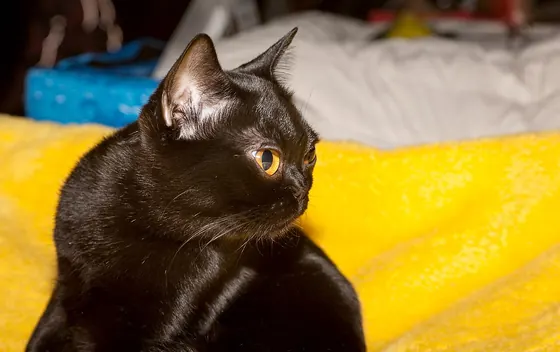
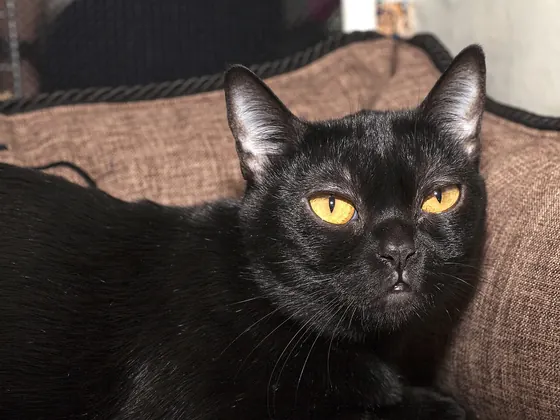
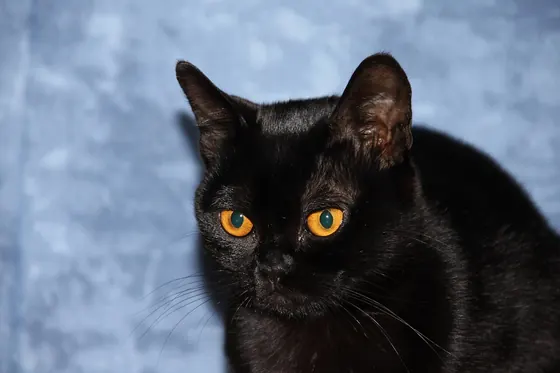
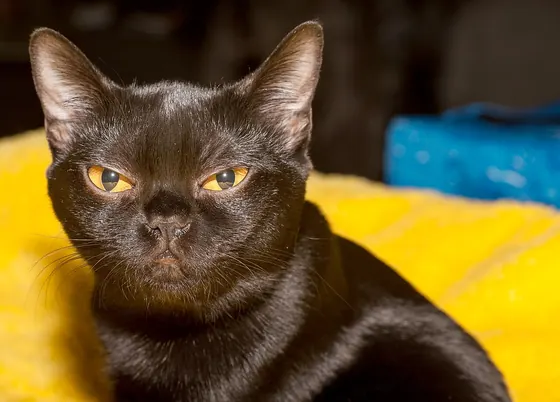
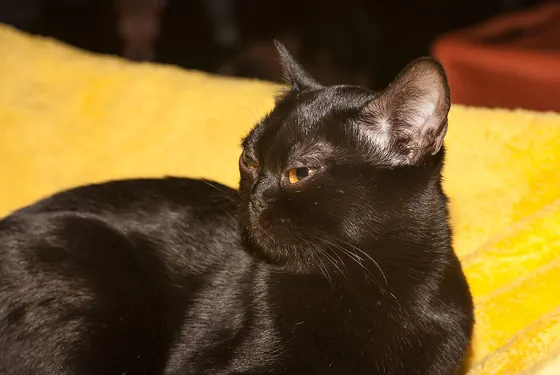
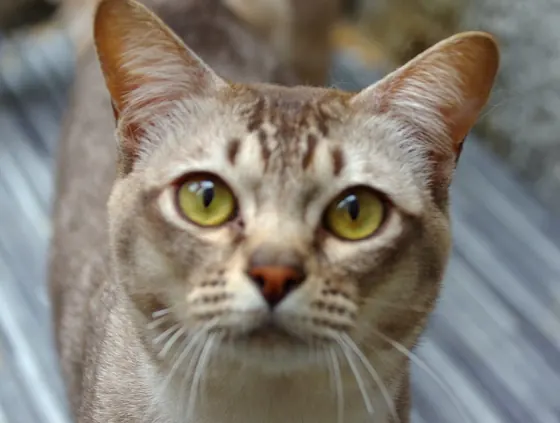
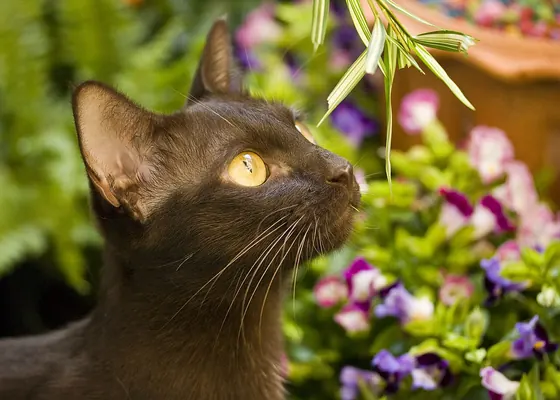
Photos: Bombaycats (CC BY-SA 3.0) · Nickolas Titkov from Moscow, Russian Federation (CC BY-SA 2.0), via Wikimedia Commons.
Breed profile
* An estimate for Spain in 2026 (food, litter, vet and insurance), based on the size, grooming and health needs of the breed, not on measured costs of individual cats.
What it is like
The breeder Nikki Horner, from Louisville (Kentucky), wanted a pocket-sized black panther, and in the 1950s she began crossing sable Burmese with black American Shorthairs. It took her years to fix the type, but she managed it: the CFA granted championship status in 1976. It is a coal-black cat with a coat as shiny as patent leather, a muscular body that is heavy for its size and copper or gold eyes. In temperament it is almost a Burmese: sociable, playful, greedy and very keen on following its person around the house. It seeks out warmth and usually ends up on the nearest lap.
Coat colours and patterns
Colours and patterns that are common or accepted in this breed. Each page explains where the colour comes from, the myths around it and other breeds that have it.
All cat coat colours and patterns →
Temperament
Care
A once-over with a chamois or your hand each week keeps the shine. It has a hearty appetite and tends to put on weight: weigh its portions and use interactive feeders. It loves fetch games and picks up routines and tricks easily. It copes badly with long periods alone and appreciates company. And remember that black cats bringing bad luck is a myth, although in Spain they are still harder to rehome.
Health
Through its Burmese side it can inherit the Burmese head defect (lethal in kittens with two copies, DNA test available), hypokalaemia and hypertrophic cardiomyopathy. Its slightly short face makes some cats prone to runny eyes. Ask for the parents' test results and, if the breeder offers it, an echocardiogram.
Fun facts
It is named after the Indian city of Bombay, associated with black leopards, although the breed was born in Kentucky.
The British Bombay is something else: a black European-type Burmese.
Kittens may have a slightly brownish tinge that turns jet black over the months.
The nickname “parlour panther” sums up exactly what its creator was after.
Frequently asked questions
How big does a Bombay get?
An adult Bombay usually weighs 3–5 kg (7–11 lb) and stands about 23–28 cm (9–11 in) at the shoulder, which makes it a medium cat.
How long does a Bombay live?
Its usual life expectancy is 12–16 years. Living indoors, being neutered and having regular vet check-ups make the biggest difference.
Is the Bombay hypoallergenic?
No. It produces the usual cat allergens. If someone at home is allergic, spend time with the breed before deciding and talk to an allergist.
Is the Bombay good with children?
Usually yes: it tends to be patient and sociable with children. As with any cat, teach children to let it walk away when it has had enough.
How much play does a Bombay need?
As a guide, 30 min of play a day. Its activity score is 4 out of 5: short daily play sessions with a wand toy work better than one long one.
Similar breeds
All breeds A to Z Cost calculator (Spanish) Food portions (Spanish)