
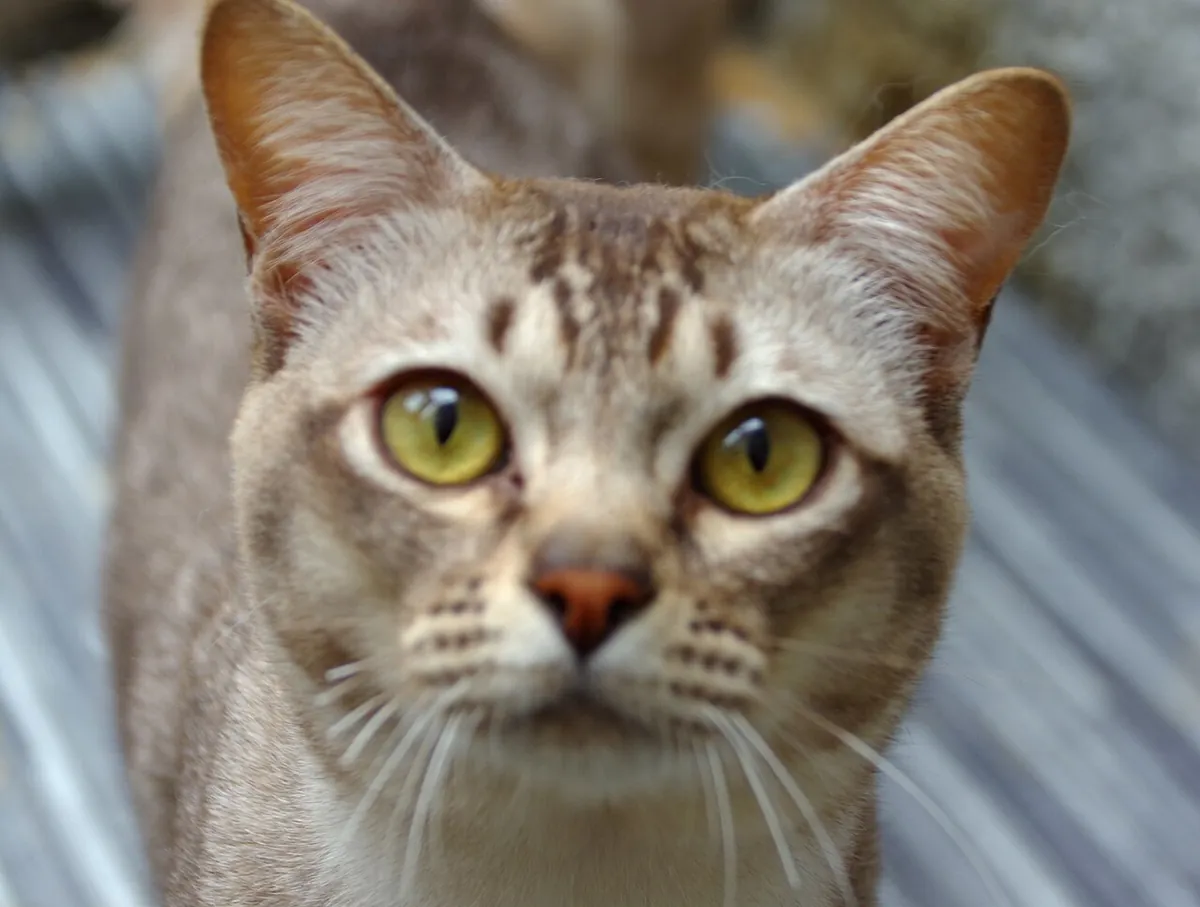
Asian
Also known as: Asian cat · Asian Shorthair · Asian Smoke · Asian Tabby · Asian Self · British Bombay
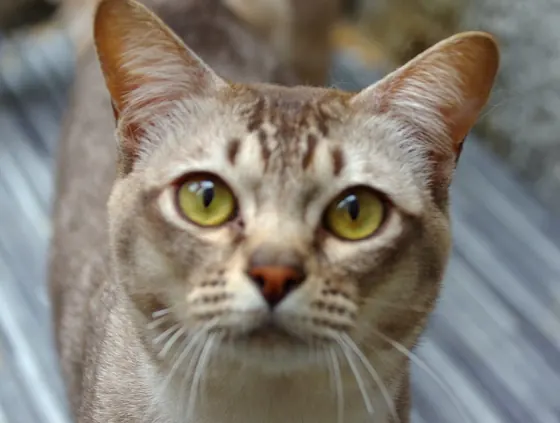
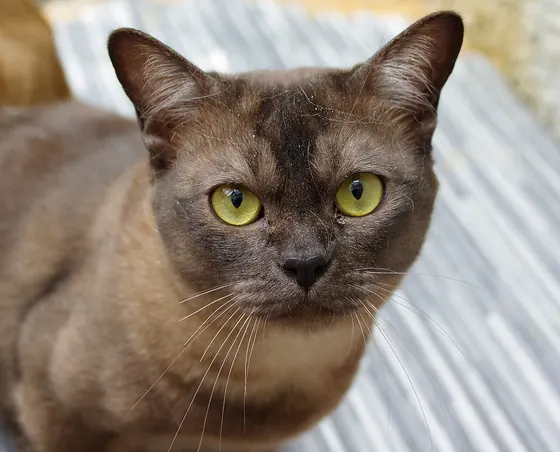
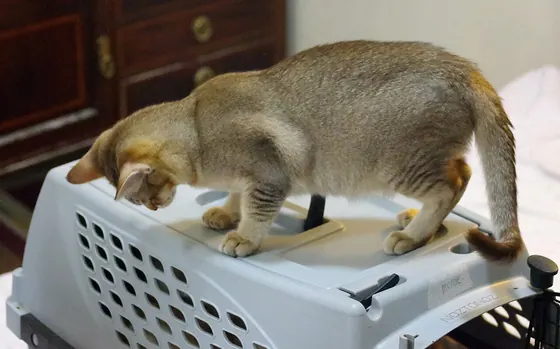
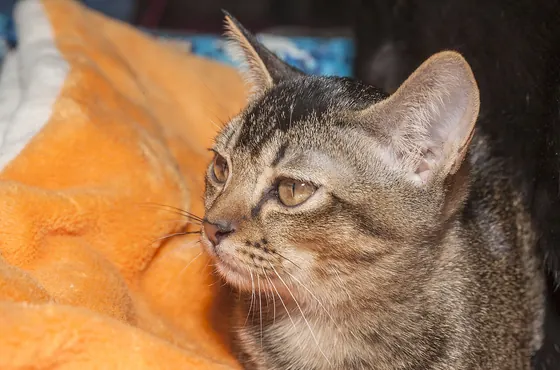
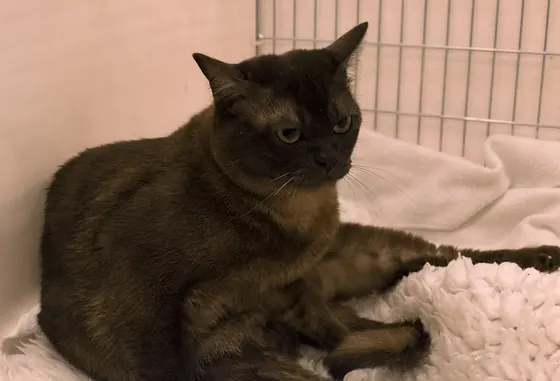
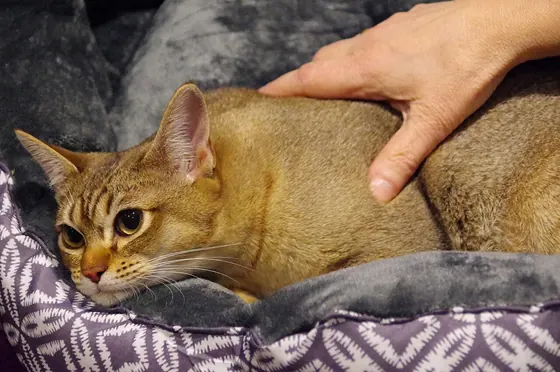
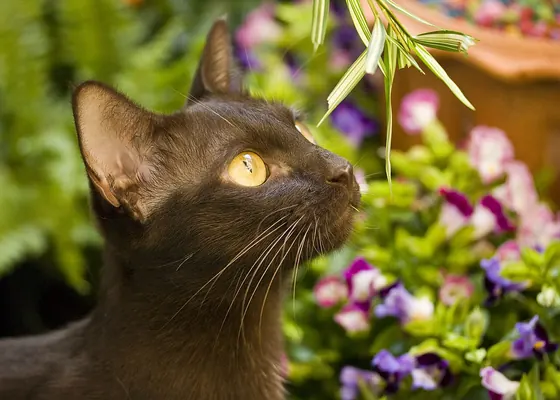
Photos: Matt Buck from London, United Kingdom (CC BY-SA 2.0) · Nickolas Titkov from Moscow, Russian Federation (CC BY-SA 2.0), via Wikimedia Commons.
Breed profile
* An estimate for Spain in 2026 (food, litter, vet and insurance), based on the size, grooming and health needs of the breed, not on measured costs of individual cats.
What it is like
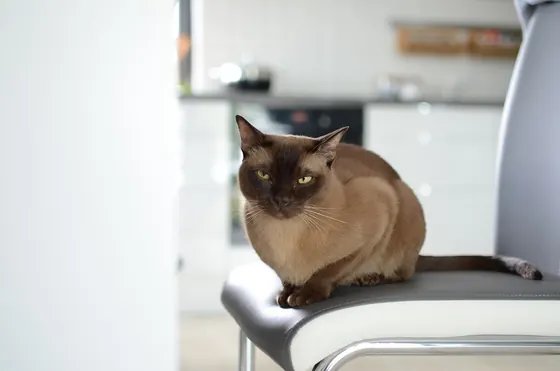
It came from the same accident as the Burmilla: in 1981, in the UK, a Chinchilla Persian called Jamari Sanquist mated a lilac Burmese, Bambino Lilac Fabergé, belonging to Baroness Miranda von Kirchberg. The breeders decided to keep the body and head of the European Burmese and widen the range of colours and patterns, and so the Asian group was born, which the British GCCF classes alongside the Burmese. Today it brings together several varieties: the Smoke, solid with a silver hair base; the Tabby, with a soft pattern; the Self, in a solid colour or tortie, which in black is called the British Bombay; and the Shaded, which is the Burmilla. In character it is very like the Burmese: sociable, curious, attached to its people and fond of play.
Temperament
Care
A once-over with a chamois or mitt each week is enough for the coat, which sheds little. The demanding part is company: it is a cat that follows you round the house and copes badly with long days alone; if you are all out during the day, two cats are better. Hunting play every day, tall scratching posts and puzzle feeders. It eats heartily, so weigh its portions and watch its weight after neutering. Annual dental check.
Health
It inherits the predispositions of its two founding breeds. From the Burmese side, hypokalaemia (low potassium causing muscle weakness, DNA test available); more diabetes and feline orofacial pain syndrome have also been described in the Burmese. From the Persian side, polycystic kidney disease (PKD, testable). Ask the breeder for the parents' test results and, from the age of seven, blood tests to keep an eye on kidneys and glucose.
Fun facts
It shares its origin with the Burmilla: the same accidental litter of 1981.
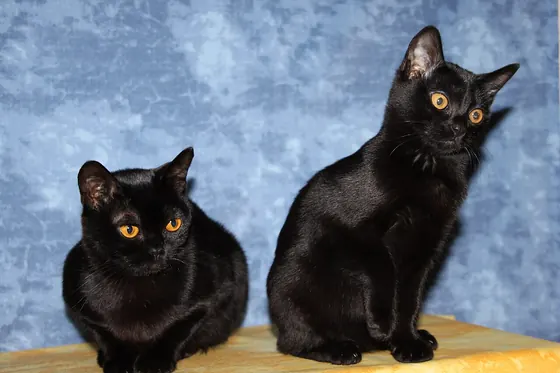
The British Bombay is a solid black Asian and has nothing to do with the copper-eyed American Bombay, apart from the colour.
In 2023 the GCCF registered only about 160 kittens across the whole Asian group, so it is rare even in the UK.
Its semi-longhaired version is the Tiffanie, which has its own profile on Michipedia.
Frequently asked questions
How big does a Asian get?
An adult Asian usually weighs 3.5–7 kg (8–15 lb) and stands about 23–28 cm (9–11 in) at the shoulder, which makes it a medium cat.
How long does a Asian live?
Its usual life expectancy is 12–16 years. Living indoors, being neutered and having regular vet check-ups make the biggest difference.
Is the Asian hypoallergenic?
No. It produces the usual cat allergens. If someone at home is allergic, spend time with the breed before deciding and talk to an allergist.
Is the Asian good with children?
Usually yes: it tends to be patient and sociable with children. As with any cat, teach children to let it walk away when it has had enough.
How much play does a Asian need?
As a guide, 30 min of play a day. Its activity score is 4 out of 5: short daily play sessions with a wand toy work better than one long one.
Similar breeds
All breeds A to Z Cost calculator (Spanish) Food portions (Spanish)