
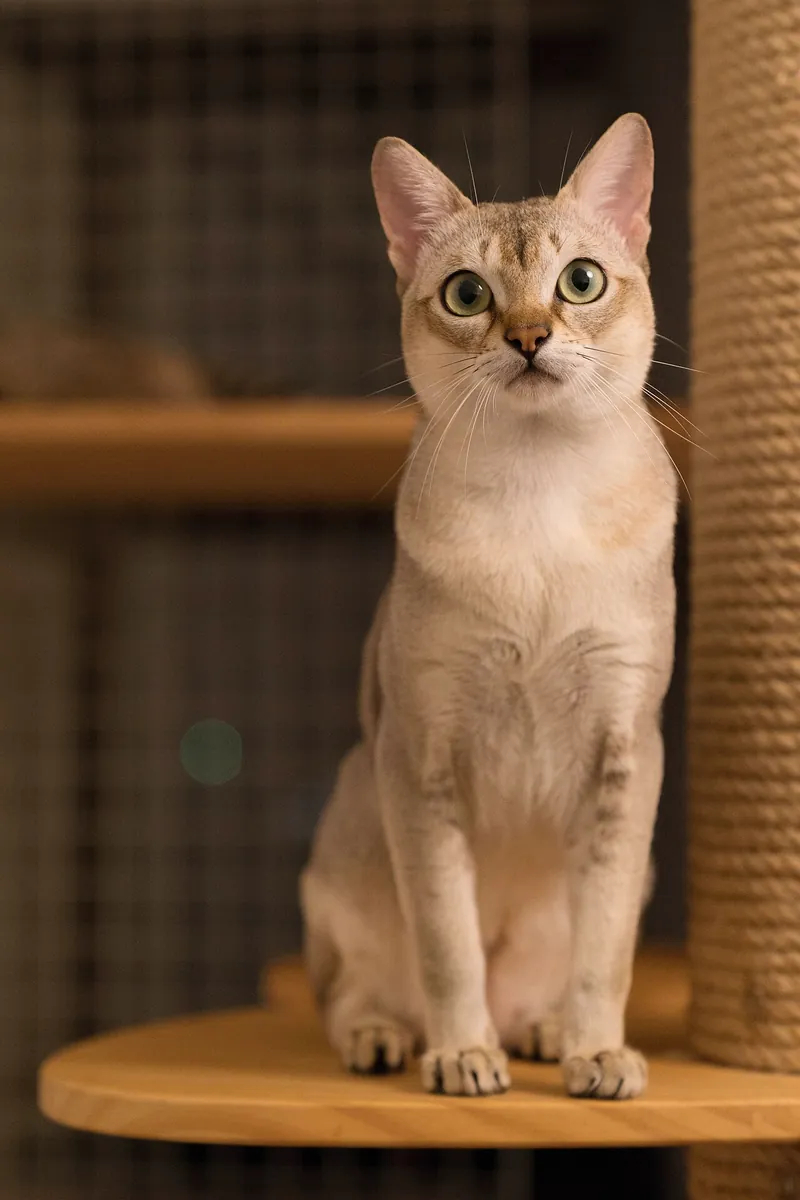
Singapura
Also known as: Singapura cat · Singapore cat · Drain cat · Kucinta
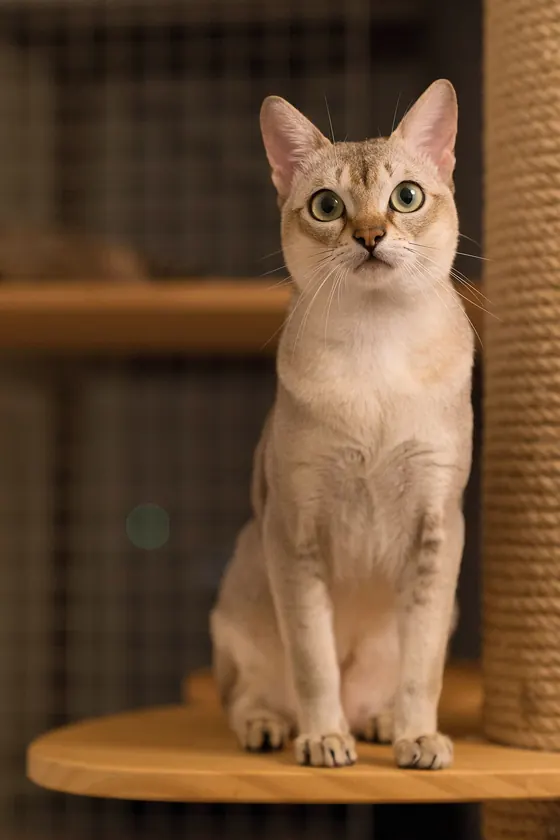
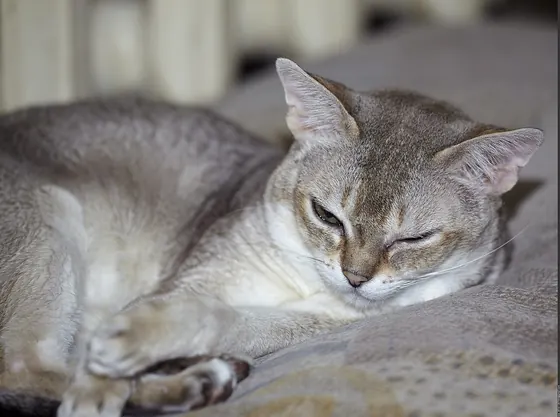
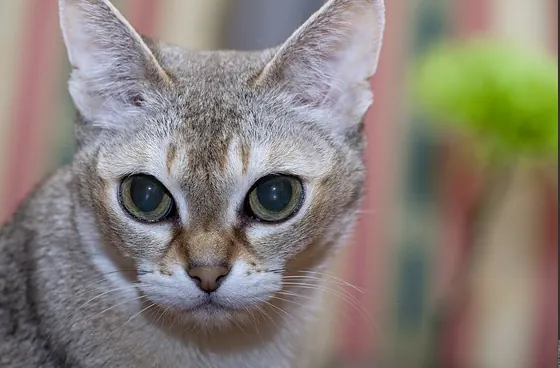
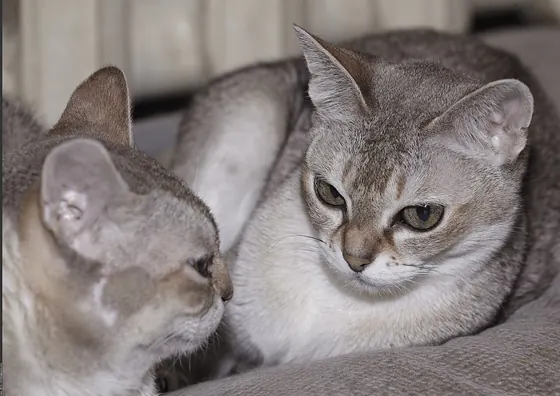
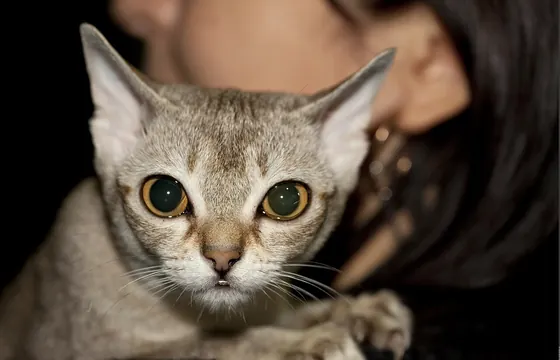
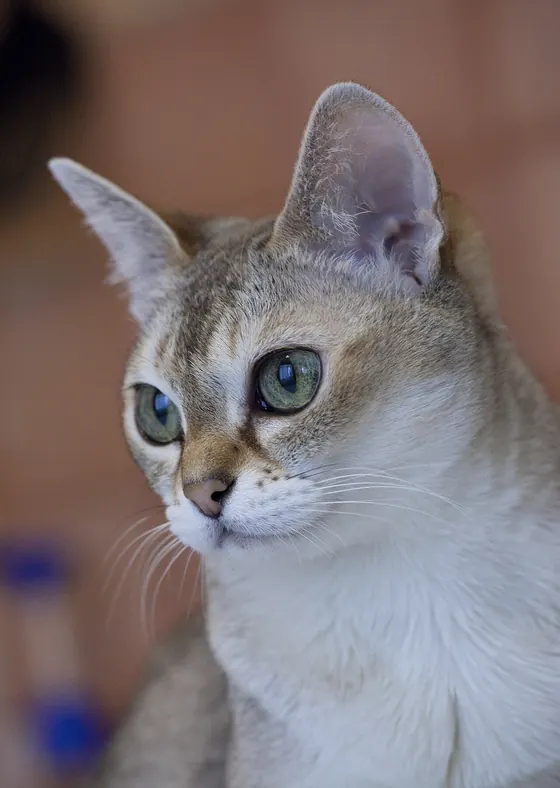
Photos: Straits Singapuras (CC BY-SA 4.0) · Nickolas Titkov from Moscow, Russian Federation (CC BY-SA 2.0), via Wikimedia Commons.
Breed profile
* An estimate for Spain in 2026 (food, litter, vet and insurance), based on the size, grooming and health needs of the breed, not on measured costs of individual cats.
What it is like
It is one of the smallest breeds: an adult female may weigh under 2.5 kg (5.5 lb). The official story is that in the mid-1970s Hal and Tommy Meadow brought several street cats from Singapore, where they were known as “drain cats”, to the United States, and that the breed grew from them, recognised by the CFA in 1988. It was later reported that some of those cats may have travelled from the US to Singapore beforehand, so its origin is still disputed. What nobody disputes is its personality: curious, playful well into adulthood and very attached to its people, with a soft voice. It has huge eyes and ears for its tiny head.
Coat colours and patterns
Colours and patterns that are common or accepted in this breed. Each page explains where the colour comes from, the myths around it and other breeds that have it.
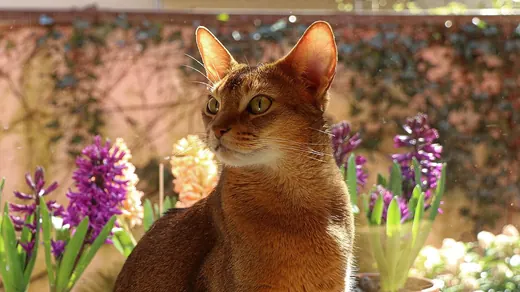
All cat coat colours and patterns →
Temperament
Care
The coat is no work at all: a wipe with a chamois once a week. Being so small and with little undercoat, it feels the cold, so it appreciates warm beds and high spots in the sun. It plays a lot and loves to climb: shelves, tall scratching posts and wand toys. Measure its portions carefully, because it eats little and it is easy to overdo the treats. Take care with balconies and windows: it is light, agile and very curious.
Health
Pyruvate kinase deficiency (haemolytic anaemia, DNA test available) and progressive retinal atrophy rdAc, also testable, have been described. Uterine inertia, which complicates births, is reported in females. Its genetic base is very narrow, so choose breeders who keep inbreeding in check and can show you the parents' test results.
Health problems to watch for
These are described more often in this breed. It does not mean a Singapura will have them, nor that a moggy is free of them: they are worth knowing about and discussing with your vet.
Fun facts
It comes in only one colour, sepia agouti: each hair alternates light and dark bands.
In 1991 the Singapore Tourism Board made it a mascot under the name Kucinta, from “kucing” (cat in Malay) and “cinta” (love).
Its origin is still disputed: several breeders have questioned the story of the imported street cats.
Despite its size, it matures slowly and can take close to two years to reach its adult look.
Frequently asked questions
How big does a Singapura get?
An adult Singapura usually weighs 2–3.5 kg (4–8 lb) and stands about 18–23 cm (7–9 in) at the shoulder, which makes it a small cat.
How long does a Singapura live?
Its usual life expectancy is 12–15 years. Living indoors, being neutered and having regular vet check-ups make the biggest difference.
Is the Singapura hypoallergenic?
No. It produces the usual cat allergens. If someone at home is allergic, spend time with the breed before deciding and talk to an allergist.
Is the Singapura good with children?
Usually yes: it tends to be patient and sociable with children. As with any cat, teach children to let it walk away when it has had enough.
How much play does a Singapura need?
As a guide, 30 min of play a day. Its activity score is 4 out of 5: short daily play sessions with a wand toy work better than one long one.
Similar breeds
All breeds A to Z Cost calculator (Spanish) Food portions (Spanish)