

Thai Lilac
Also known as: Lilac Korat · Thai Blue Point · Thai Lilac Point · Pointed Korat


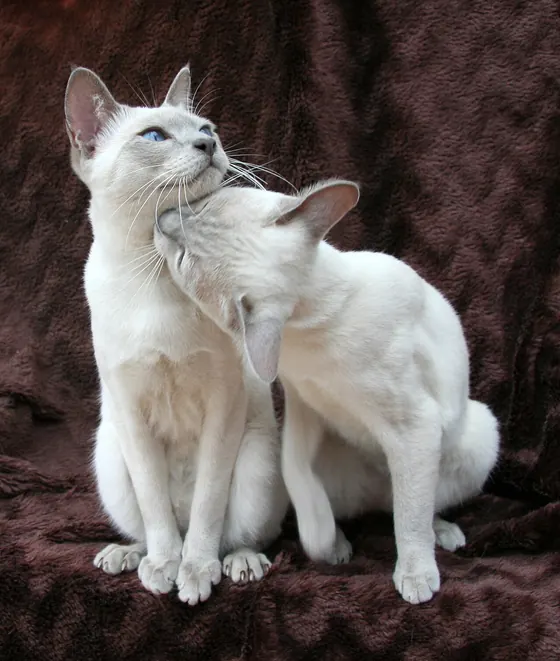
Photos: Tanyarae9 (CC BY-SA 3.0) · Tanyarae9 (CC BY 3.0) · Dreistone (CC BY-SA 4.0), via Wikimedia Commons.
Breed profile
* An estimate for Spain in 2026 (food, litter, vet and insurance), based on the size, grooming and health needs of the breed, not on measured costs of individual cats.
What it is like
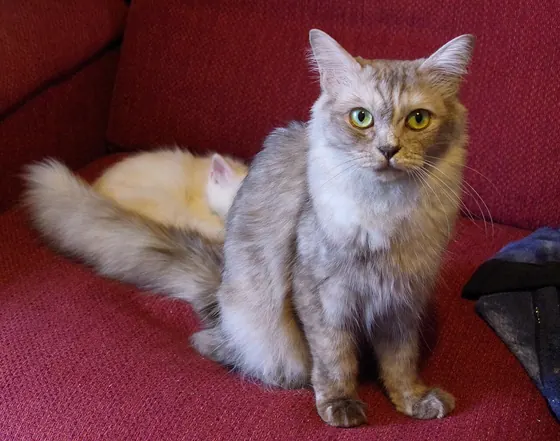
The Korat is accepted in only one colour, silver-blue, and all the large registries insist on it. But some cats imported from Thailand carried hidden recessive genes for other colours, and lilac or colourpoint kittens that could not be registered as Korats began to be born in Korat litters. In the UK, the first registered Thai Lilac was born in 1989, in the Jenanca line, and the first Thai Lilac Point in 2014. Today the British GCCF records them on its experimental register under three names: Thai Lilac, in solid lilac; Thai Blue Point, blue colourpoint; and Thai Lilac Point, lilac colourpoint. They have the Korat type: a medium, muscular body, a heart-shaped head seen from the front and large eyes. And its personality: devoted, clever, a little bossy with their people and calm at home. They are very scarce even in the UK.
Temperament
Care
Its short coat, with no undercoat, is cared for with a mitt once a week. It prefers a quiet home and a stable routine, and forms a strong bond with its people. Daily play, scratching posts and high spots to watch from. It does not like loud noises or sudden changes: introduce it calmly to visitors and other animals.
Health
It shares risks with the Korat: GM1 and GM2 gangliosidosis, recessive inherited diseases of the nervous system with a DNA test, which the GCCF requires. As it is a small, closely related population, ask for the parents' test results and about inbreeding. Otherwise, the usual cat care.
Fun facts
The lilac colour and the colourpoint pattern entered the Korat with cats imported from Thailand.
In Thailand the Korat is called si sawat; the lilac is the same cat with a different colour genetics.
The first Thai Lilac registered in the UK was born in 1989.
As in the Korat, kittens' eyes can take years to reach their final colour.
Frequently asked questions
How big does a Thai Lilac get?
An adult Thai Lilac usually weighs 2.5–4.5 kg (6–10 lb) and stands about 22–28 cm (9–11 in) at the shoulder, which makes it a small cat.
How long does a Thai Lilac live?
Its usual life expectancy is 12–16 years. Living indoors, being neutered and having regular vet check-ups make the biggest difference.
Is the Thai Lilac hypoallergenic?
No. It produces the usual cat allergens. If someone at home is allergic, spend time with the breed before deciding and talk to an allergist.
Is the Thai Lilac good with children?
It can be, with calm children who respect its space. As with any cat, teach children to let it walk away when it has had enough.
How much play does a Thai Lilac need?
As a guide, 20 min of play a day. Its activity score is 3 out of 5: short daily play sessions with a wand toy work better than one long one.
Similar breeds


All breeds A to Z Cost calculator (Spanish) Food portions (Spanish)