
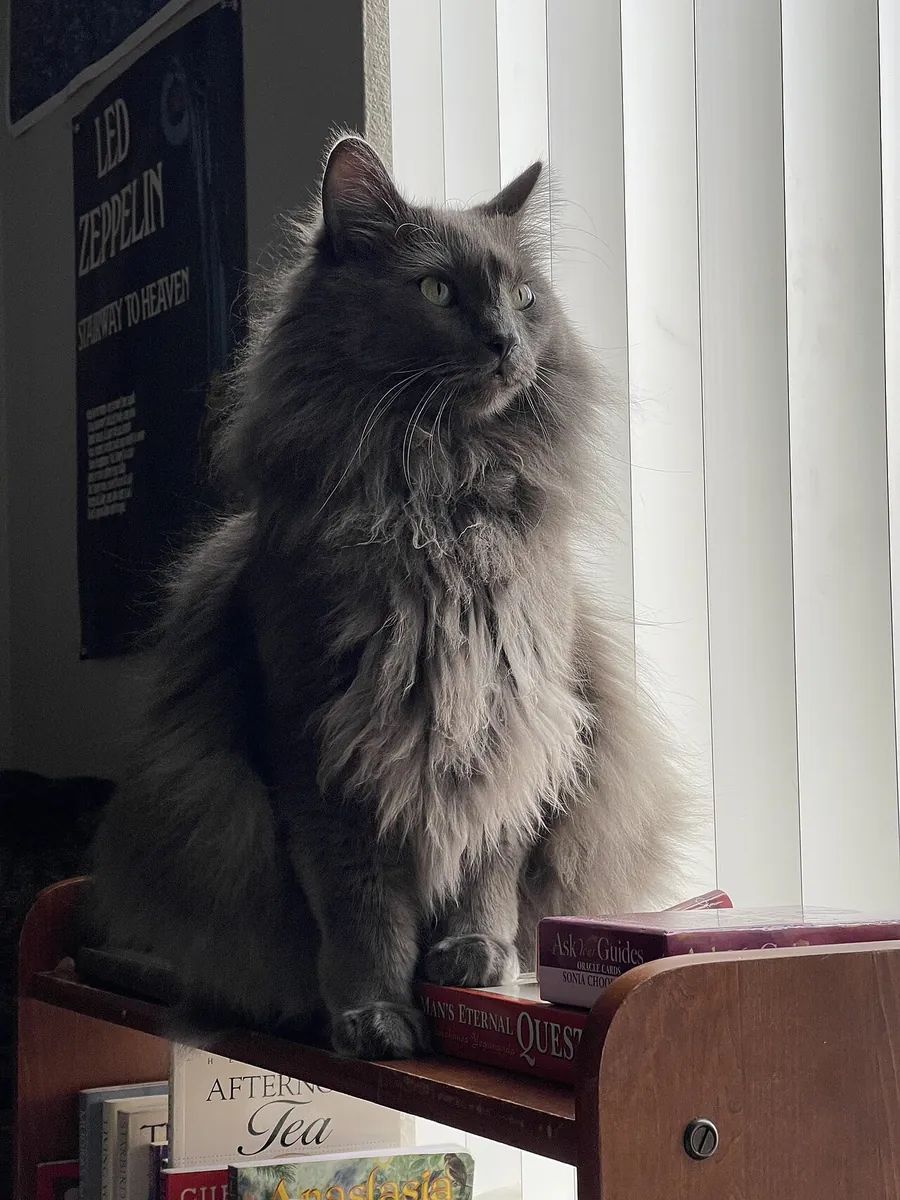
Nebelung
Also known as: Nebelung cat · Mist cat · Longhaired Russian Blue · Creature of the mist
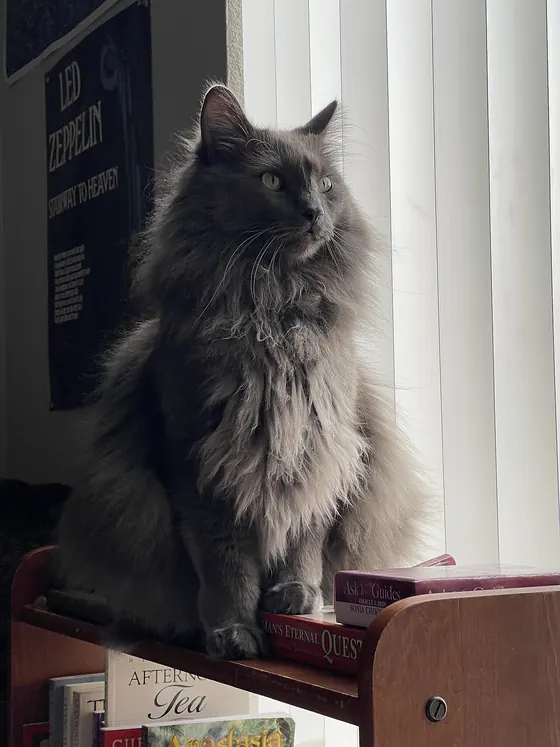
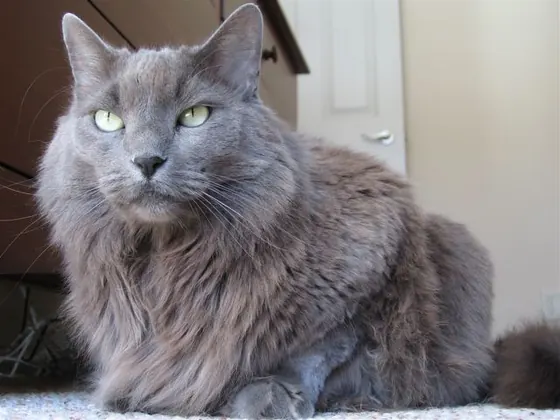
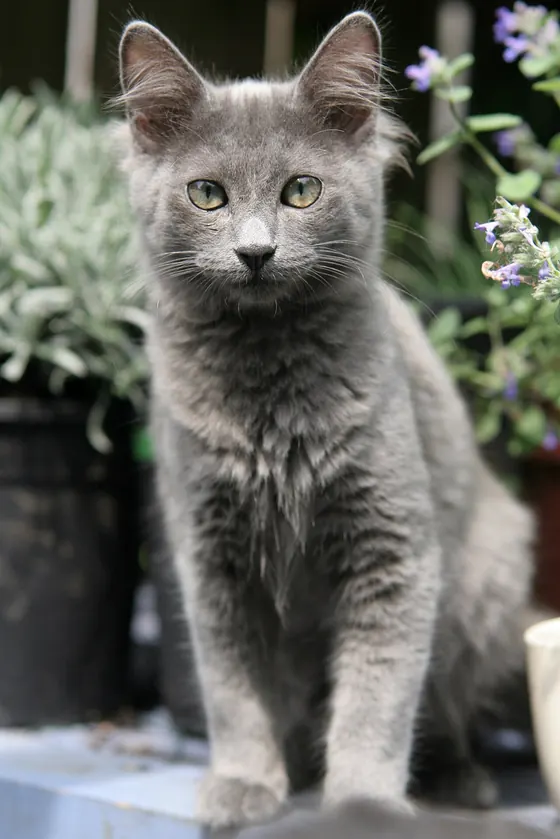
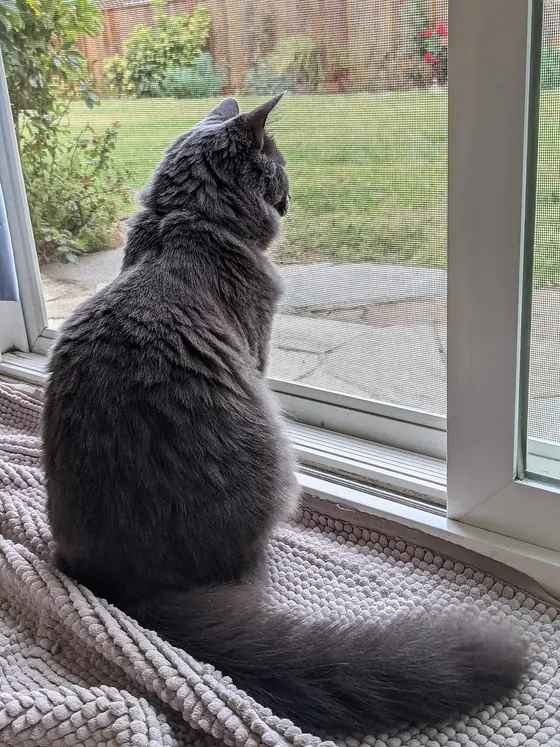
Photos: Aislingblack (CC BY-SA 4.0) · MCB (CC BY-SA 2.5) · Nebelung (CC BY 3.0) · Mds08011 (CC BY 4.0), via Wikimedia Commons.
Breed profile
* An estimate for Spain in 2026 (food, litter, vet and insurance), based on the size, grooming and health needs of the breed, not on measured costs of individual cats.
What it is like
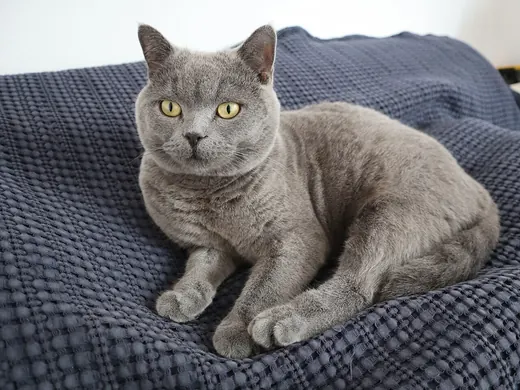
It was created in the 1980s by the American programmer Cora Cobb, in Denver, from Siegfried, a semi-longhaired blue male born to a black longhaired female, and his sister Brunhilde. Its name comes from the German “Nebel”, mist, and from the Nibelungs of the Germanic saga that inspired Wagner's operas, which is also where the names of the two founders come from. TICA recognised it in 1987. It is essentially a semi-longhaired Russian Blue: slender, green-eyed, with a blue coat that has a silver sheen. Shy with strangers and very loyal to its own people, it is calm, a creature of fixed routines and playful once it trusts you.
Coat colours and patterns
Colours and patterns that are common or accepted in this breed. Each page explains where the colour comes from, the myths around it and other breeds that have it.
All cat coat colours and patterns →
Temperament
Care
Weekly brushing, more in spring when it sheds its winter coat. It needs a quiet home and stable routines: noise, constant visitors or moving house stress it. Give it hiding places, high spots and time to build trust. It copes well with being alone during the working day. It learns with treats and enjoys hunting games. Keep an eye on portions, as it eats with gusto.
Health
It is a young, healthy breed with no well-documented inherited diseases of its own. Its risks are those of any cat: excess weight, tartar and kidney or urinary disease with age. As it is very sensitive to stress, make sure changes at home do not trigger idiopathic cystitis or litter tray problems. Annual check-ups.
Fun facts
Its name joins the German “Nebel” (mist) with the Nibelungs of Germanic mythology.
The silver sheen of its coat shows up much better in natural light.
It takes about two years to grow its full coat.
It is a rare breed: there are very few breeders in Spain.
Frequently asked questions
How big does a Nebelung get?
An adult Nebelung usually weighs 3–6 kg (7–13 lb) and stands about 23–28 cm (9–11 in) at the shoulder, which makes it a medium cat.
How long does a Nebelung live?
Its usual life expectancy is 12–16 years. Living indoors, being neutered and having regular vet check-ups make the biggest difference.
Is the Nebelung hypoallergenic?
No. It produces the usual cat allergens. If someone at home is allergic, spend time with the breed before deciding and talk to an allergist.
Is the Nebelung good with children?
It can be, with calm children who respect its space. As with any cat, teach children to let it walk away when it has had enough.
How much play does a Nebelung need?
As a guide, 20 min of play a day. Its activity score is 3 out of 5: short daily play sessions with a wand toy work better than one long one.
Similar breeds
All breeds A to Z Cost calculator (Spanish) Food portions (Spanish)