
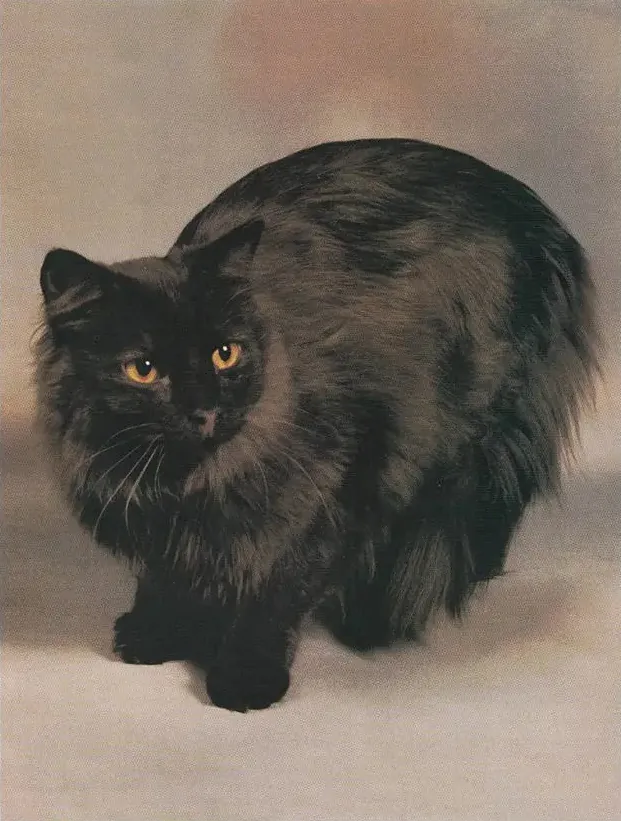
Chantilly-Tiffany
Also known as: Chantilly · Tiffany · Foreign Longhair · Chantilly/Tiffany · Chantilly cat
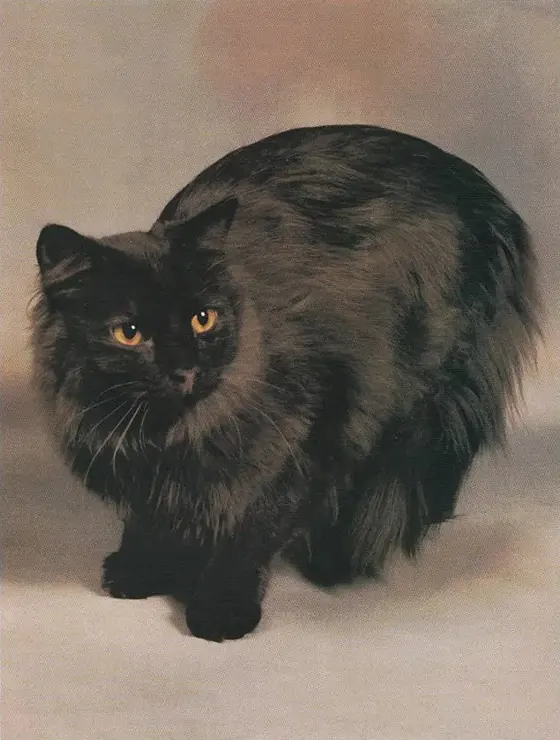
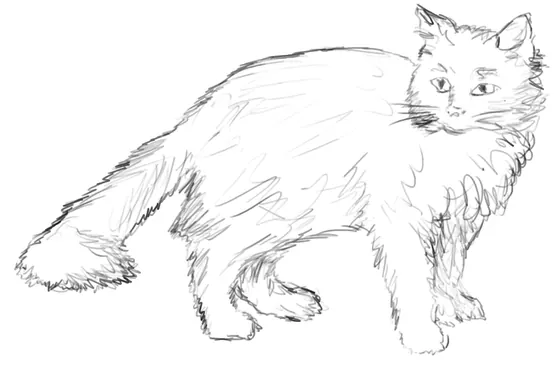
Photos: Helgren, Anne. (CC0) · Arnaud.ramey (CC BY-SA 4.0), via Wikimedia Commons.
Breed profile
* An estimate for Spain in 2026 (food, litter, vet and insurance), based on the size, grooming and health needs of the breed, not on measured costs of individual cats.
What it is like
It is an extinct breed, and we include it for its history and because its name is still in circulation. In 1967 the American breeder Jennie Robinson bought a pair of semi-longhaired, chocolate-coloured, golden-eyed cats, Thomas and Shirley, at an estate auction in White Plains, New York; they had their first litter in May 1969. The ACA registered them in the early 1970s as Foreign Longhairs; a Burmese breeder in Florida, Sigyn Lund, renamed them Tiffany, but the breed was so scarce that it lost its registration. In the late 1980s Tracy Oraas and Jan DeRegt revived it, and in 1992 they called it Chantilly, partly to avoid confusion with the British Tiffanie. It reached experimental or new breed status with several North American registries, including ACFA, CFF, CCA and TICA, but in 2009 TICA had only fifteen cats on its books. The last line ended in 2015, when a Norwegian breeder closed her programme and spayed the last female, Acey. No breeding programme is known today.
Temperament
Care
As there are no cats of the breed left, be wary of anyone selling a “Chantilly”: it will be another cat or a cross. For anyone with a cat of similar type, its coat, without undercoat, tangled little, although breeders recommended brushing it every other day.
Health
There are very few health data, because the breed was always so scarce. Some sources describe a tendency to over-groom and pull out hair, with thin patches and hairballs; others present it as a cat that shed little. Its disappearance has to do with how small the breeding population always was.
Fun facts
The photo on its profile dates from 1995 and shows Opurrtune Fax O' Life, from the breeder Tracy Oraas; the second image is an artistic illustration, because hardly any photos of the breed remain.
For years it was repeated that it carried Burmese blood, which has been ruled out.
It has nothing to do with the British Tiffanie, which has its own profile on Michipedia.
Its last line was lost in Norway in 2015.
Frequently asked questions
How big does a Chantilly-Tiffany get?
An adult Chantilly-Tiffany usually weighs 2.5–5 kg (6–11 lb) and stands about 25–30 cm (10–12 in) at the shoulder, which makes it a medium cat.
How long does a Chantilly-Tiffany live?
Its usual life expectancy is 12–16 years. Living indoors, being neutered and having regular vet check-ups make the biggest difference.
Is the Chantilly-Tiffany hypoallergenic?
No. It produces the usual cat allergens. If someone at home is allergic, spend time with the breed before deciding and talk to an allergist.
Is the Chantilly-Tiffany good with children?
Usually yes: it tends to be patient and sociable with children. As with any cat, teach children to let it walk away when it has had enough.
How much play does a Chantilly-Tiffany need?
As a guide, 20 min of play a day. Its activity score is 3 out of 5: short daily play sessions with a wand toy work better than one long one.
Similar breeds
All breeds A to Z Cost calculator (Spanish) Food portions (Spanish)