
Somali
Also known as: Somali cat · Longhaired Abyssinian · Fox cat · Abyssinian Longhair
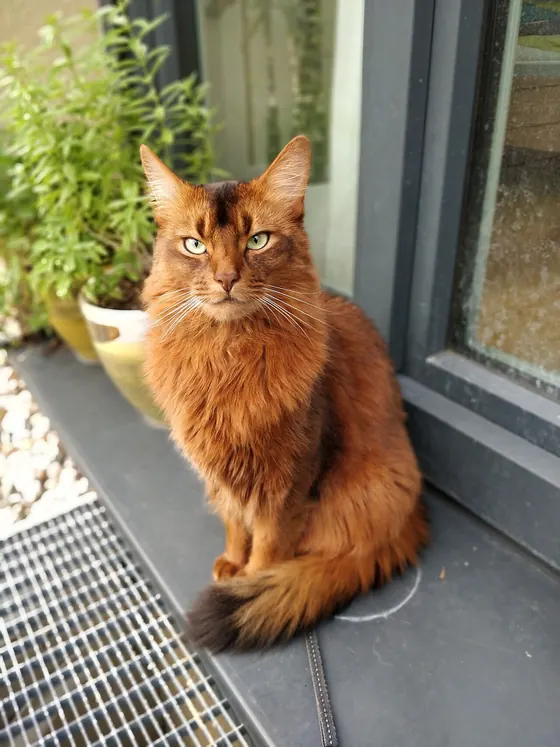
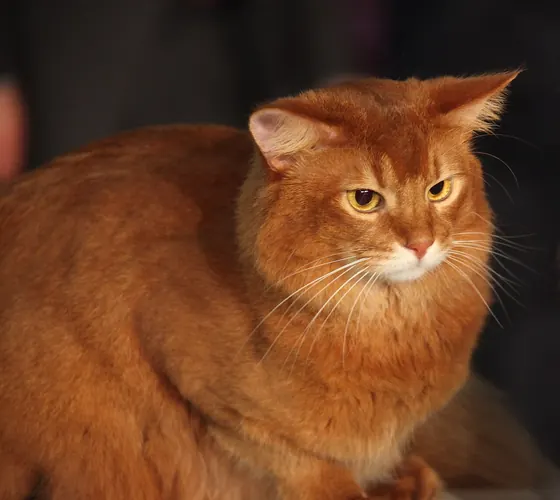
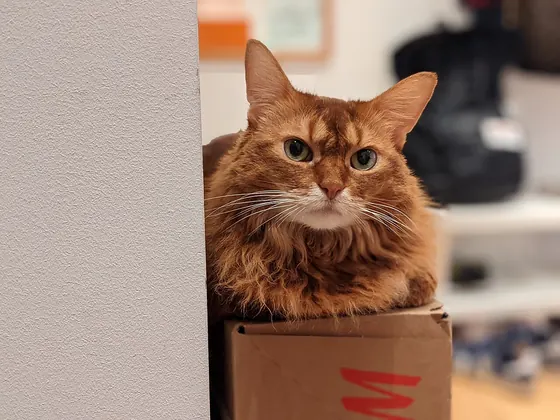
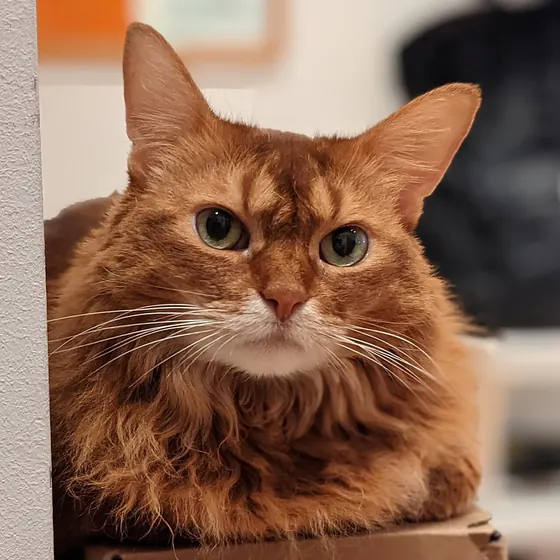
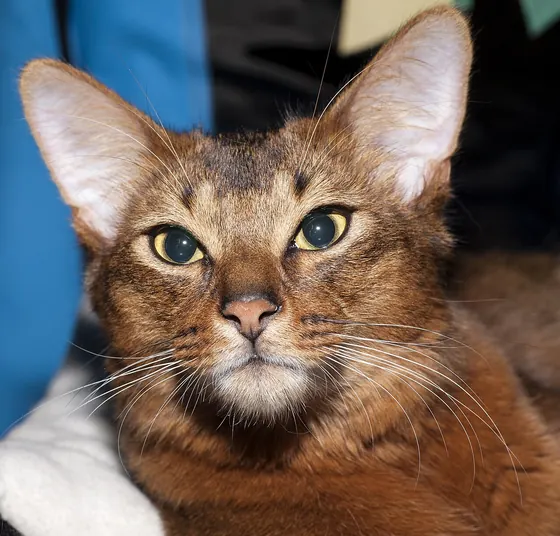
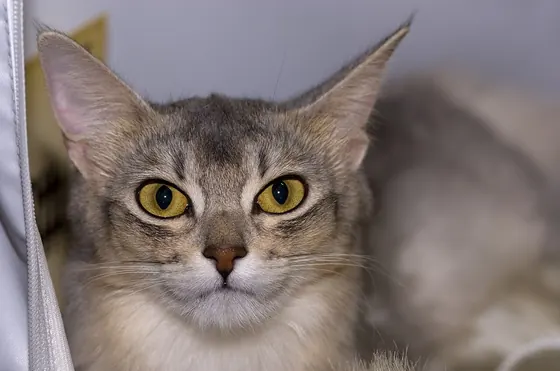
Photos: AbuDun91919 (CC BY-SA 4.0) · Pieter Lanser from The Netherlands (CC BY 2.0) · Gferon (CC BY-SA 4.0) · Nickolas Titkov from Moscow, Russian Federation (CC BY-SA 2.0), via Wikimedia Commons.
Breed profile
* An estimate for Spain in 2026 (food, litter, vet and insurance), based on the size, grooming and health needs of the breed, not on measured costs of individual cats.
What it is like
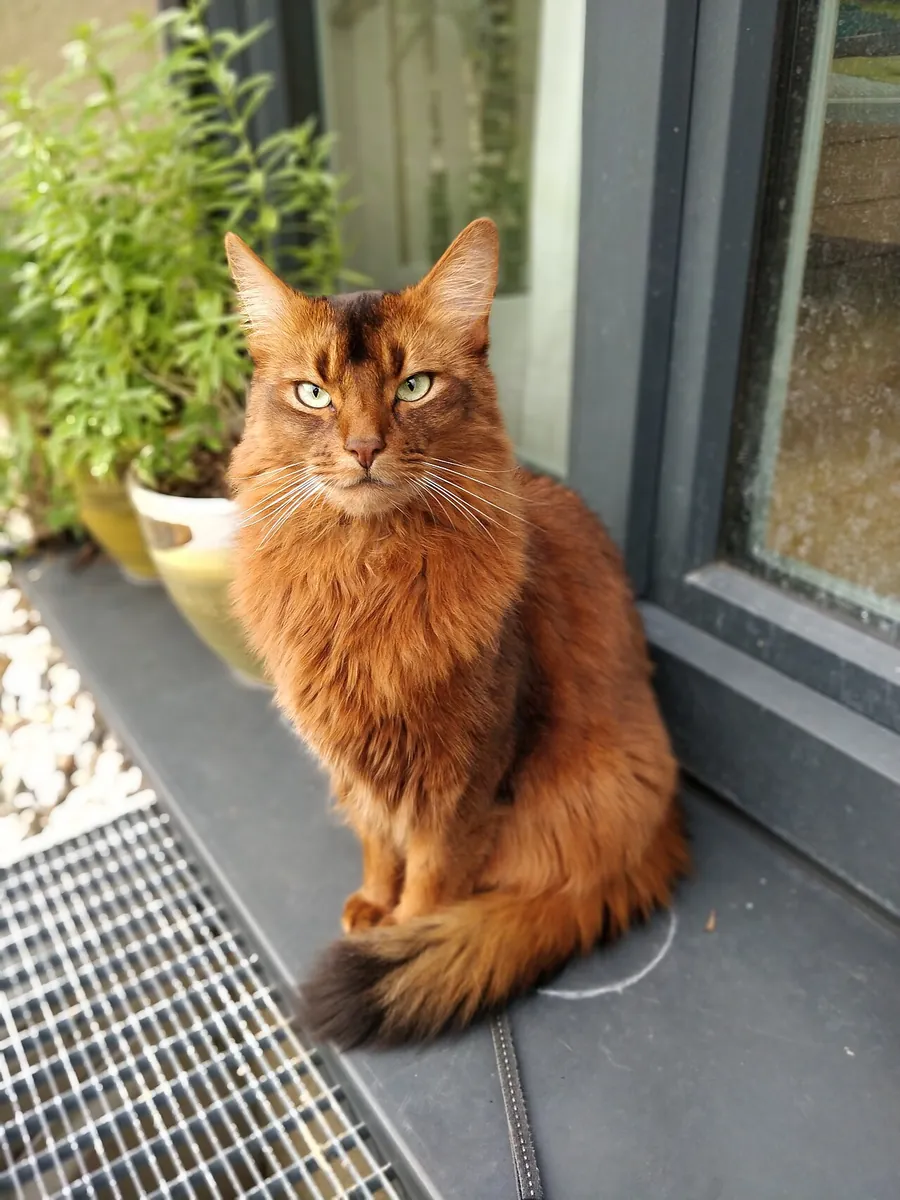
Longhaired kittens kept turning up in Abyssinian litters and for years they were quietly given away. In the 1960s the American breeder Evelyn Mague, along with other breeders in Canada and Australia, decided to breed them as a breed of their own, and the CFA recognised it in 1978. It was named Somali because Somalia neighbours Ethiopia, the former Abyssinia. It has the athletic body of the Abyssinian, a ticked coat with several bands of colour on each hair, a ruff round the neck and a tail so bushy that it is called the fox cat. It is perpetual motion: curious, playful, a clown and very people-oriented, although not especially fond of being held.
Coat colours and patterns
Colours and patterns that are common or accepted in this breed. Each page explains where the colour comes from, the myths around it and other breeds that have it.
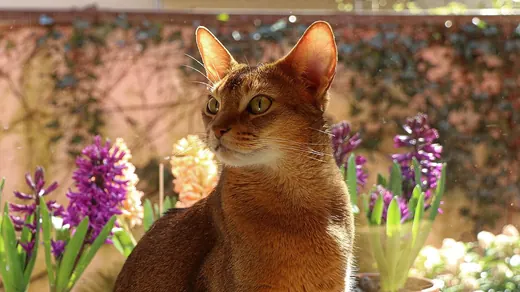 Ticked or agouti
Pattern · Ticked tabby, Abyssinian tabby
Ticked or agouti
Pattern · Ticked tabby, Abyssinian tabby
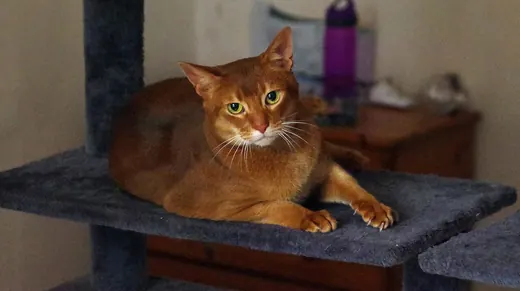 Cinnamon and fawn
Colour · Cinnamon, Sorrel
Cinnamon and fawn
Colour · Cinnamon, Sorrel
All cat coat colours and patterns →
Temperament
Care
Brushing once or twice a week; its coat is fine and tangles little, except in the ruff and the britches. The demanding part is activity: it needs places to climb, hunting games several times a day and mental challenges, because a bored Somali is destructive. It copes badly with many hours alone; another active cat helps. Check its teeth, as gingivitis is common.
Health
It shares with the Abyssinian progressive retinal atrophy (rdAc and rdy forms, DNA test for rdAc), pyruvate kinase deficiency (testable), renal amyloidosis and gingivitis. Insist on the parents' PRA and pyruvate kinase test results and look after its mouth from a young age.
Health problems to watch for
These are described more often in this breed. It does not mean a Somali will have them, nor that a moggy is free of them: they are worth knowing about and discussing with your vet.
Fun facts
Its name is a nod to Somalia neighbouring Ethiopia, the former Abyssinia.
Being longer, each hair has more bands of colour than the Abyssinian's, which gives it a special sheen.
Kittens are born quite dark and the ticking colour develops over the months.
Longhaired Abyssinians were already appearing before organised breeding, a sign that the gene had been in the breed for some time.
Frequently asked questions
How big does a Somali get?
An adult Somali usually weighs 3–5.5 kg (7–12 lb) and stands about 23–28 cm (9–11 in) at the shoulder, which makes it a medium cat.
How long does a Somali live?
Its usual life expectancy is 12–15 years. Living indoors, being neutered and having regular vet check-ups make the biggest difference.
Is the Somali hypoallergenic?
No. It produces the usual cat allergens. If someone at home is allergic, spend time with the breed before deciding and talk to an allergist.
Is the Somali good with children?
Usually yes: it tends to be patient and sociable with children. As with any cat, teach children to let it walk away when it has had enough.
How much play does a Somali need?
As a guide, 45 min of play a day. Its activity score is 5 out of 5: short daily play sessions with a wand toy work better than one long one.
Similar breeds
All breeds A to Z Cost calculator (Spanish) Food portions (Spanish)