
Sacred Birman
Also known as: Birman · Birman cat · Sacred Cat of Burma · Sacré de Birmanie
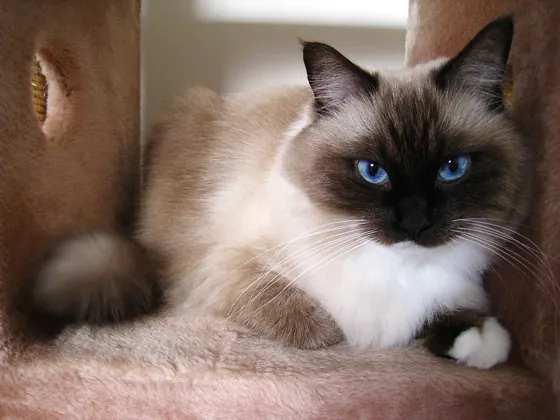
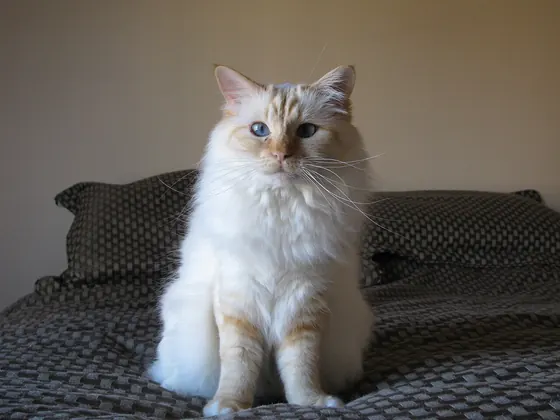
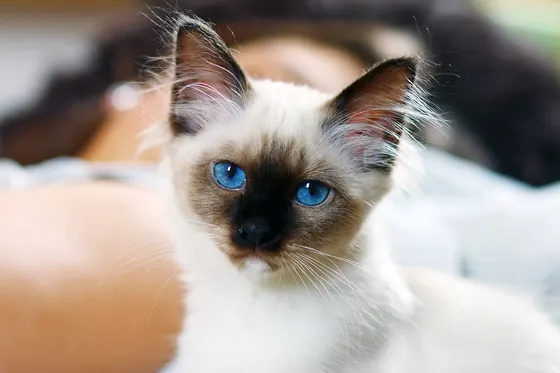
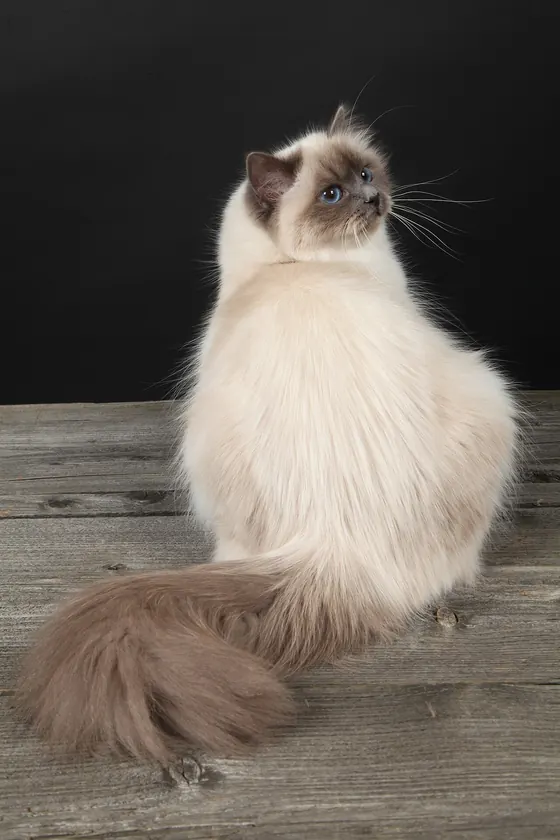
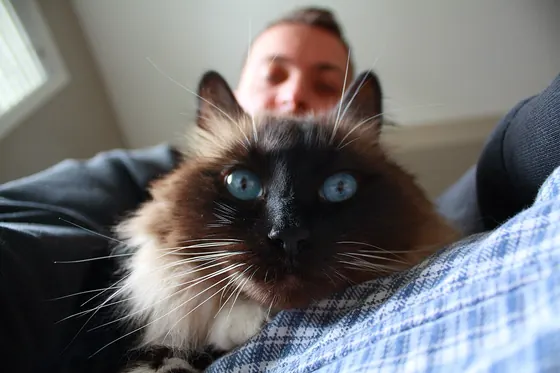
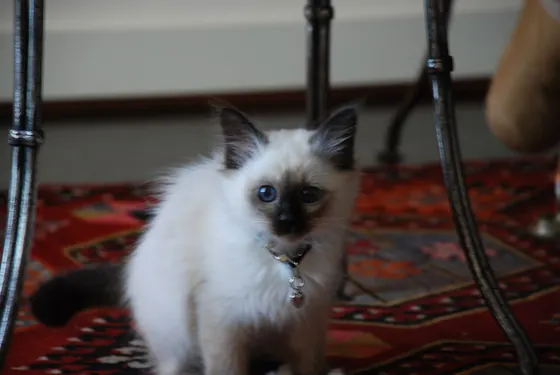
Photos: wapiko☆ (CC BY 2.0) · Donovan Tremblay (CC BY-SA 4.0) · Thomas Günther (CC BY-SA 4.0) · Sidi Saad's Heilige Birmas (CC BY-SA 4.0) · Shawn from Airdrie, Canada (CC BY-SA 2.0) · Silésie19 (CC BY-SA 3.0), via Wikimedia Commons.
Breed profile
* An estimate for Spain in 2026 (food, litter, vet and insurance), based on the size, grooming and health needs of the breed, not on measured costs of individual cats.
What it is like
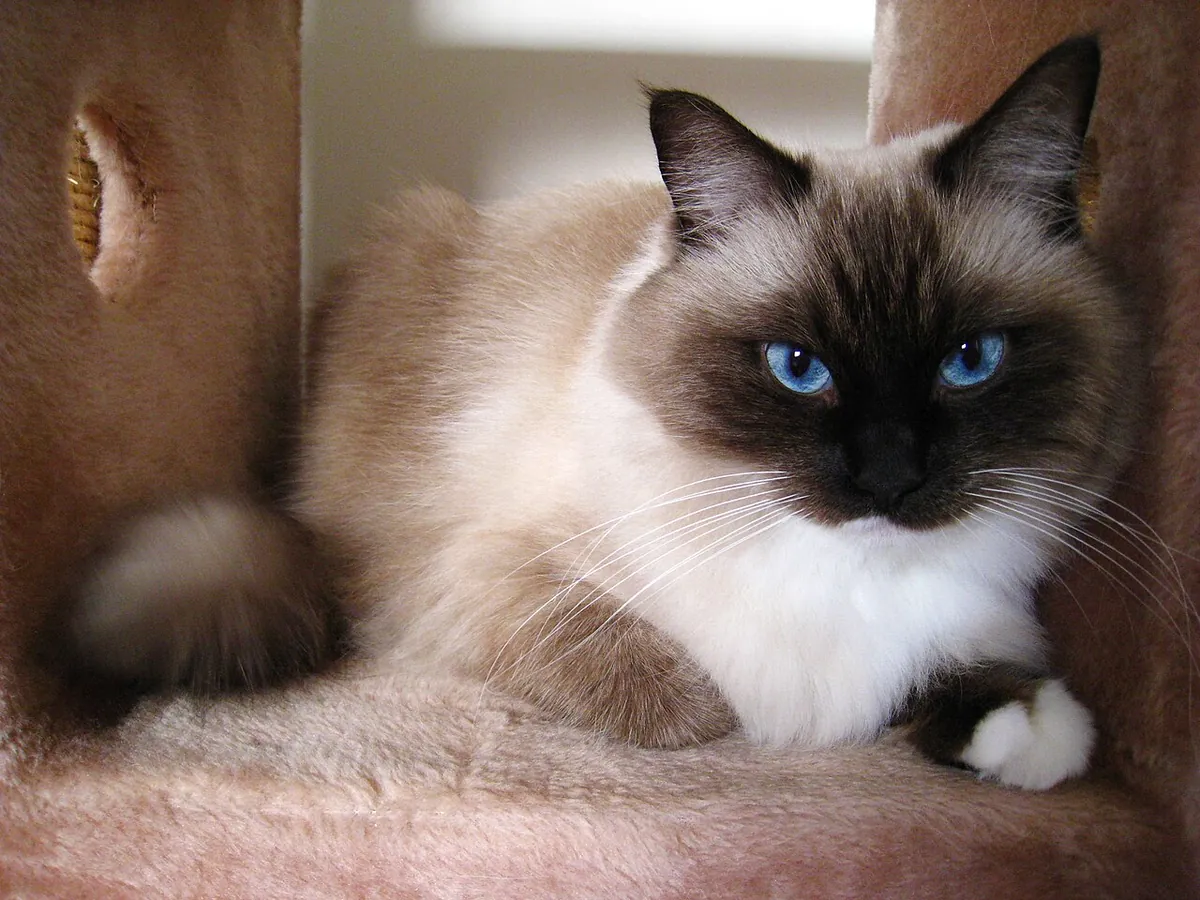
Its legend tells of a Burmese temple and of a cat that took on its colours when its priest died, but the breed as we know it was developed in France in the 1920s and recognised there in 1925. After the Second World War very few cats were left and it was rebuilt with crosses to Persians and Siamese. It should not be confused with the Burmese, which is a different breed. It has coloured points, sapphire blue eyes, a silky semi-long coat and four immaculate white gloves, which are its trademark. Its temperament is sweet, calm and sociable, with a soft voice, and it adapts to almost any home.
Coat colours and patterns
Colours and patterns that are common or accepted in this breed. Each page explains where the colour comes from, the myths around it and other breeds that have it.
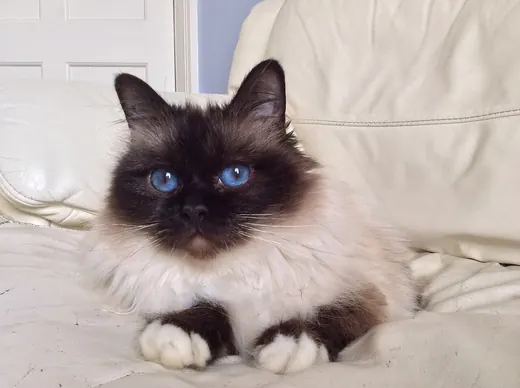
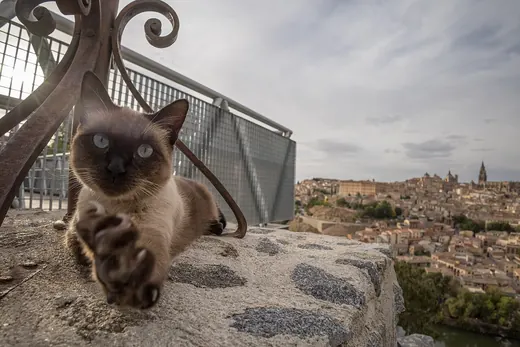
All cat coat colours and patterns →
Temperament
Care
Its coat, with little undercoat, tangles little: brushing once or twice a week. It enjoys company and gentle play, and gets on well with children, dogs and other cats. It adapts very well to flat life. Keep the gloves clean if it goes out on a terrace and watch its weight after neutering. It easily learns routines for a reward, such as walking into the carrier on its own.
Health
More cases of FIP (feline infectious peritonitis) in kittens and some predisposition to kidney disease are described; take care, because many healthy Birmans have slightly higher than normal creatinine and blood results need careful interpretation. There is also a rare congenital hypotrichosis, with a DNA test. Annual check-ups.
Health problems to watch for
These are described more often in this breed. It does not mean a Sacred Birman will have them, nor that a moggy is free of them: they are worth knowing about and discussing with your vet.
Fun facts
In France it is called the Sacré de Birmanie, which is where the name Sacred Birman comes from.
According to legend, the white gloves symbolise the purity of the cat that rested on its dying priest.
It has nothing to do with the Burmese, even though both names refer to Burma.
In a 2024 British study it was the breed with the longest median life expectancy, around 16 years.
Frequently asked questions
How big does a Sacred Birman get?
An adult Sacred Birman usually weighs 3.5–7 kg (8–15 lb) and stands about 25–30 cm (10–12 in) at the shoulder, which makes it a medium cat.
How long does a Sacred Birman live?
Its usual life expectancy is 13–17 years. Living indoors, being neutered and having regular vet check-ups make the biggest difference.
Is the Sacred Birman hypoallergenic?
No. It produces the usual cat allergens. If someone at home is allergic, spend time with the breed before deciding and talk to an allergist.
Is the Sacred Birman good with children?
Usually yes: it tends to be patient and sociable with children. As with any cat, teach children to let it walk away when it has had enough.
How much play does a Sacred Birman need?
As a guide, 20 min of play a day. Its activity score is 3 out of 5: short daily play sessions with a wand toy work better than one long one.
Similar breeds
All breeds A to Z Cost calculator (Spanish) Food portions (Spanish)