
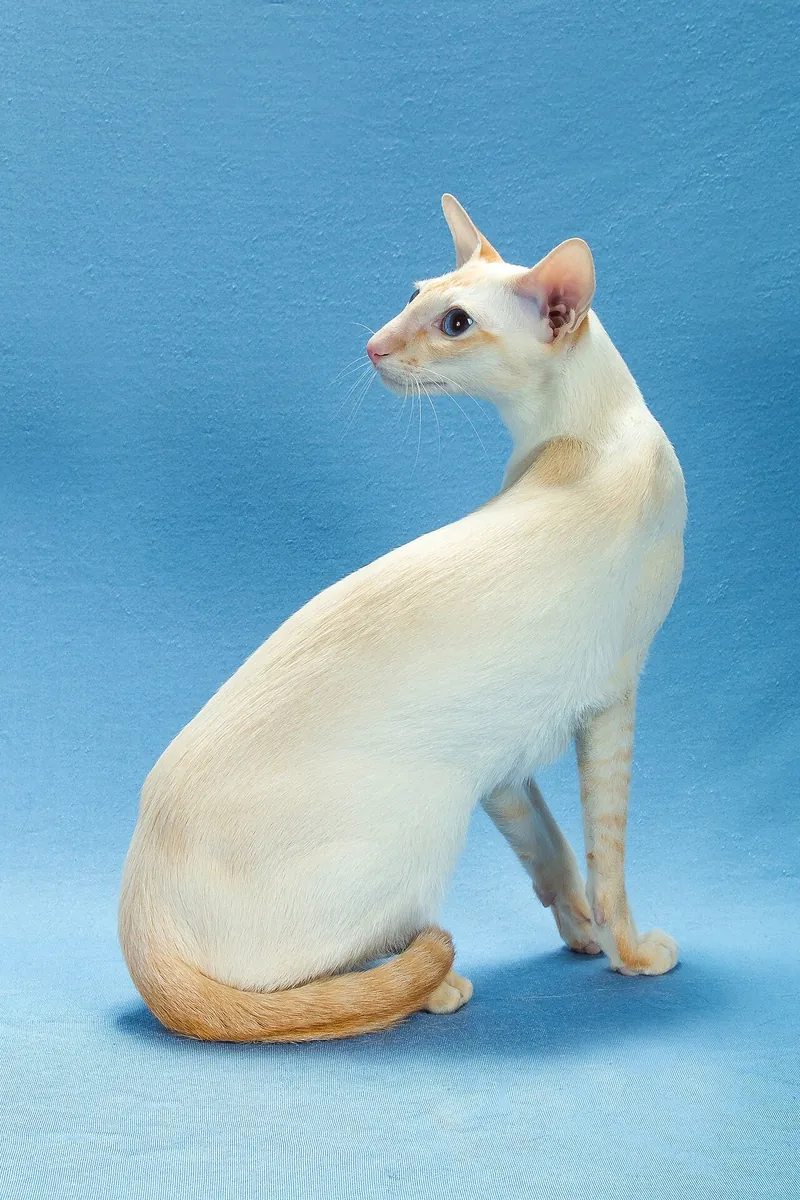
Colourpoint Shorthair
Also known as: Colorpoint Shorthair · Red point Siamese · Lynx point Siamese · Tortie point Siamese · New-colour Siamese
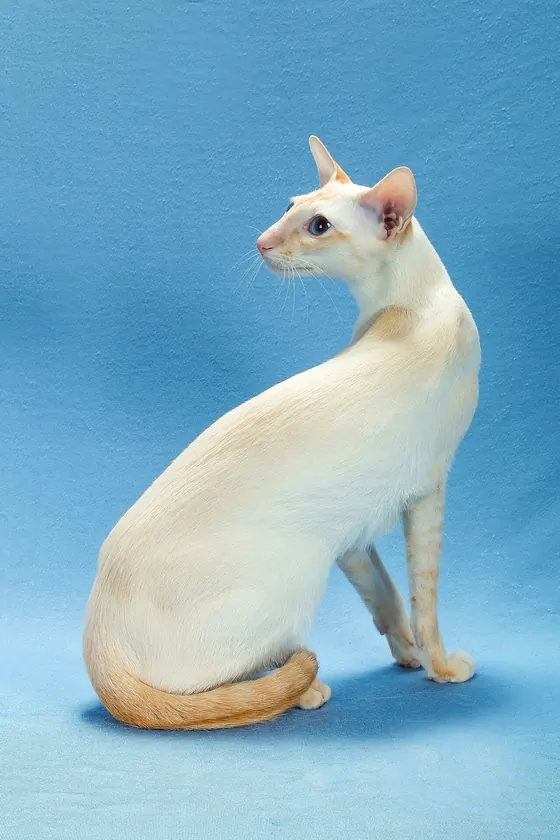
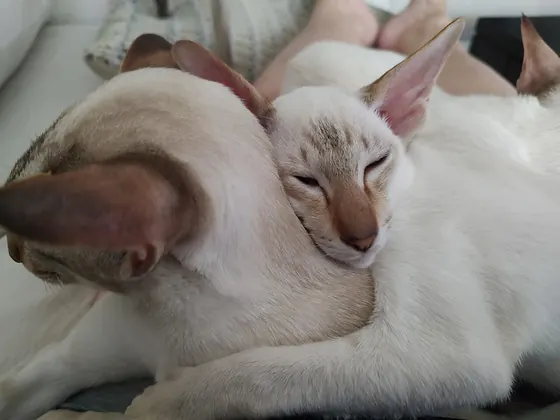
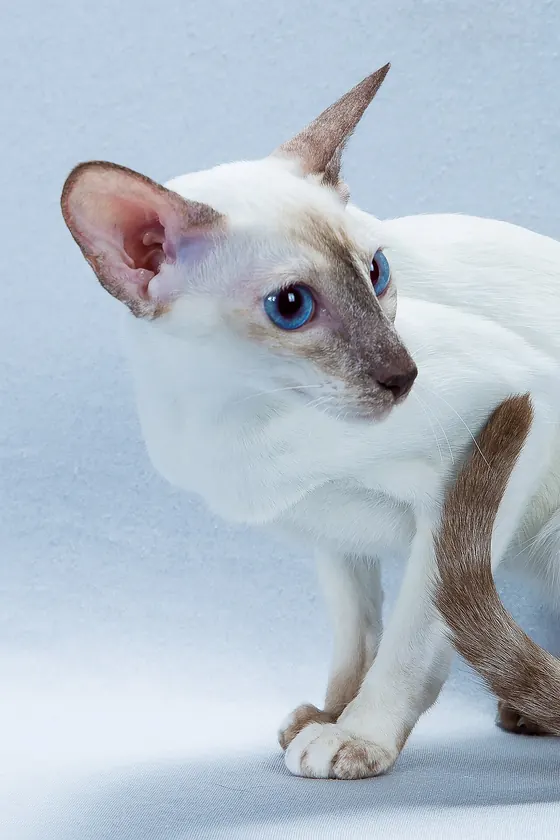
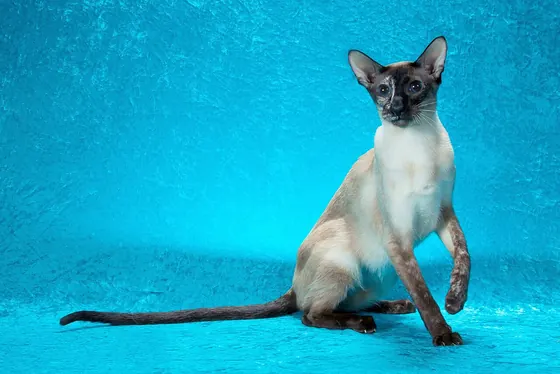
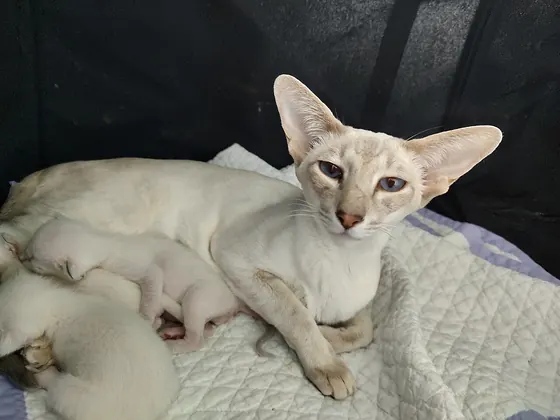
Photos: Larry Johnson (CC0) · Kathryn Smith (CC BY 4.0), via Wikimedia Commons.
Breed profile
* An estimate for Spain in 2026 (food, litter, vet and insurance), based on the size, grooming and health needs of the breed, not on measured costs of individual cats.
What it is like
For all practical purposes it is a Siamese in colours other than the four classic ones. The American CFA accepts the Siamese only in seal, chocolate, blue and lilac, and around 1948 some breeders in the United States and the UK wanted other colours, especially red. To get them they crossed Siamese with a red tabby American Shorthair, then bred back to Siamese for generations to recover the type. The CFA granted these cats championship status in 1964 under the name Colorpoint Shorthair, at first only in red and cream point; in 1969 it added lynx points (with tabby points) and tortie points. Other registries, such as FIFe, the GCCF or TICA, do not separate it: for them a Siamese-type red point is simply a Siamese. It has the long, fine body, wedge-shaped head, large ears and blue eyes of the Siamese, and its personality too: talkative, clever and very attached to its people.
Temperament
Care
The coat is almost no work: a rubber mitt once a week. What it asks for is company and activity: hunting play every day, tall scratching posts, puzzle feeders and, if you are out for long hours, another cat to keep it entertained. It easily learns to walk on a harness and work with a clicker. Secure windows and balconies, because it is curious and bold. Annual dental check.
Health
The same risks as the Siamese: progressive retinal atrophy (rdAc, CEP290 gene, DNA test available), amyloidosis, feline asthma, megaoesophagus, dental problems and a higher risk of mammary tumours in unspayed females. Ask the breeder for the parents' test results. Annual check-up and blood tests from the age of seven.
Fun facts
For FIFe, the GCCF and TICA it is simply a Siamese in other colours; the CFA has treated it as a separate breed since 1964.
The first attempt to produce the red point used a red tabby American Shorthair.
Tortie points are almost always female, because tortoiseshell depends on two X chromosomes.
Lynx points have stripes on the legs and tail and the “M” on the forehead, but only on the points.
Frequently asked questions
How big does a Colourpoint Shorthair get?
An adult Colourpoint Shorthair usually weighs 2.5–5 kg (6–11 lb) and stands about 20–25 cm (8–10 in) at the shoulder, which makes it a medium cat.
How long does a Colourpoint Shorthair live?
Its usual life expectancy is 12–16 years. Living indoors, being neutered and having regular vet check-ups make the biggest difference.
Is the Colourpoint Shorthair hypoallergenic?
No. It produces the usual cat allergens. If someone at home is allergic, spend time with the breed before deciding and talk to an allergist.
Is the Colourpoint Shorthair good with children?
Usually yes: it tends to be patient and sociable with children. As with any cat, teach children to let it walk away when it has had enough.
How much play does a Colourpoint Shorthair need?
As a guide, 40 min of play a day. Its activity score is 5 out of 5: short daily play sessions with a wand toy work better than one long one.
Similar breeds
All breeds A to Z Cost calculator (Spanish) Food portions (Spanish)