
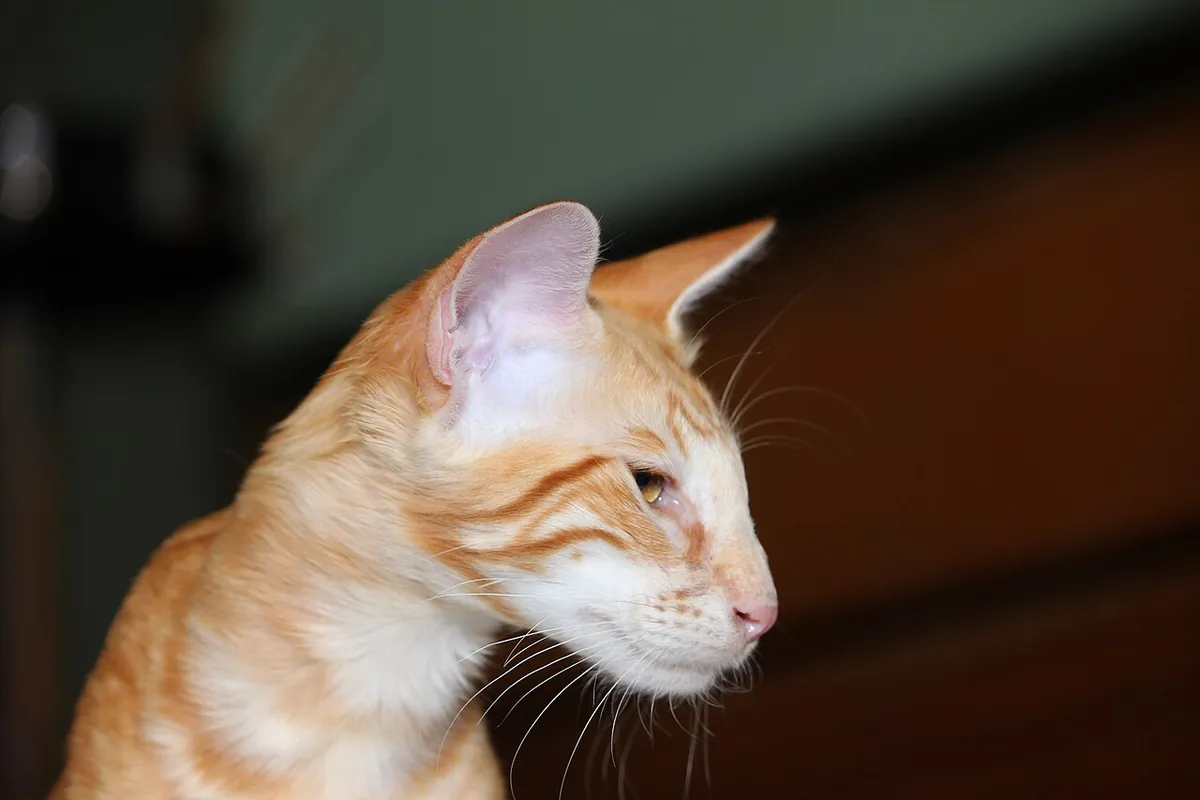
Oriental Longhair
Also known as: Oriental Semi-longhair · British Angora · Javanese · Mandarin
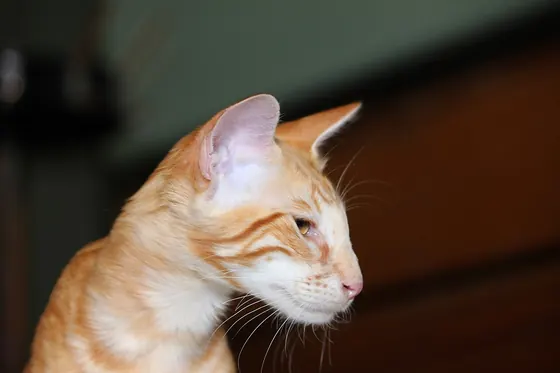
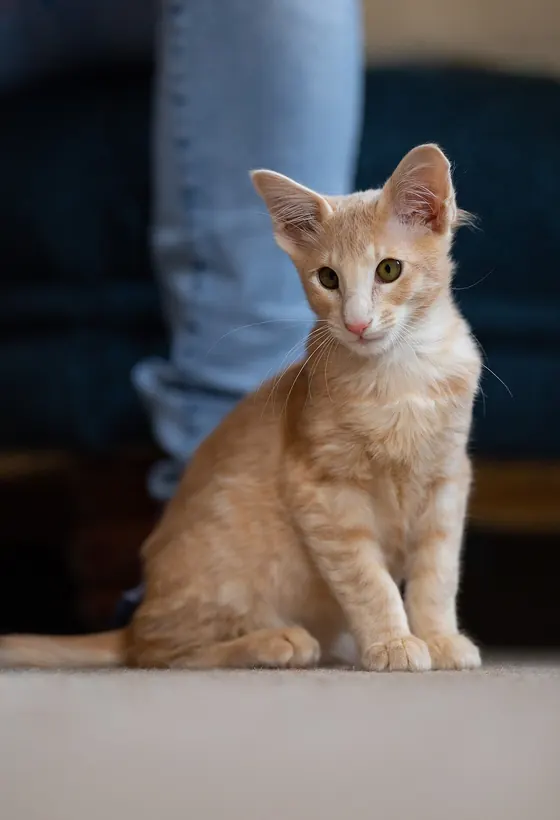
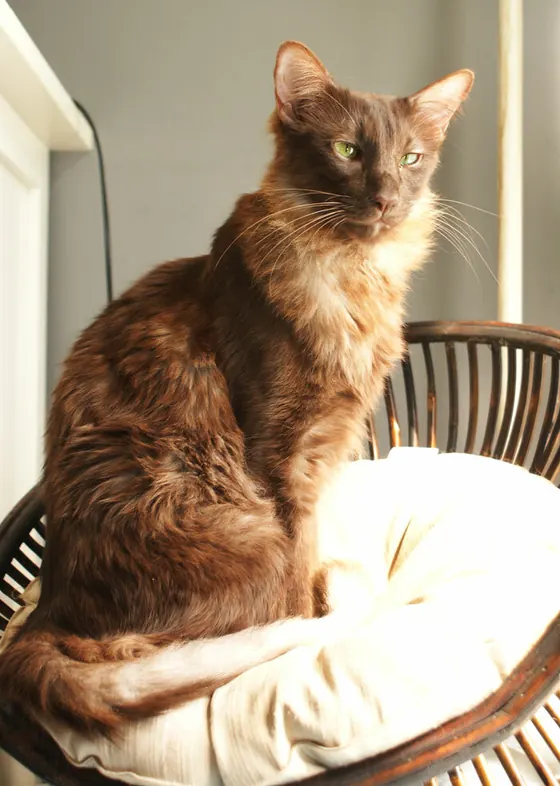
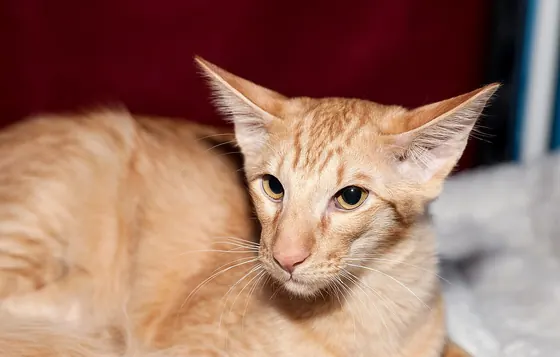
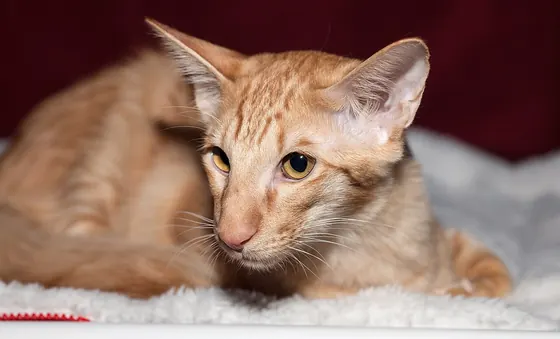
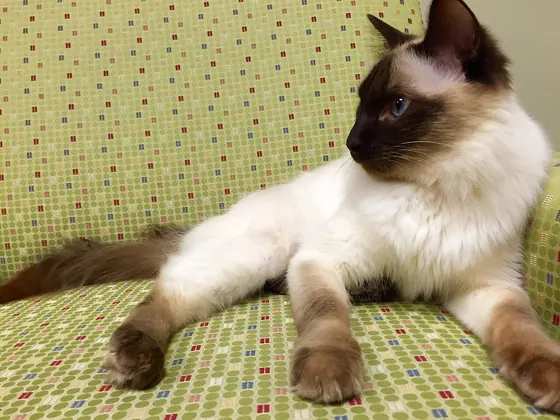
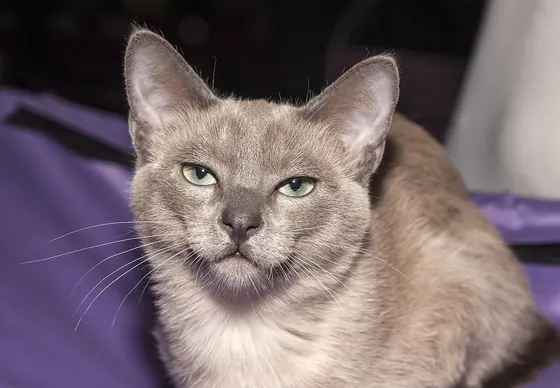
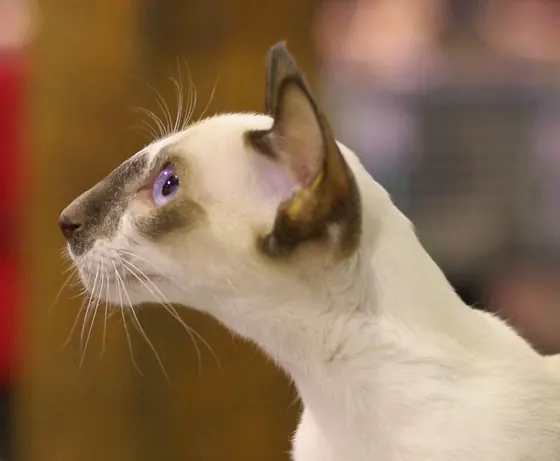
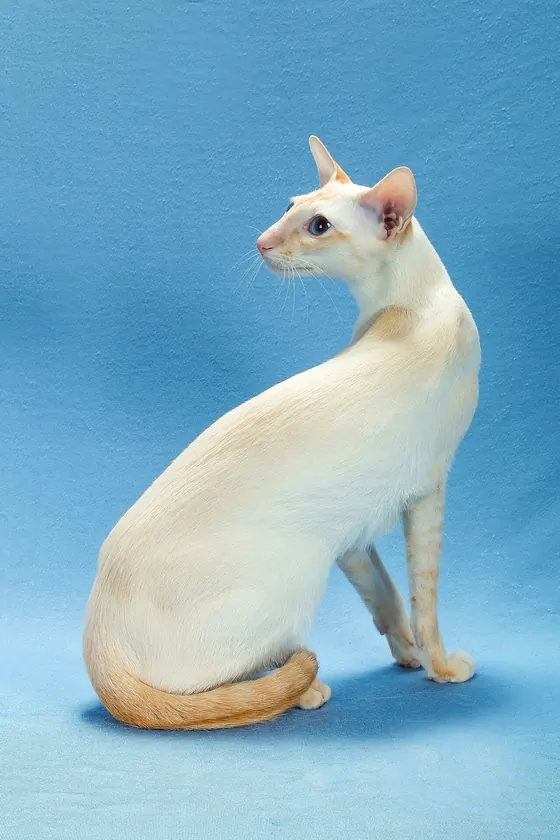
Photos: Kamée (CC BY 3.0) · Gnew17 (CC BY-SA 4.0) · Yusui.y (CC0) · Nickolas Titkov from Moscow, Russian Federation (CC BY-SA 2.0), via Wikimedia Commons.
Breed profile
* An estimate for Spain in 2026 (food, litter, vet and insurance), based on the size, grooming and health needs of the breed, not on measured costs of individual cats.
Varieties
The same cat in two coat lengths
What it is like
It was born in the UK in the 1960s, when several breeders set out to recreate the look of the old Angora from Siamese and Orientals that carried the longhair gene. In Britain it was simply called the Angora for years, until it was renamed to avoid confusion with the Turkish Angora. It is the same cat as the Oriental Shorthair, with a fine body, wedge-shaped head and large ears, but with a semi-long coat and a spectacular plumed tail. Its personality is identical too: sociable, chatty and very dependent on its people. Having no undercoat, it looks less bulky than you might expect and hardly ever tangles.
Temperament
Care
Despite the coat, it is groomed almost like a shorthair: combing with a long-toothed comb once or twice a week prevents the few mats that form behind the ears and under the legs. It needs intense daily play, tall scratching posts and company; it is not a cat to leave alone for whole days. It appreciates a warm bed. Check its teeth often and get it used to toothbrushing from kittenhood.
Health
It inherits the same predispositions as the rest of the Siamese family: progressive retinal atrophy (rdAc, DNA test available), hepatic amyloidosis, gingivitis and asthma. As it is a minority breed, choose breeders who avoid high inbreeding and can show you the parents' test results. As with the Shorthair, no cat is free of allergens.
Fun facts
Several registries have treated it as the Javanese or as a variety of the Balinese: the difference from the latter is mainly colour.
Two Oriental Shorthairs can have longhaired kittens if both carry the recessive gene.
Its coat has no undercoat, so it sheds considerably less than a typical semi-longhaired cat.
The tail, with long fringes that fan out, is its most distinctive feature.
Frequently asked questions
How big does a Oriental Longhair get?
An adult Oriental Longhair usually weighs 2.5–5 kg (6–11 lb) and stands about 20–25 cm (8–10 in) at the shoulder, which makes it a medium cat.
How long does a Oriental Longhair live?
Its usual life expectancy is 12–15 years. Living indoors, being neutered and having regular vet check-ups make the biggest difference.
Is the Oriental Longhair hypoallergenic?
It is often described as hypoallergenic, but no cat is free of the main cat allergen (Fel d 1). Some people with mild allergies react less to it; spend time with the breed before deciding.
Is the Oriental Longhair good with children?
Usually yes: it tends to be patient and sociable with children. As with any cat, teach children to let it walk away when it has had enough.
How much play does a Oriental Longhair need?
As a guide, 40 min of play a day. Its activity score is 5 out of 5: short daily play sessions with a wand toy work better than one long one.
Similar breeds
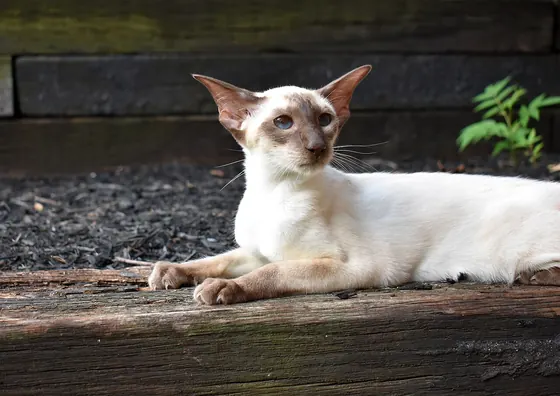
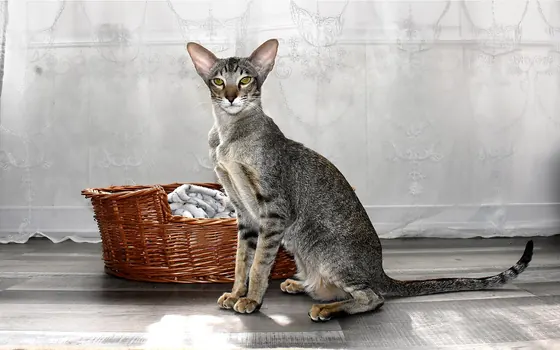
All breeds A to Z Cost calculator (Spanish) Food portions (Spanish)