
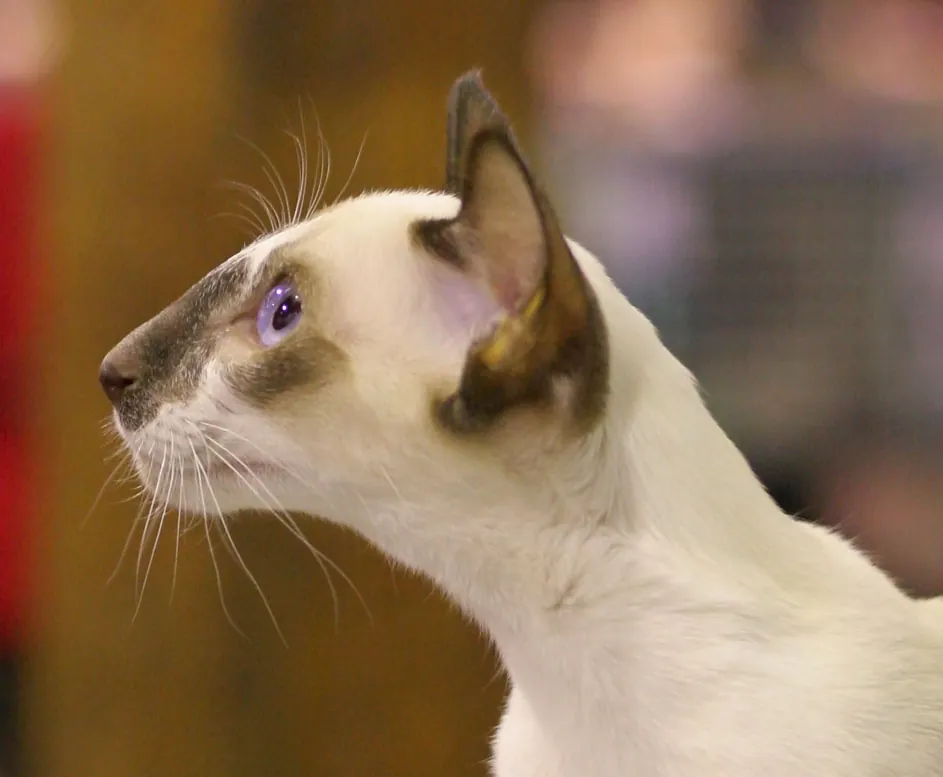
Seychellois
Also known as: Seychellois Shorthair · Seychellois Longhair · Seychellois cat · Seychelles cat
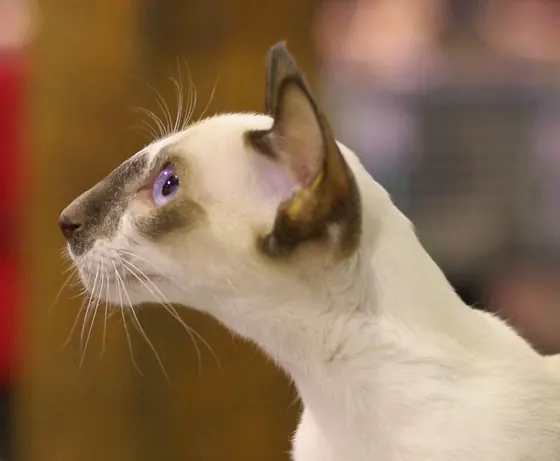
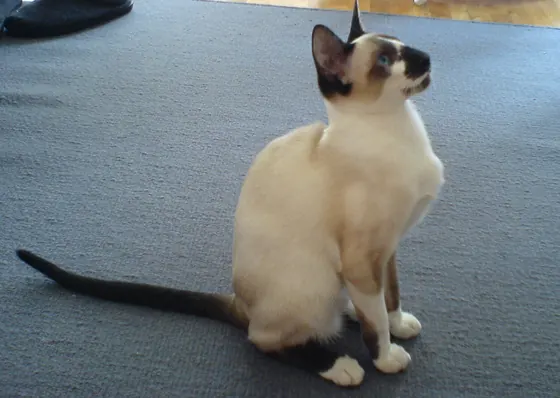
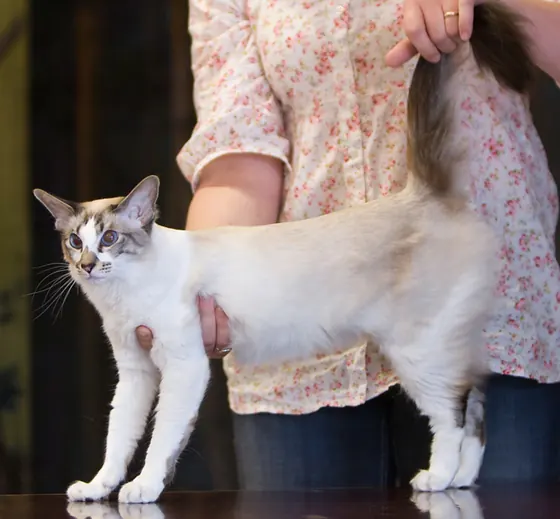
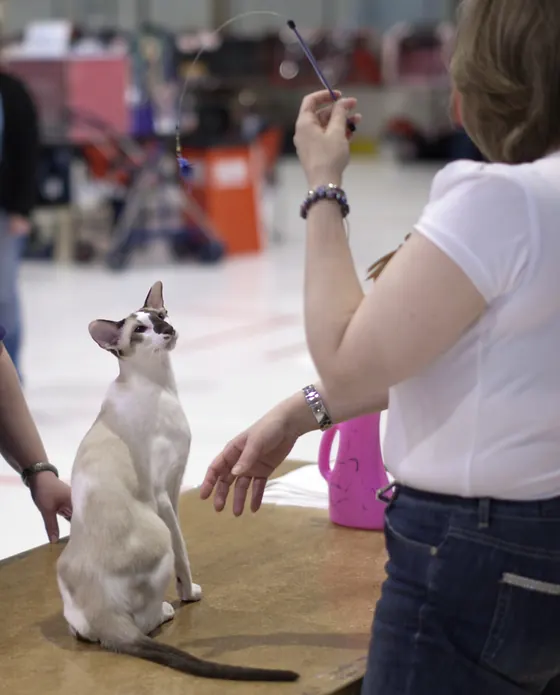
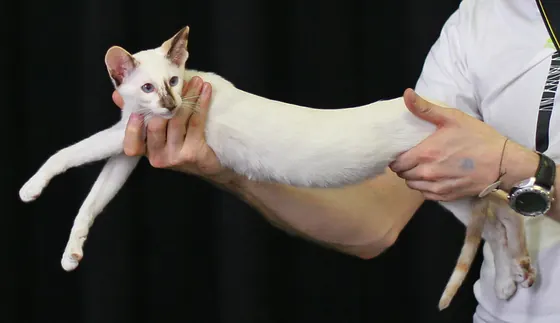
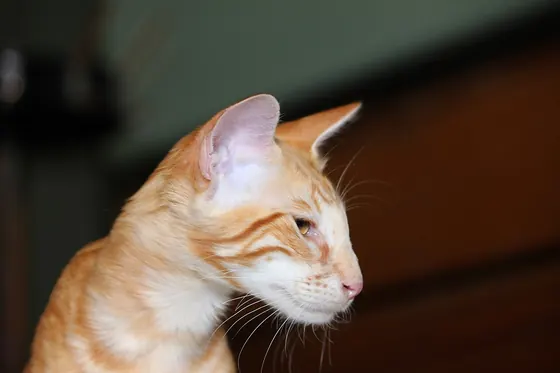
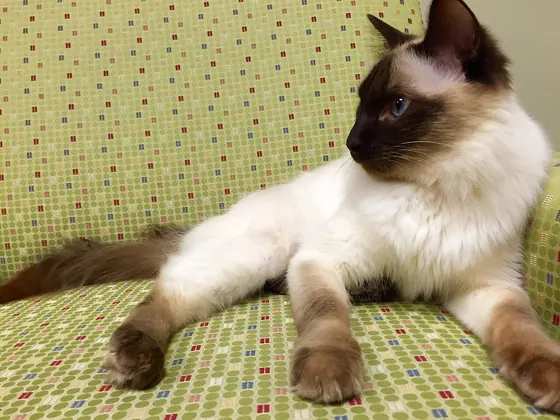
Photos: Heikki Siltala (CC BY 3.0) · Henrik Hansen (Hansen) (Public domain), via Wikimedia Commons.
Breed profile
* An estimate for Spain in 2026 (food, litter, vet and insurance), based on the size, grooming and health needs of the breed, not on measured costs of individual cats.
What it is like
It was created in the UK in the 1980s by the breeder Pat Turner, who was inspired by the look of the bicolour cats of the Seychelles, in the Indian Ocean. To achieve it she crossed Siamese with a tortoiseshell and white Persian, and later added Orientals. The result is a cat of pure Oriental type, with a long, fine body, a wedge-shaped head, enormous ears and blue eyes, but always with plenty of white and scattered patches of colour. Turner classified the pattern into three grades with French names: the neuvième, with colour only on the tail and the odd patch on the head; the huitième, with more patches; and the septième, the most coloured. FIFe granted it championship status in 2005 as a breed in its own right, in short and semi-long coats, but outside that federation it is hardly seen and most registries do not distinguish it from Orientals and Siamese with white. In character it is a textbook Oriental: it talks a lot, follows its people and cannot stand being bored.
Temperament
Care
The shorthair is groomed with a rubber mitt once a week; the semi-longhair with a gentle brush once or twice a week, because with no undercoat it hardly tangles. What it demands is company: it copes badly with spending the day alone, and if everyone at home works away, two cats are better. Daily hunting play, tall scratching posts and shelves to climb. White areas with pink skin, such as the ear tips and nose, burn in the sun: if it sunbathes at the window, keep an eye on those areas and ask your vet about protection.
Health
It shares risks with the Siamese and Orientals it comes from: progressive retinal atrophy (rdAc, CEP290 gene, DNA test available), dental problems and a greater tendency to asthma. On white areas exposed to the sun, squamous cell carcinoma can develop over time, especially on the ears. As the population is very small, choose breeders who keep inbreeding in check. Annual check-up and blood tests from the age of seven.
Fun facts
The three pattern grades have French names: neuvième, huitième and septième, from least to most colour.
FIFe recognised bicolour Orientals in 2003 and, two years later, colourpoints with white under the name Seychellois.
In FIFe the shorthairs are registered as SYS and the semi-longhairs as SYL.
Pat Turner's breeding programme was continued by Barbara Lambert and was lost after her death in the early 2000s.
Frequently asked questions
How big does a Seychellois get?
An adult Seychellois usually weighs 2.5–5 kg (6–11 lb) and stands about 20–25 cm (8–10 in) at the shoulder, which makes it a medium cat.
How long does a Seychellois live?
Its usual life expectancy is 12–15 years. Living indoors, being neutered and having regular vet check-ups make the biggest difference.
Is the Seychellois hypoallergenic?
No. It produces the usual cat allergens. If someone at home is allergic, spend time with the breed before deciding and talk to an allergist.
Is the Seychellois good with children?
Usually yes: it tends to be patient and sociable with children. As with any cat, teach children to let it walk away when it has had enough.
How much play does a Seychellois need?
As a guide, 40 min of play a day. Its activity score is 5 out of 5: short daily play sessions with a wand toy work better than one long one.
Similar breeds
All breeds A to Z Cost calculator (Spanish) Food portions (Spanish)