
Himalayan
Also known as: Himalayan cat · Colourpoint Persian · Himalayan Persian · Colourpoint Longhair · Himmie
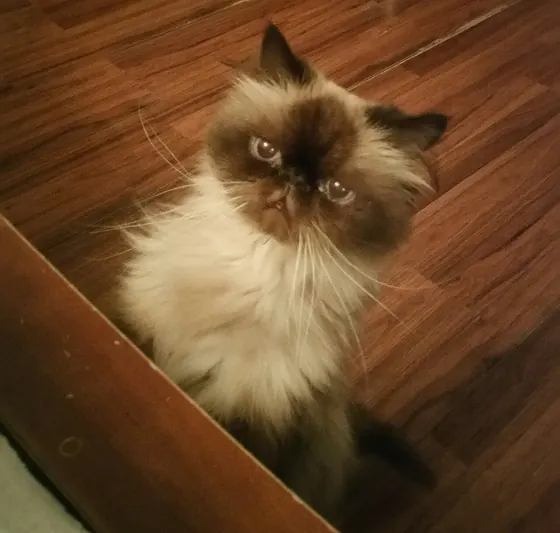
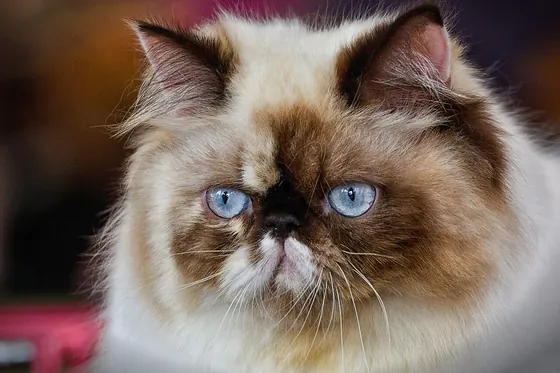
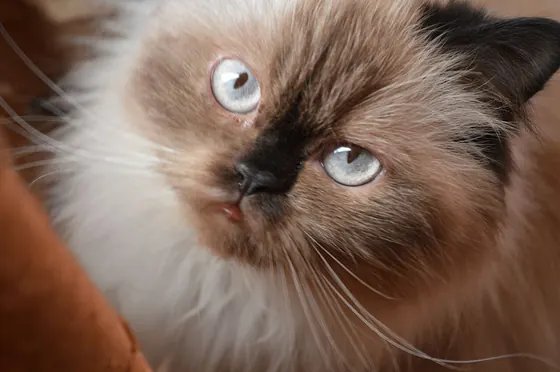
Photos: Asilverstein (CC BY-SA 3.0) · Joseph Morris (CC BY-SA 4.0) · Elbriga89 (CC BY-SA 3.0) · Sheepwalrus (CC BY-SA 4.0) · Dody.bukittinggi (CC BY-SA 4.0) · Munnyfun (CC BY-SA 4.0), via Wikimedia Commons.
Breed profile
* An estimate for Spain in 2026 (food, litter, vet and insurance), based on the size, grooming and health needs of the breed, not on measured costs of individual cats.
Varieties
The Persian family: same type, different coat
What it is like
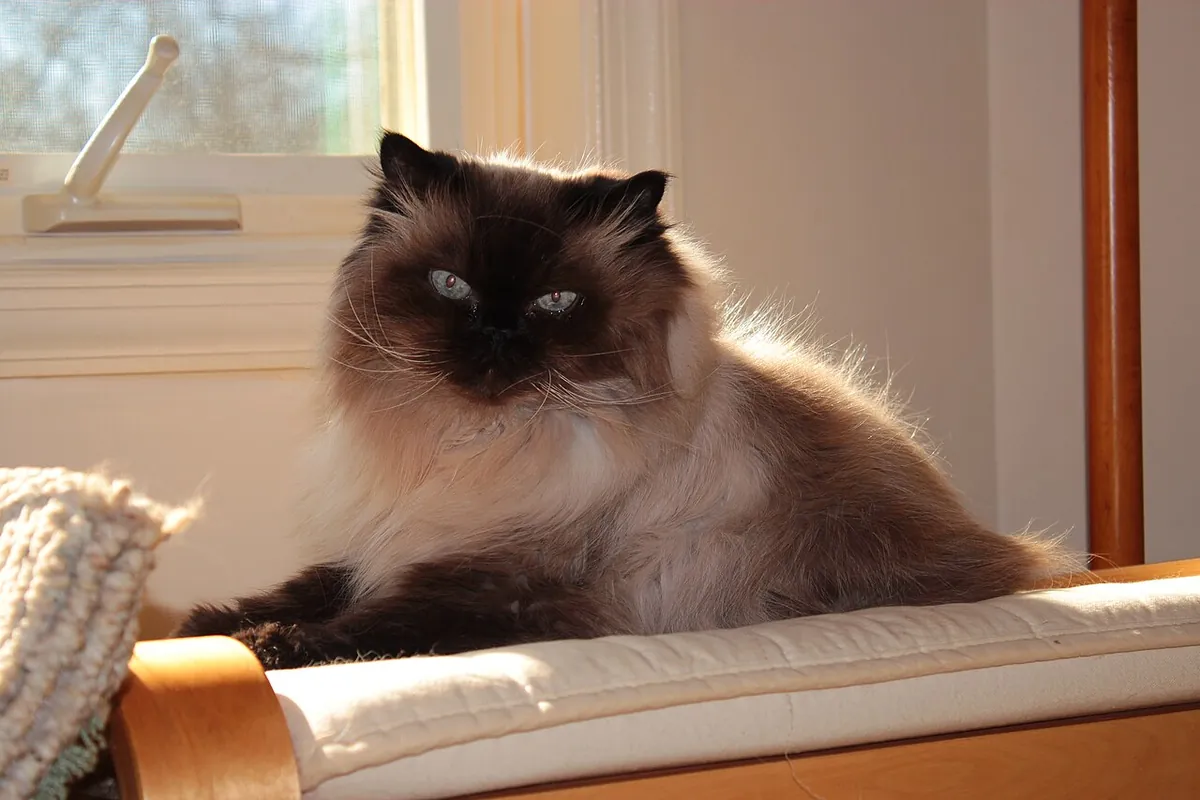
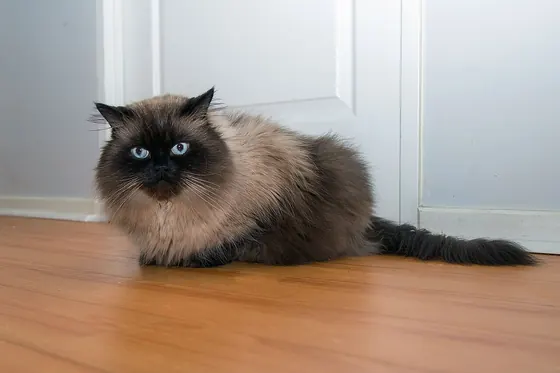
It is a Persian with the colourpoint pattern and blue eyes of the Siamese. In the 1930s, American researchers crossed Siamese and Persians to study how that pattern is inherited, and British and American breeders then fixed the type: the GCCF recognised it in 1955 as the Colourpoint Longhair and the CFA, shortly afterwards, as the Himalayan. Today many registries treat it as a colour variety of the Persian. It has a compact body, a long, dense coat and the same flat face as the modern Persian, with the same brachycephalic problems. It is calm and affectionate, with a touch more curiosity and playfulness than the Persian, inherited from its Siamese side.
Coat colours and patterns
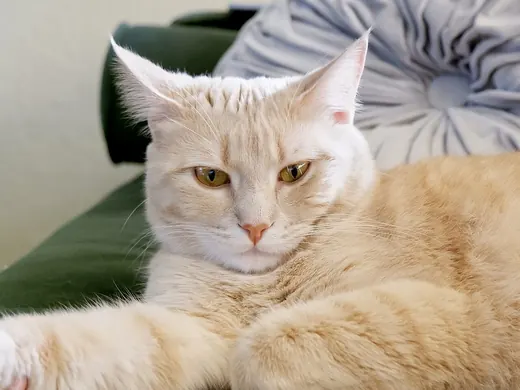
Colours and patterns that are common or accepted in this breed. Each page explains where the colour comes from, the myths around it and other breeds that have it.
All cat coat colours and patterns →
Temperament
Care
Daily brushing is a must, with a metal comb and slicker, so knots do not appear; a bath and blow-dry every few weeks if it gets dirty. Daily cleaning of tear stains and facial folds, and hygiene of the rear end. As it is calm, keep play to short sessions with a wand toy. Keep the house cool in summer: with a flat face and so much coat, heat affects it badly.
Health
It inherits the Persian's risks: polycystic kidney disease (PKD, DNA test available), hypertrophic cardiomyopathy and brachycephalic syndrome, with narrow nostrils, watery eyes, corneal ulcers and dental problems. More cases of calcium oxalate urinary stones are also described. Insist on the PKD test and look for lines with a visible nose.
Health problems to watch for
These are described more often in this breed. It does not mean a Himalayan will have them, nor that a moggy is free of them: they are worth knowing about and discussing with your vet.
Fun facts
Its name comes from the Himalayan rabbit, which has the same pattern of dark points.
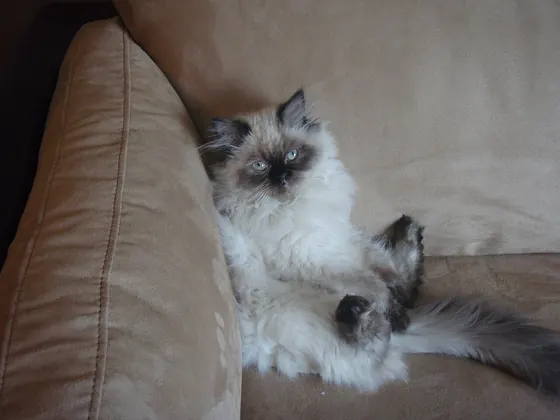
Kittens are born almost white and gain colour over the weeks.
The CFA has considered it a colour division of the Persian since 1984, not a separate breed.
As in the Siamese, the points depend on temperature: in cold climates the body darkens too.
Frequently asked questions
How big does a Himalayan get?
An adult Himalayan usually weighs 3.5–6.5 kg (8–14 lb) and stands about 25–30 cm (10–12 in) at the shoulder, which makes it a medium cat.
How long does a Himalayan live?
Its usual life expectancy is 12–15 years. Living indoors, being neutered and having regular vet check-ups make the biggest difference.
Is the Himalayan hypoallergenic?
No. It produces the usual cat allergens. If someone at home is allergic, spend time with the breed before deciding and talk to an allergist.
Is the Himalayan good with children?
It can be, with calm children who respect its space. As with any cat, teach children to let it walk away when it has had enough.
How much play does a Himalayan need?
As a guide, 15 min of play a day. Its activity score is 2 out of 5: short daily play sessions with a wand toy work better than one long one.
Similar breeds
All breeds A to Z Cost calculator (Spanish) Food portions (Spanish)