
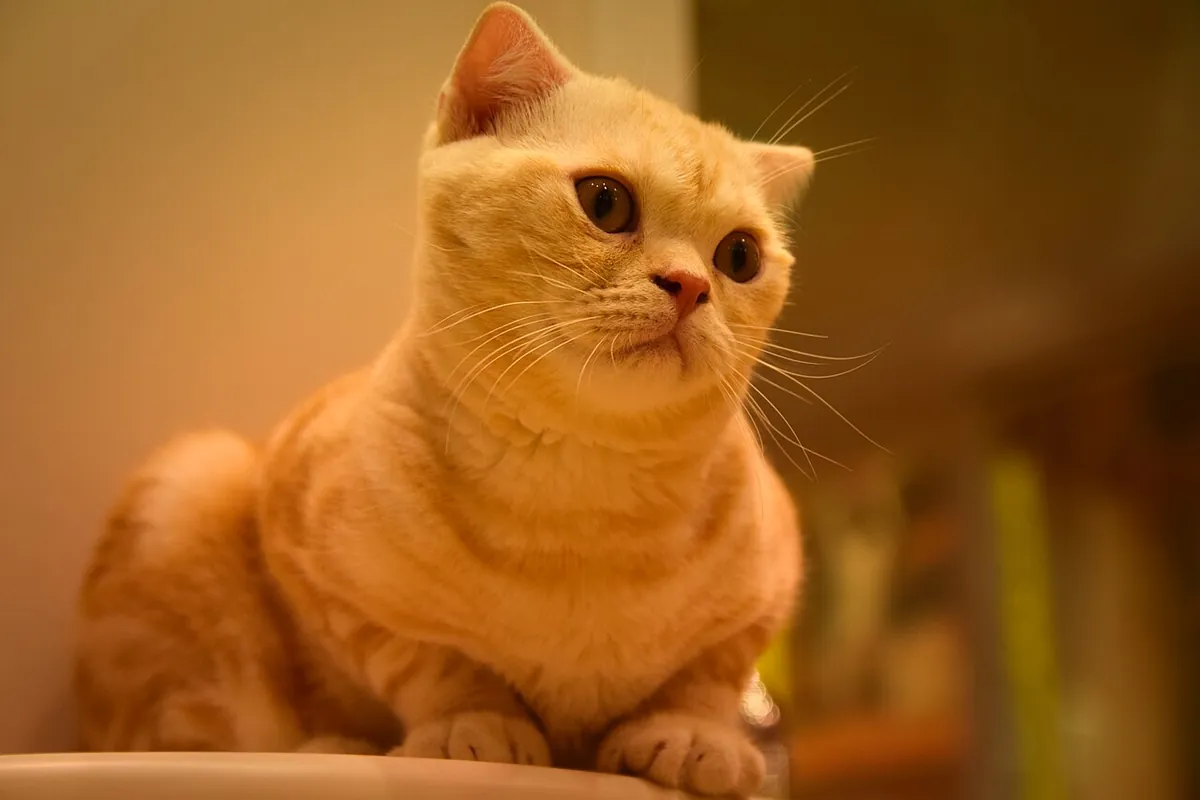
Scottish Fold
Also known as: Fold · Scottish Fold cat · Fold-eared cat · Lop-eared cat · Highland Fold · Scottish Straight
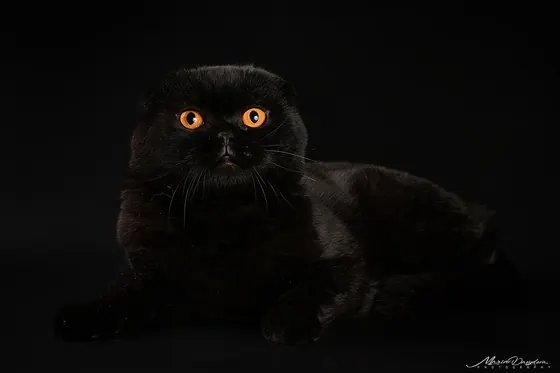
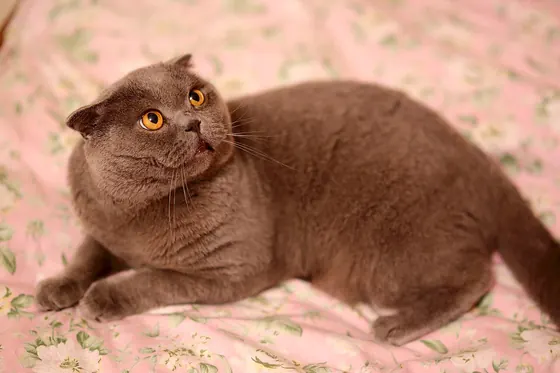
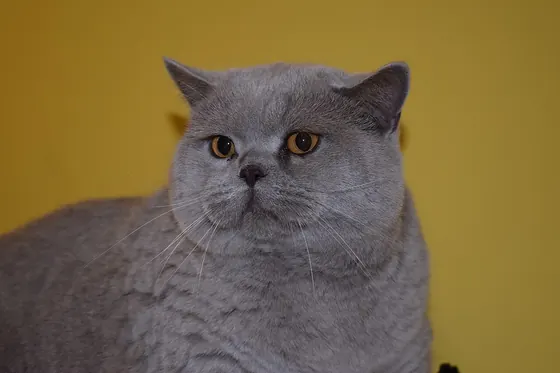
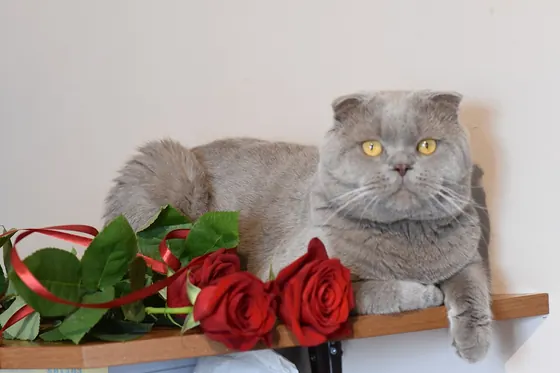
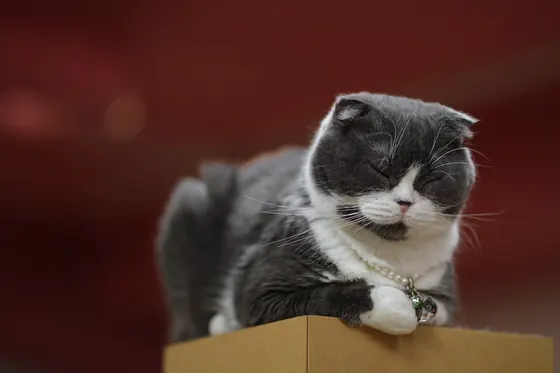
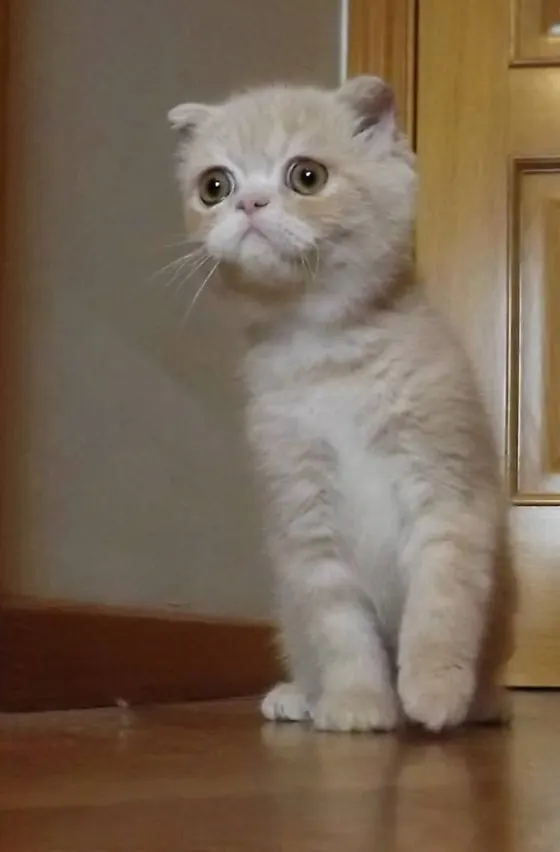
Photos: Raita Futo from Tokyo, Japan (CC BY 2.0) · SvetlozarpPetrov (CC BY-SA 4.0) · Vladimir Pustovit (CC BY 2.0) · Giuseppefontana055 (CC BY-SA 4.0) · Takashi Hososhima from Tokyo, Japan (CC BY-SA 2.0), via Wikimedia Commons.
Breed profile
* An estimate for Spain in 2026 (food, litter, vet and insurance), based on the size, grooming and health needs of the breed, not on measured costs of individual cats.
Varieties
Scottish varieties
What it is like
Every Scottish Fold descends from Susie, a fold-eared farm cat found in 1961 near Coupar Angus (Scotland) by the shepherd William Ross. What folds its ears is a dominant mutation of the TRPV4 gene that affects not just the ear cartilage but cartilage throughout the body: it causes osteochondrodysplasia, a disorder of bone and cartilage, and it affects every Fold, not just badly bred ones. Its temperament is sweet and calm, but there is no way to breed a healthy Fold. The British GCCF and FIFe do not recognise it, breeding it is banned in the Netherlands and in Germany it is classed as “torture breeding” (“Qualzucht”).
Temperament
Care
If you already live with one, give it a comfortable life: weight under control, beds and litter trays with a low entry, ramps or steps, non-slip floors and gentle play. Watch for signs of pain: stiffness, reluctance to jump, sitting like a Buddha with its legs stretched out, a stiff tail, changes in how it uses the litter tray. Your vet can prescribe pain relief and joint supplements. If you are after this temperament, the British Shorthair or a Scottish Straight offer it without the mutation.
Health
Osteochondrodysplasia in every Fold: early arthritis, deformities of the legs and tail, chronic pain. In kittens with two copies of the gene (Fold × Fold matings) it is severe and appears very early. It also inherits polycystic kidney disease (PKD) and HCM from the British and Persian cats used in breeding. A Fold cannot be “bred well”: the mutation is the disease.
Health problems to watch for
These are described more often in this breed. It does not mean a Scottish Fold will have them, nor that a moggy is free of them: they are worth knowing about and discussing with your vet.
Fun facts
Kittens are born with straight ears; they fold at around three or four weeks, if they fold at all.
The singer Taylor Swift has two Scottish Folds, Meredith Grey and Olivia Benson, which has helped make the breed popular.
Its Buddha-like sitting posture, presented as cute, may be a way of relieving joint pain.
In 2016 a study identified the TRPV4 mutation that folds the ears and causes the bone disease.
Frequently asked questions
How big does a Scottish Fold get?
An adult Scottish Fold usually weighs 2.5–6 kg (6–13 lb) and stands about 20–25 cm (8–10 in) at the shoulder, which makes it a medium cat.
How long does a Scottish Fold live?
Its usual life expectancy is 11–14 years. Living indoors, being neutered and having regular vet check-ups make the biggest difference.
Is the Scottish Fold hypoallergenic?
No. It produces the usual cat allergens. If someone at home is allergic, spend time with the breed before deciding and talk to an allergist.
Is the Scottish Fold good with children?
Usually yes: it tends to be patient and sociable with children. As with any cat, teach children to let it walk away when it has had enough.
How much play does a Scottish Fold need?
As a guide, 20 min of play a day. Its activity score is 2 out of 5: short daily play sessions with a wand toy work better than one long one.
Similar breeds
All breeds A to Z Cost calculator (Spanish) Food portions (Spanish)