

Foldex
Also known as: FoldEx · Exotic Fold · Foldex cat · Fold-eared Exotic

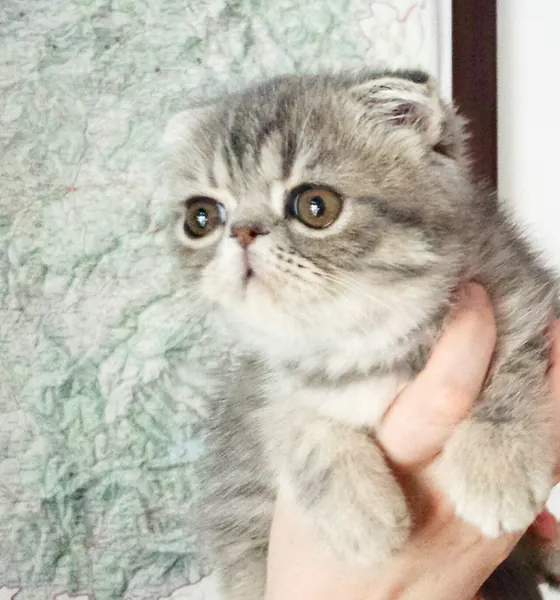
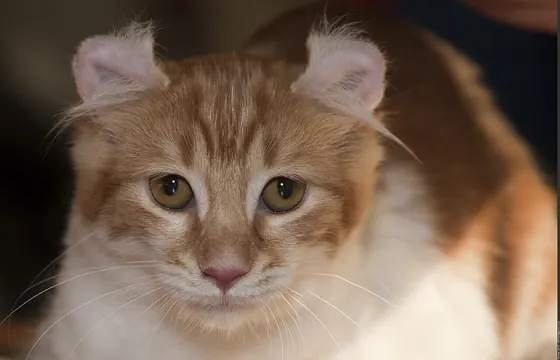
Photos: AliciaPSF (CC BY-SA 4.0), via Wikimedia Commons.
Breed profile
* An estimate for Spain in 2026 (food, litter, vet and insurance), based on the size, grooming and health needs of the breed, not on measured costs of individual cats.
What it is like
It was born in Quebec, Canada, from crossing Scottish Folds with Exotic Shorthairs. The breeder Betty-Ann Yaxley first presented it in 1995 and Jeanne Barrette later promoted it. The Canadian CCA accepted it as an experimental breed in November 1998, as a new breed in 2006 and granted championship status in 2010. It has the round face and compact body of the Exotic, and only about half of Foldex kittens are born with folded ears. It needs saying plainly: the folded-ear gene affects bone and cartilage throughout the body, which is why FIFe and the GCCF do not recognise fold-eared breeds and several countries and regions ban breeding them: Germany (2005), the Netherlands (2014), Scotland (2018), Austria and the Australian state of Victoria (2020) and Flanders (2021). In character it is calm, sweet and very affectionate.
Temperament
Care
The shorthair is brushed once or twice a week; the semi-longhair, two or three times. Clean the ears carefully, because the fold traps wax. Clean the tear ducts if it has a flat face. Watch how it moves: if it struggles to jump, limps, walks stiffly or will not let you touch its tail, see your vet, as these can be signs of joint pain.
Health
All fold-eared cats have osteochondrodysplasia, a cartilage disorder that can cause early arthritis and pain, especially in the legs and tail; with two copies of the gene it is severe. From the Exotic it inherits the risk of polycystic kidney disease (PKD, DNA test available) and, in the flatter-faced lines, breathing problems and watery eyes. Many vets advise against breeding it; if you like its look, an Exotic has the same temperament without the ear problem.
Fun facts
Only about half of Foldex cats have folded ears.
Its name joins “fold” and “ex” from Exotic.
The Canadian CCA granted it championship status in 2010.
Kittens are born with straight ears and the fold appears at around three or four weeks.
Frequently asked questions
How big does a Foldex get?
An adult Foldex usually weighs 3–6 kg (7–13 lb) and stands about 23–28 cm (9–11 in) at the shoulder, which makes it a medium cat.
How long does a Foldex live?
Its usual life expectancy is 12–15 years. Living indoors, being neutered and having regular vet check-ups make the biggest difference.
Is the Foldex hypoallergenic?
No. It produces the usual cat allergens. If someone at home is allergic, spend time with the breed before deciding and talk to an allergist.
Is the Foldex good with children?
Usually yes: it tends to be patient and sociable with children. As with any cat, teach children to let it walk away when it has had enough.
How much play does a Foldex need?
As a guide, 20 min of play a day. Its activity score is 2 out of 5: short daily play sessions with a wand toy work better than one long one.
Similar breeds
All breeds A to Z Cost calculator (Spanish) Food portions (Spanish)