
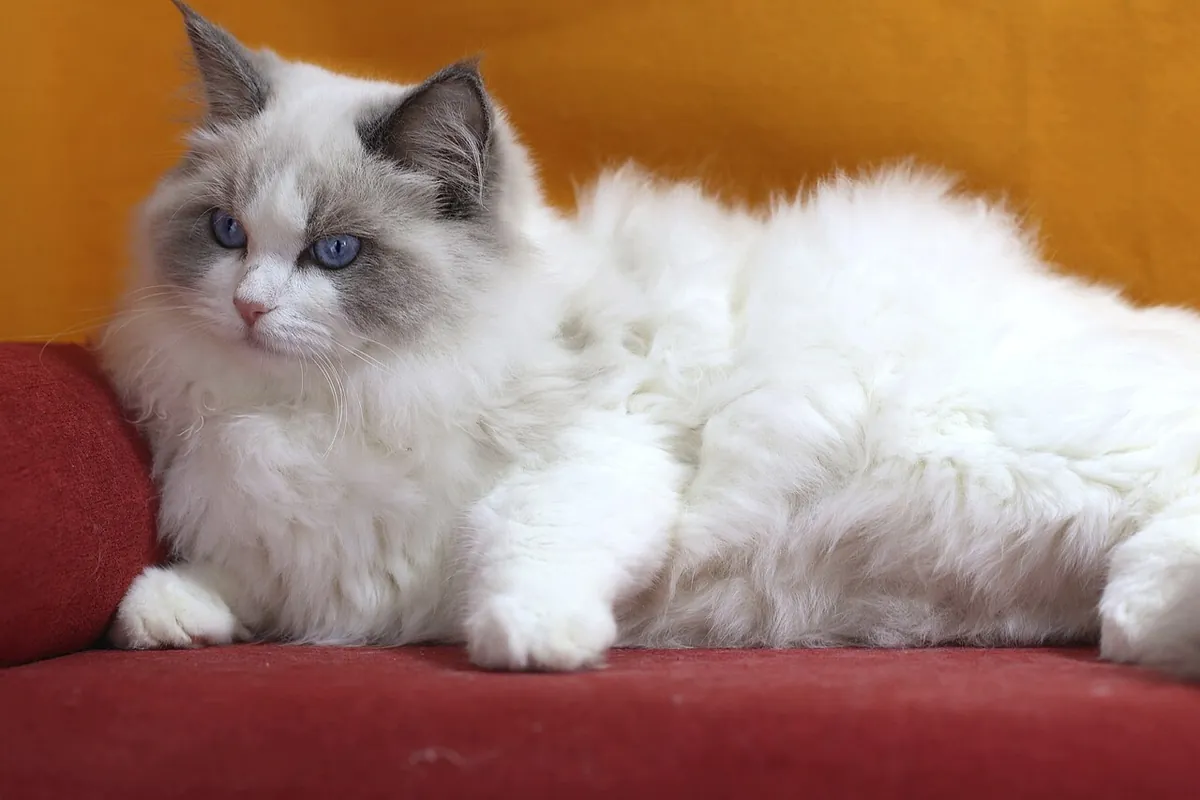
Ragdoll
Also known as: Ragdoll cat · Rag doll · Rag doll cat · Floppy cat
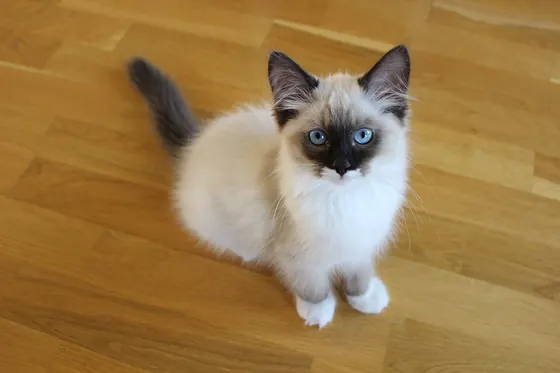
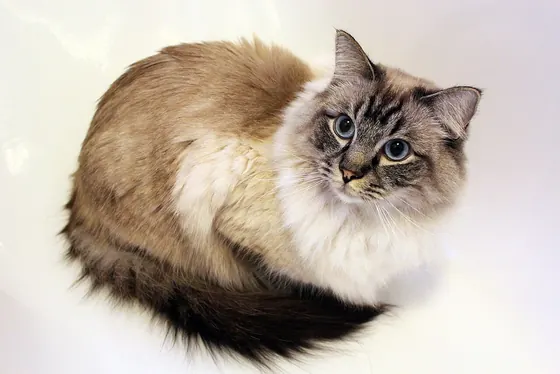
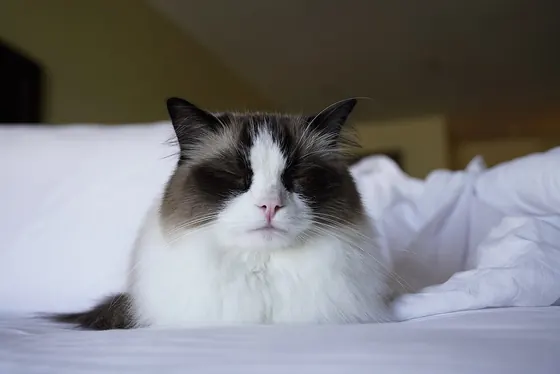
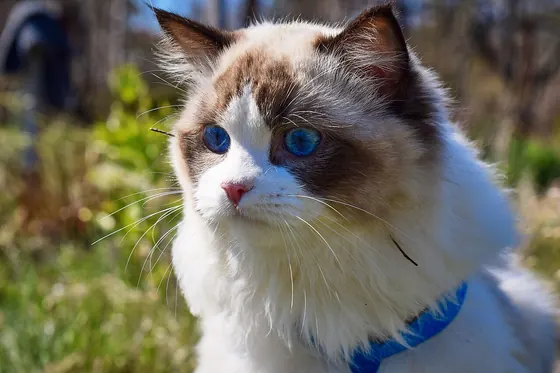
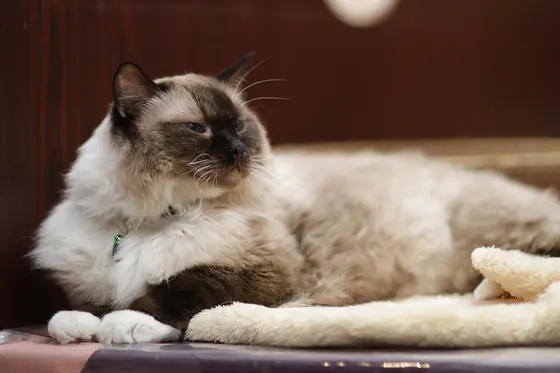
Photos: MOZZILAND (CC BY-SA 4.0) · Ulkl (Public domain) · BlackIceNRW (CC BY-SA 3.0) · Arjunmz (CC BY 4.0) · Матвей Тузов (CC BY 4.0) · Takashi Hososhima from Tokyo, Japan (CC BY-SA 2.0), via Wikimedia Commons.
Breed profile
* An estimate for Spain in 2026 (food, litter, vet and insurance), based on the size, grooming and health needs of the breed, not on measured costs of individual cats.
What it is like
It was created by Ann Baker of California in the 1960s from Josephine, a white semi-longhaired female, and several males from the neighbourhood. Baker trademarked the name and surrounded the breed with fanciful stories, but other breeders fixed the type and today it is one of the most popular breeds in the world. It is large and strong-boned, with blue eyes and a pointed pattern, and it matures slowly: it is not fully grown until three or four years of age. Its fame comes from its docility: many go completely limp when you pick them up, like a rag doll. It is very sociable, follows its people round the house and gets on well with children, dogs and other cats.
Coat colours and patterns
Colours and patterns that are common or accepted in this breed. Each page explains where the colour comes from, the myths around it and other breeds that have it.
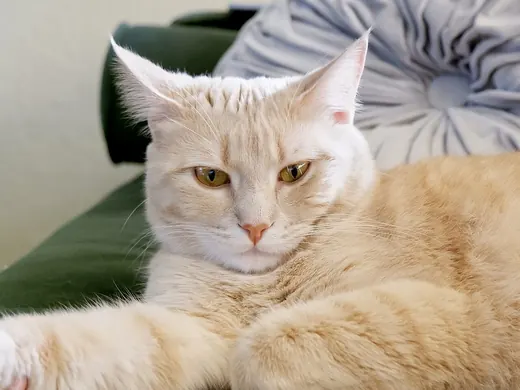 Cream
Colour · Cream cat, Beige cat
Cream
Colour · Cream cat, Beige cat
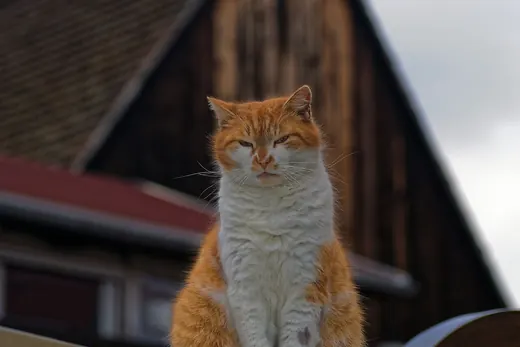 Bicolour
White spotting · Black and white cat, Ginger and white cat
Bicolour
White spotting · Black and white cat, Ginger and white cat
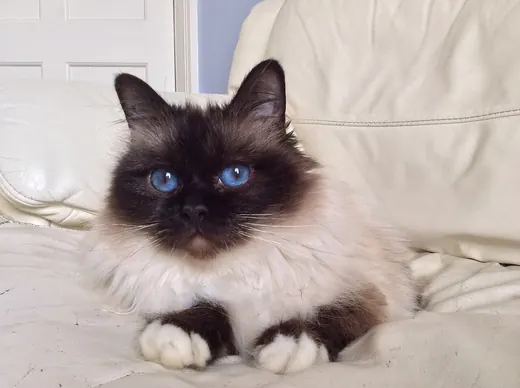 Mitted
White spotting · Mitted, Gloves
Mitted
White spotting · Mitted, Gloves
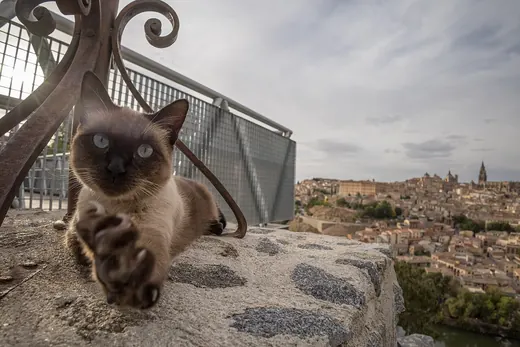 Colourpoint
Pattern · Pointed, Siamese
Colourpoint
Pattern · Pointed, Siamese
All cat coat colours and patterns →
Temperament
Care
Brushing twice a week with a long-toothed comb, more during the moult. Its coat, with little undercoat, tangles less than you might think, mainly behind the ears and under the legs. It is trusting and not very streetwise about danger: an indoor life with a netted balcony is best. Gentle daily play so it does not get fat, and a large, stable scratching post for its size. Watch out for falls: it does not always land well.
Health
It has its own hypertrophic cardiomyopathy mutation (MYBPC3 gene) with a DNA test, which every serious breeder should carry out, along with echocardiograms of breeding cats. More cases of calcium oxalate stones and of FIP in kittens are also described. In a 2024 British study its median life expectancy came out below that of many other breeds.
Health problems to watch for
These are described more often in this breed. It does not mean a Ragdoll will have them, nor that a moggy is free of them: they are worth knowing about and discussing with your vet.
Fun facts
Ann Baker went as far as claiming that Josephine had been genetically altered after an accident, a claim with no scientific basis at all.
There are three patterns: colourpoint, mitted (with white mittens) and bicolour (with an inverted white V on the face).
Kittens are born white and the point colour takes two or three years to fully develop.
An old myth said it felt no pain; that is false, and precisely because it is so calm, knocks and falls need watching.
Frequently asked questions
How big does a Ragdoll get?
An adult Ragdoll usually weighs 4.5–9 kg (10–20 lb) and stands about 28–33 cm (11–13 in) at the shoulder, which makes it an extra large cat.
How long does a Ragdoll live?
Its usual life expectancy is 12–15 years. Living indoors, being neutered and having regular vet check-ups make the biggest difference.
Is the Ragdoll hypoallergenic?
No. It produces the usual cat allergens. If someone at home is allergic, spend time with the breed before deciding and talk to an allergist.
Is the Ragdoll good with children?
Usually yes: it tends to be patient and sociable with children. As with any cat, teach children to let it walk away when it has had enough.
How much play does a Ragdoll need?
As a guide, 15 min of play a day. Its activity score is 2 out of 5: short daily play sessions with a wand toy work better than one long one.
Similar breeds
All breeds A to Z Cost calculator (Spanish) Food portions (Spanish)