
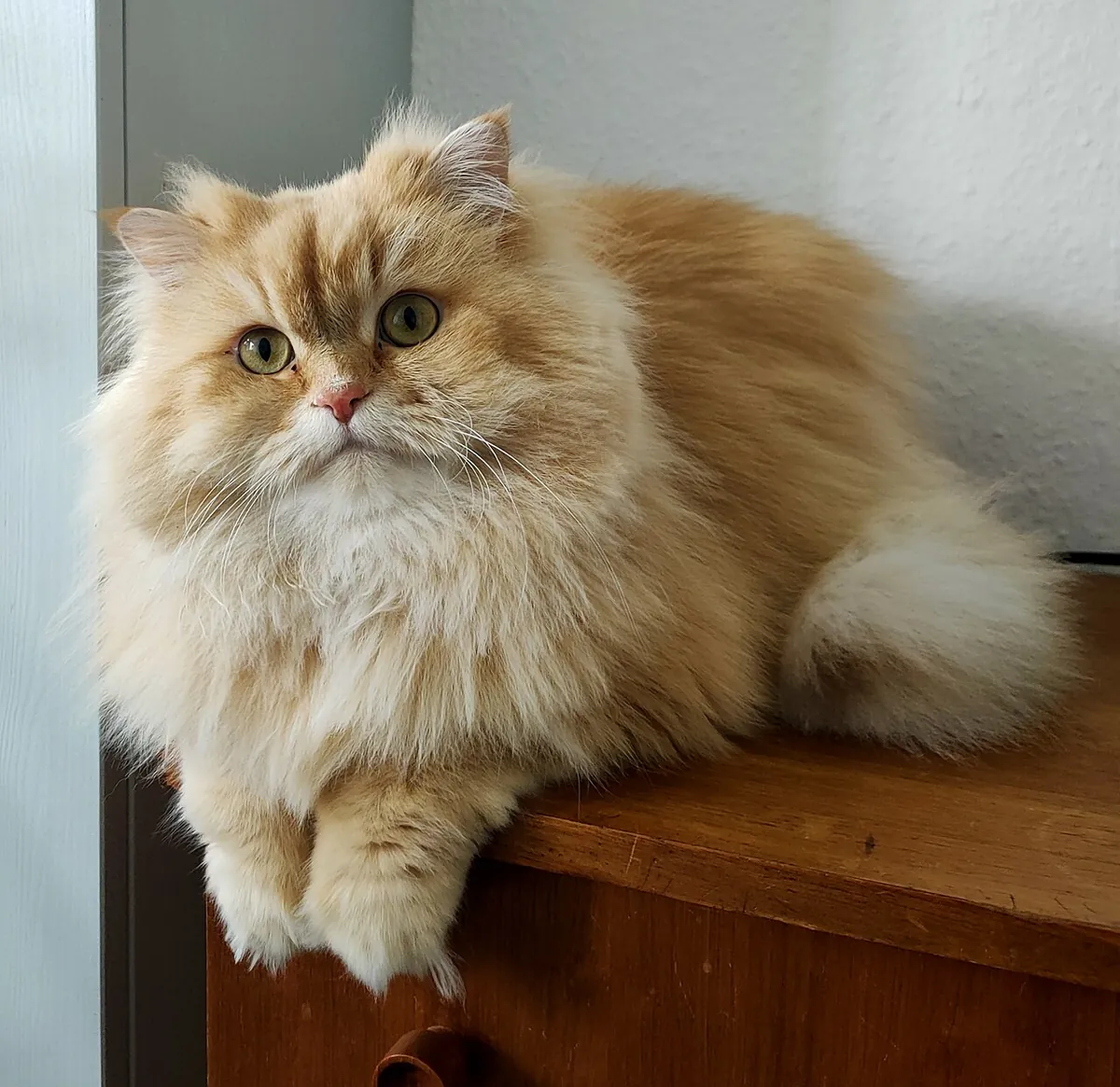
British Longhair
Also known as: British Longhair cat · British Semi-longhair · Longhaired British · Lowlander
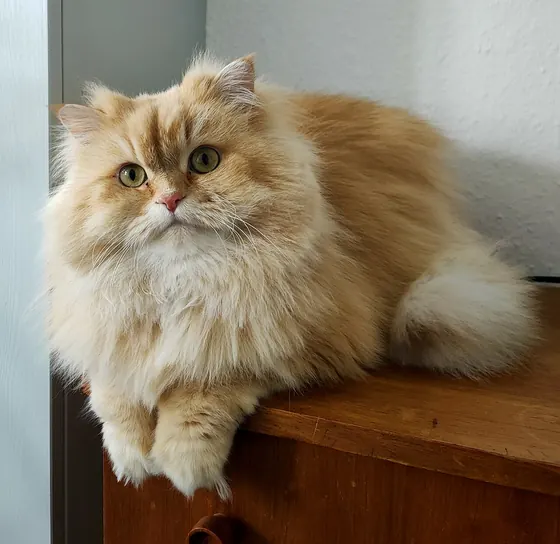
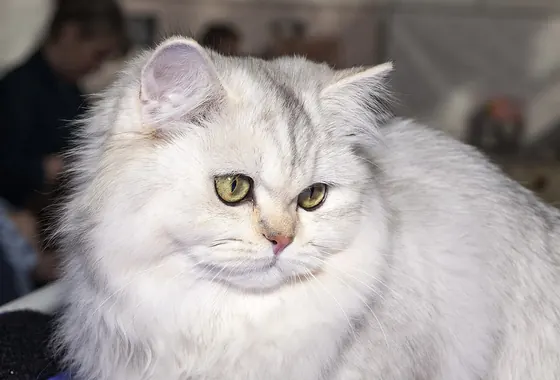
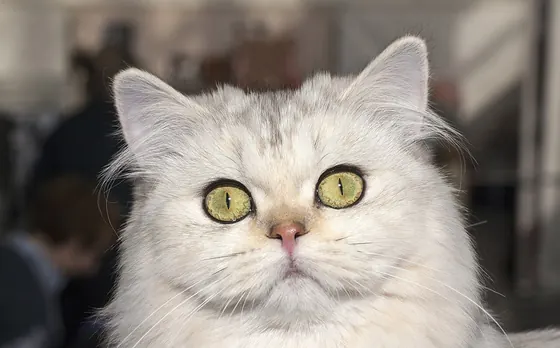
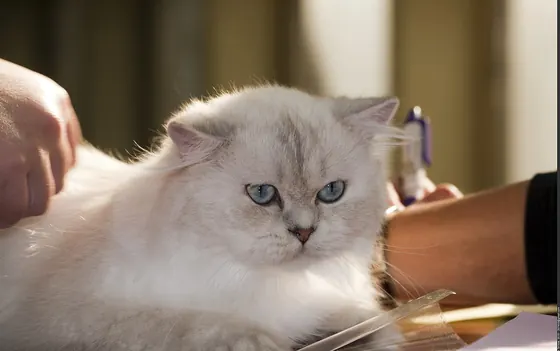
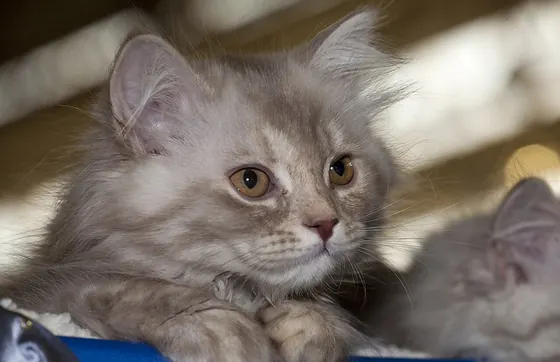
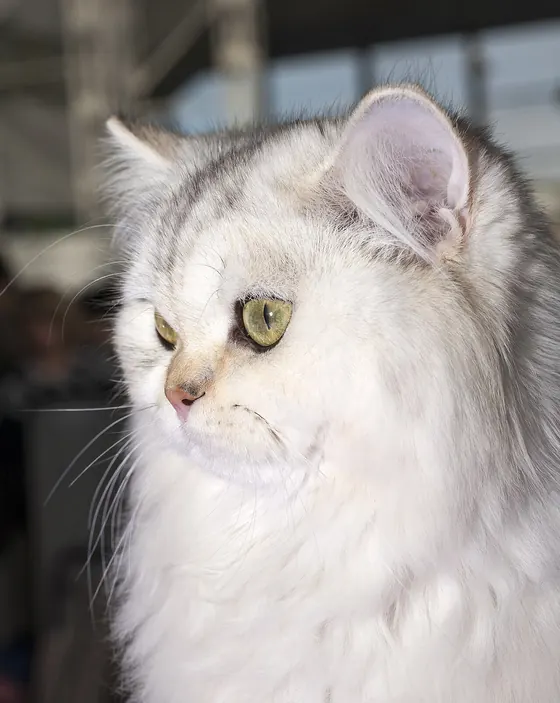
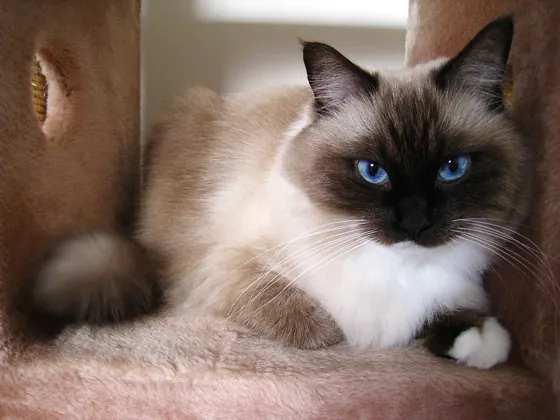
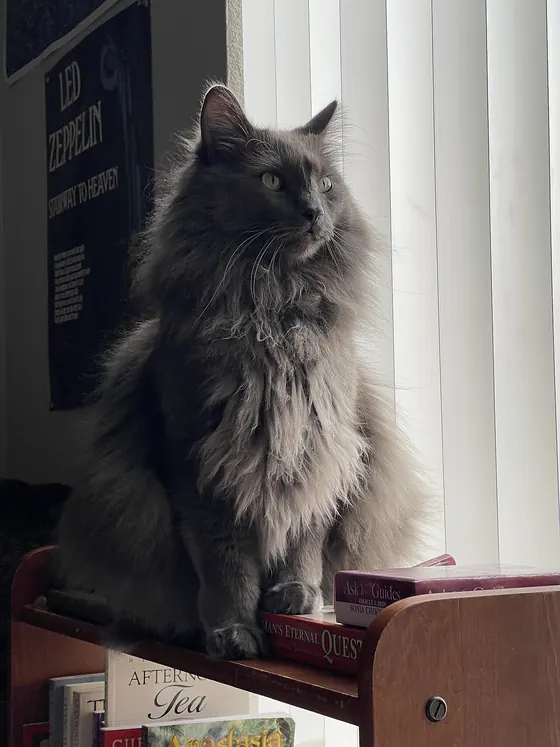
Photos: Fanta3 (CC BY-SA 4.0) · Nickolas Titkov from Moscow, Russian Federation (CC BY-SA 2.0), via Wikimedia Commons.
Breed profile
* An estimate for Spain in 2026 (food, litter, vet and insurance), based on the size, grooming and health needs of the breed, not on measured costs of individual cats.
Varieties
The same cat in two coat lengths
What it is like
It is the British Shorthair with a long coat. When the British was crossed with Persians after the world wars to rebuild the breed, the recessive longhair gene stayed in it, and every so often fluffy kittens were born that for years had no place at shows. In time people began breeding them on purpose and registries gradually accepted it as a breed in its own right; FIFe did so in 2017. It has the round, sturdy body, full cheeks and large eyes of the British, and a dense semi-long coat, less long and fine than the Persian's. Its temperament is just as placid, balanced and independent.
Coat colours and patterns
Colours and patterns that are common or accepted in this breed. Each page explains where the colour comes from, the myths around it and other breeds that have it.
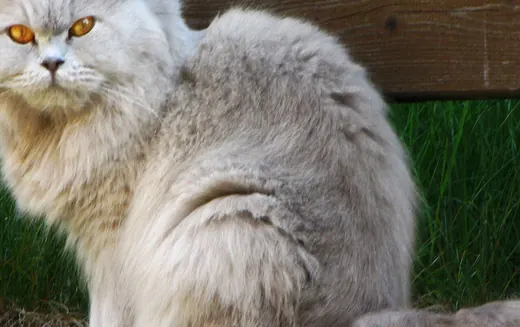
All cat coat colours and patterns →
Temperament
Care
It needs a good deal more brushing than its shorthaired cousin: two or three times a week with a metal comb, and daily during the moult, to prevent knots on the neck, under the legs and in the britches. It is calm and gains weight easily: weigh its portions and play with it every day. It does not like being held, but it does like being close. Its face is not flat, so it is spared the problems of the modern Persian.
Health
It shares with the British Shorthair a predisposition to hypertrophic cardiomyopathy (echocardiograms for breeding cats) and to polycystic kidney disease (PKD, DNA test available) from its Persian heritage. Obesity and blood type B are also common. Ask for the PKD test and the parents' heart checks.
Fun facts
For years, longhaired kittens born to British Shorthairs were sold as pets with no chance of being shown.
Two British Shorthairs carrying the gene can have a longhaired kitten.
Like the Shorthair, it takes about three years to reach its adult look.
Its coat is shorter than the Persian's and does not usually form such large mats.
Frequently asked questions
How big does a British Longhair get?
An adult British Longhair usually weighs 4–8 kg (9–18 lb) and stands about 28–33 cm (11–13 in) at the shoulder, which makes it a large cat.
How long does a British Longhair live?
Its usual life expectancy is 12–15 years. Living indoors, being neutered and having regular vet check-ups make the biggest difference.
Is the British Longhair hypoallergenic?
No. It produces the usual cat allergens. If someone at home is allergic, spend time with the breed before deciding and talk to an allergist.
Is the British Longhair good with children?
Usually yes: it tends to be patient and sociable with children. As with any cat, teach children to let it walk away when it has had enough.
How much play does a British Longhair need?
As a guide, 15 min of play a day. Its activity score is 2 out of 5: short daily play sessions with a wand toy work better than one long one.
Similar breeds
All breeds A to Z Cost calculator (Spanish) Food portions (Spanish)