
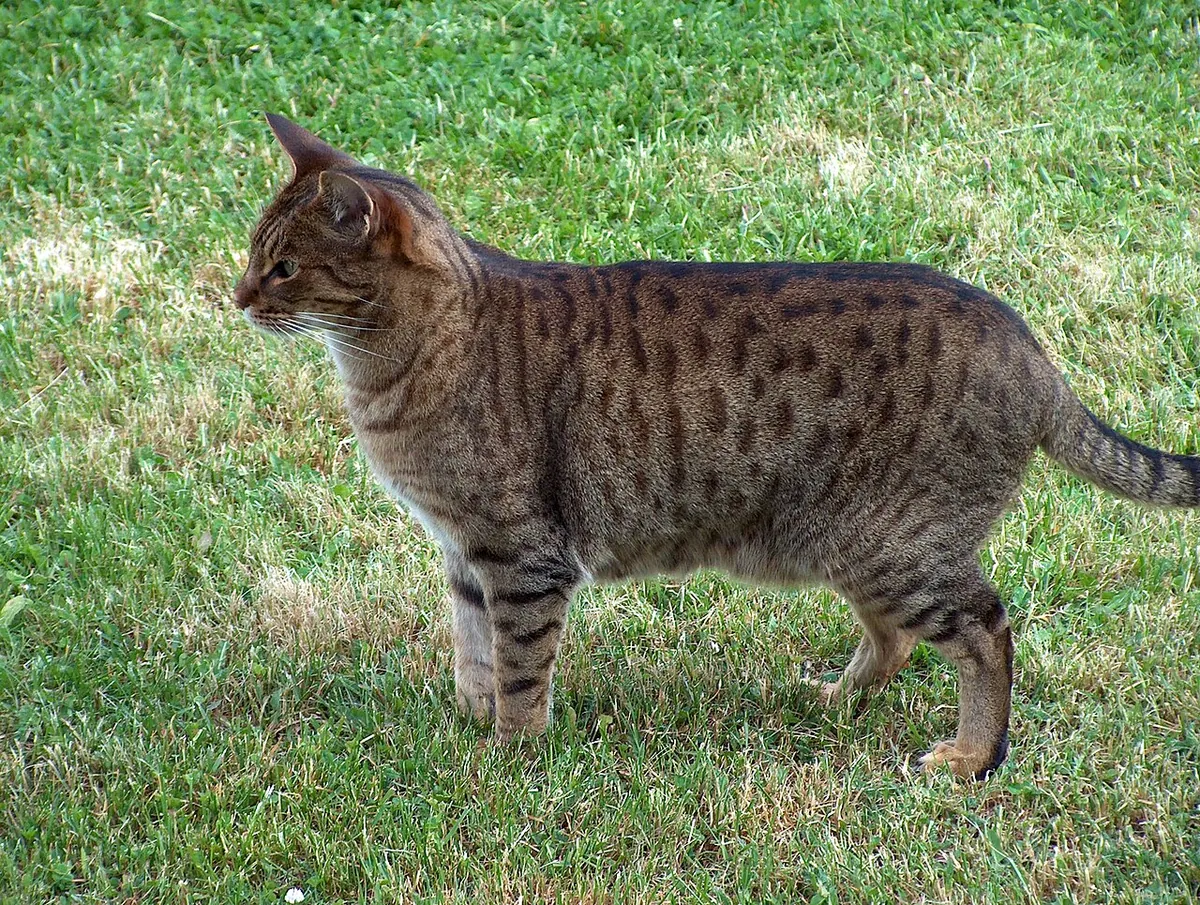
Ocicat
Also known as: Ocicat cat · Oci · Domestic ocelot · Spotted cat
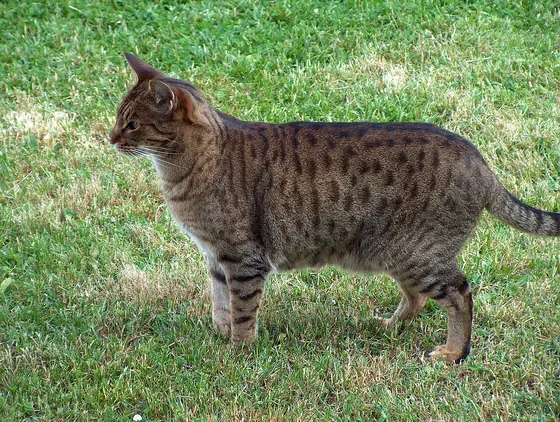
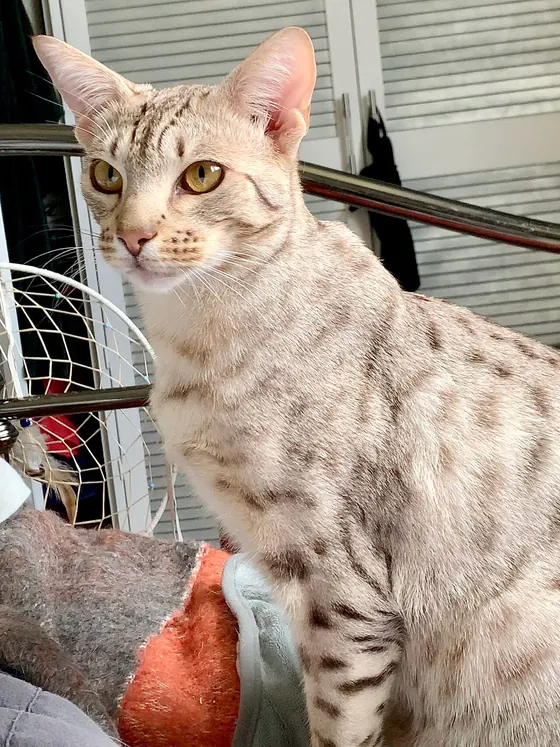
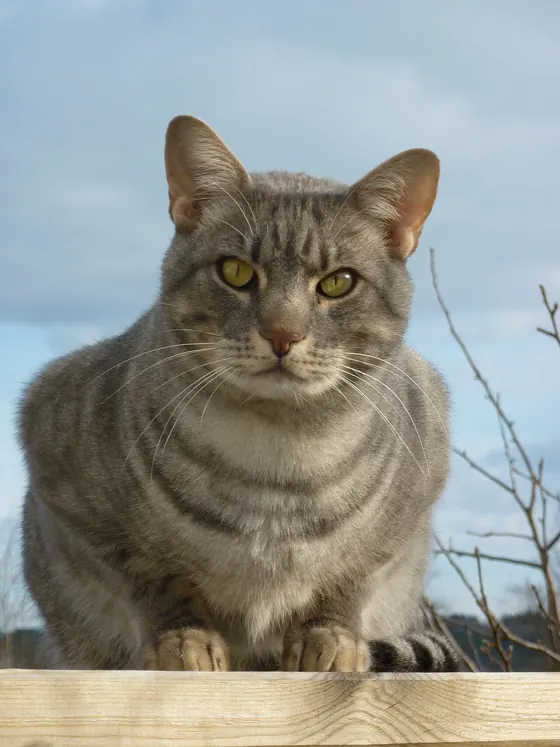
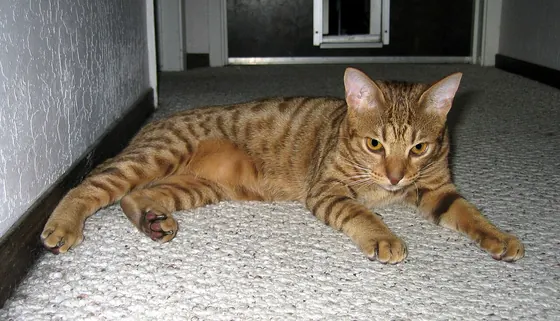
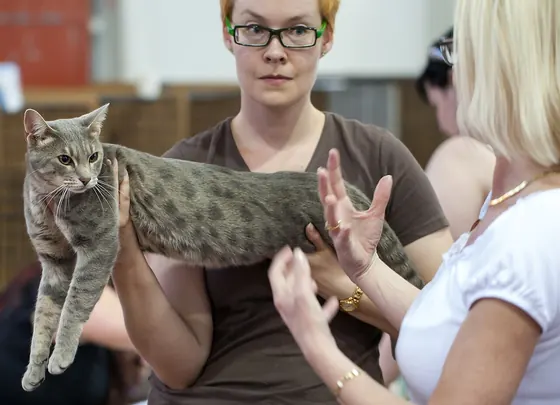
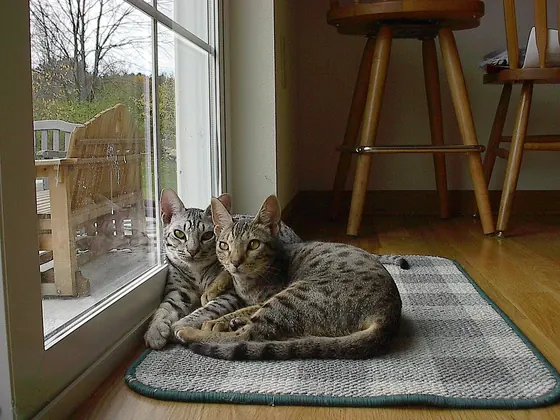
Photos: T. Bjornstad (CC BY 2.5) · Trey W-M (CC BY 4.0) · Tom Bjørnstad (CC BY-SA 3.0) · Check-Six at English Wikipedia (Public domain) · Heikki Siltala-catza.net (CC BY 3.0) · grimmcar (Public domain), via Wikimedia Commons.
Breed profile
* An estimate for Spain in 2026 (food, litter, vet and insurance), based on the size, grooming and health needs of the breed, not on measured costs of individual cats.
What it is like
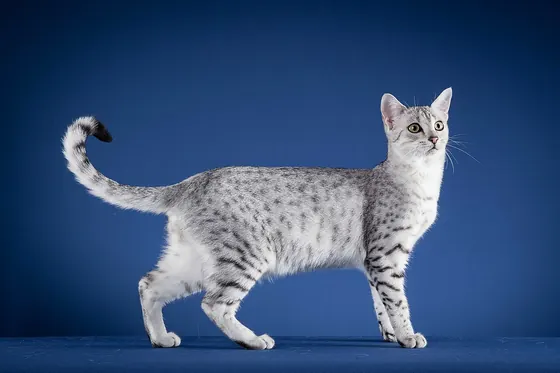
Its wild-cat look is pure chance: it has not a drop of wild blood. In 1964 the breeder Virginia Daly, from Michigan, was crossing an Abyssinian with a Siamese in search of a Siamese with Abyssinian-type points, and in the second litter an ivory kitten with golden spots appeared. Her daughter called it an Ocicat because it looked like an ocelot. The American Shorthair was later added to gain size and the silver colour. It is a muscular, athletic cat, very sociable and with an almost dog-like character: it comes when called, learns to fetch toys and wants to be part of everything that happens at home.
Coat colours and patterns
Colours and patterns that are common or accepted in this breed. Each page explains where the colour comes from, the myths around it and other breeds that have it.
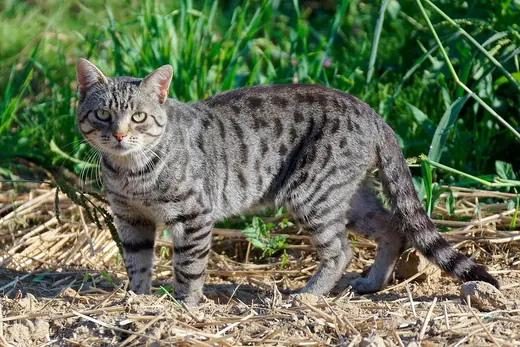
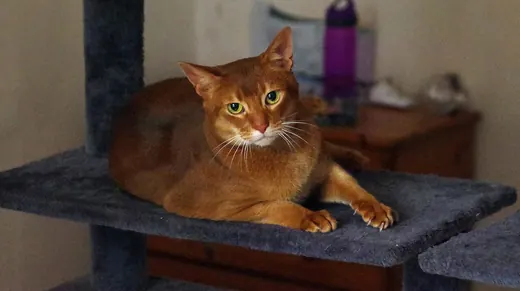
All cat coat colours and patterns →
Temperament
Care
Minimal coat care: a rubber mitt or cloth once a week. It needs company and activity: it does not cope well with being alone all day and really enjoys another cat or a calm dog. It loves fetch games, clicker training and the harness. Regular dental cleaning, because its founding breeds are prone to gingivitis.
Health
A fairly healthy breed. From its Abyssinian and Siamese ancestors it can inherit progressive retinal atrophy (rdAc, DNA test available), pyruvate kinase deficiency (testable) and, more rarely, renal amyloidosis. Dental problems are common. Ask the breeder for the PK-def and rdAc tests.
Fun facts
The first Ocicat was called Tonga; he was sold as a pet and neutered before anyone thought of making a breed.
It has no wild ancestor at all: it is Abyssinian, Siamese and American Shorthair.
Its pattern is the spotted tabby, with thumbprint-shaped spots on the sides.
The American CFA accepted it for championship in 1987.
Frequently asked questions
How big does a Ocicat get?
An adult Ocicat usually weighs 3–7 kg (7–15 lb) and stands about 23–30 cm (9–12 in) at the shoulder, which makes it a large cat.
How long does a Ocicat live?
Its usual life expectancy is 12–18 years. Living indoors, being neutered and having regular vet check-ups make the biggest difference.
Is the Ocicat hypoallergenic?
No. It produces the usual cat allergens. If someone at home is allergic, spend time with the breed before deciding and talk to an allergist.
Is the Ocicat good with children?
Usually yes: it tends to be patient and sociable with children. As with any cat, teach children to let it walk away when it has had enough.
How much play does a Ocicat need?
As a guide, 45 min of play a day. Its activity score is 4 out of 5: short daily play sessions with a wand toy work better than one long one.
Similar breeds
All breeds A to Z Cost calculator (Spanish) Food portions (Spanish)