
Toyger
Also known as: Toyger cat · Toy tiger · Tiger cat · Mini tiger
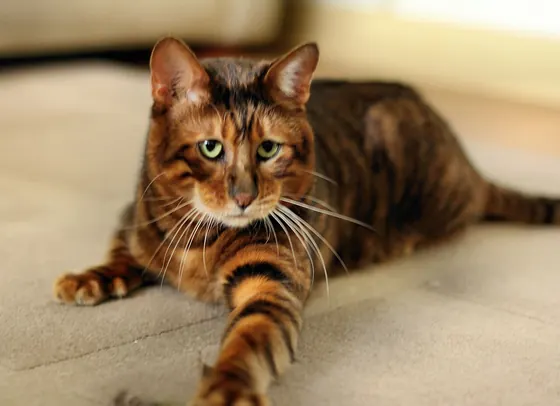
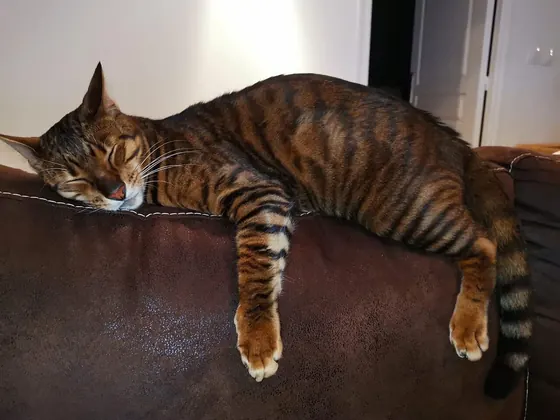
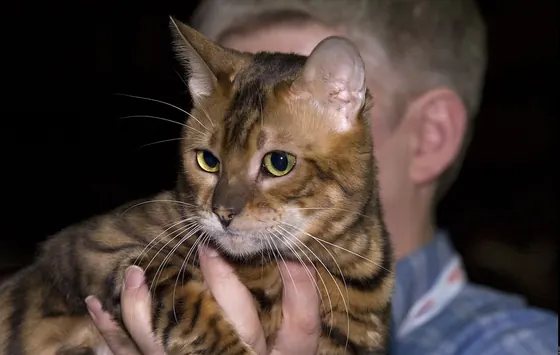
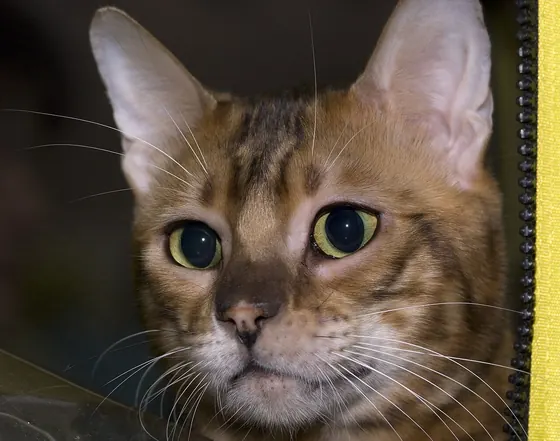
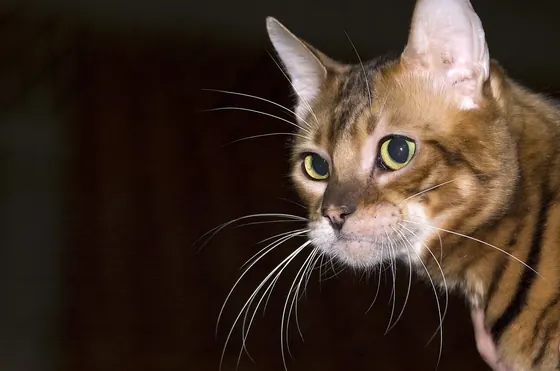
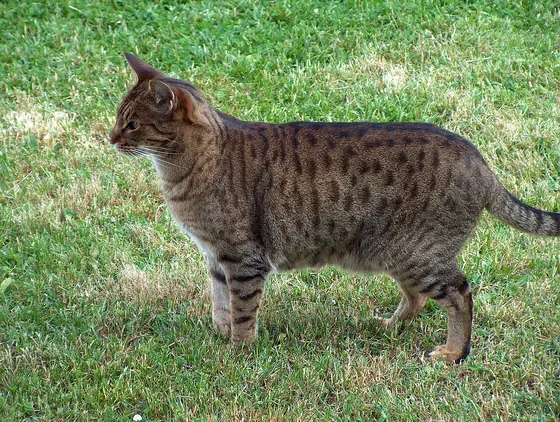
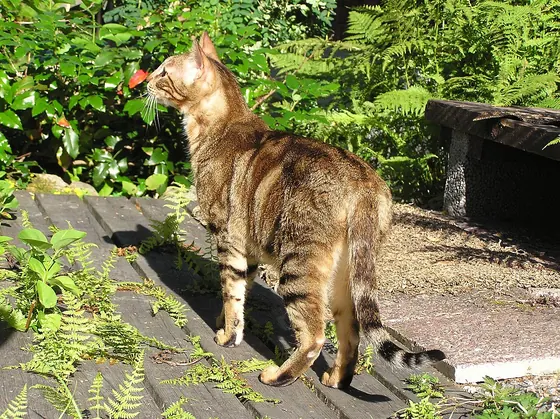
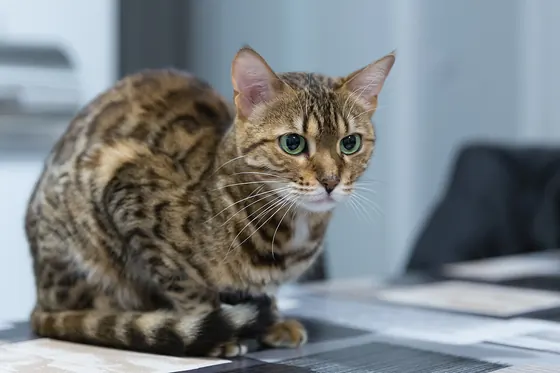
Photos: Gaynorjl (CC BY-SA 4.0) · Gaynorjl (CC BY-SA 3.0) · Bellille (CC BY-SA 4.0) · Nickolas Titkov from Moscow, Russian Federation (CC BY-SA 2.0), via Wikimedia Commons.
Breed profile
* An estimate for Spain in 2026 (food, litter, vet and insurance), based on the size, grooming and health needs of the breed, not on measured costs of individual cats.
What it is like
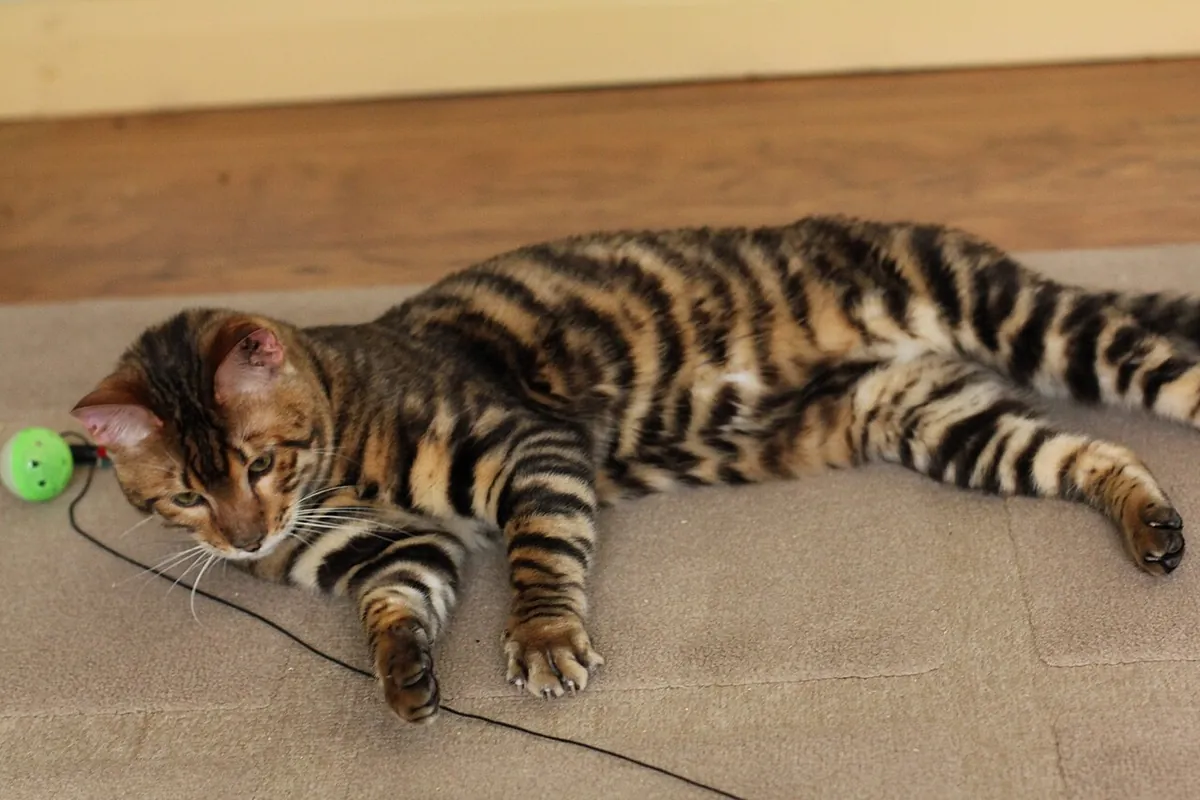
It is the project of the American breeder Judy Sugden, daughter of the Bengal's creator, to produce a domestic cat that looks like a miniature tiger. In the late 1980s she began crossing a domestic tabby with a Bengal and later brought in a street cat from Kashmir to add facial markings. TICA registered it in 1993 and accepted it for championship in 2007. The aim is vertical, branching stripes instead of the classic tabby, and circular markings on the face. It has no recent wild blood and its temperament is calmer than the Bengal's: sociable, playful, easy to train and very attached to its family. It is rare in Spain and there are very few breeders.
Coat colours and patterns
Colours and patterns that are common or accepted in this breed. Each page explains where the colour comes from, the myths around it and other breeds that have it.
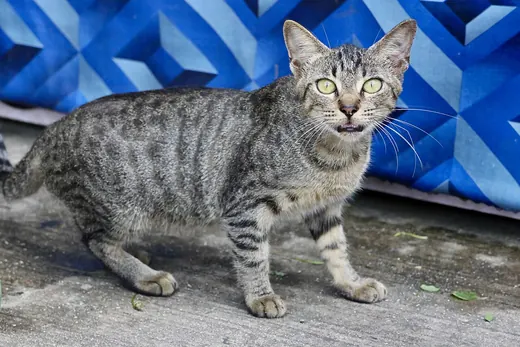
All cat coat colours and patterns →
Temperament
Care
The coat is cared for with a weekly once-over with a mitt. It enjoys daily play, scratching posts and the odd walk on a harness, but it does not have the Bengal's intensity. It adapts well to flats and to families with children. As it is a scarce breed, be wary of cheap adverts: many online “Toygers” are Bengals or ordinary tabbies.
Health
A young breed with few cats, so there is little large-scale health information. As it comes from the Bengal, ask for the parents' PK-def and PRA-b tests and an echocardiogram to rule out HCM; heart murmurs have been described in some lines.
Fun facts
Its name joins “toy” and “tiger”.
Judy Sugden wanted the cat to help draw attention to tiger conservation.
A street cat from Kashmir called Jammu Bhuri contributed the facial markings.
The standard asks for the stripes on the head to form circles, something no other cat has.
Frequently asked questions
How big does a Toyger get?
An adult Toyger usually weighs 3–6.5 kg (7–14 lb) and stands about 23–30 cm (9–12 in) at the shoulder, which makes it a medium cat.
How long does a Toyger live?
Its usual life expectancy is 12–15 years. Living indoors, being neutered and having regular vet check-ups make the biggest difference.
Is the Toyger hypoallergenic?
No. It produces the usual cat allergens. If someone at home is allergic, spend time with the breed before deciding and talk to an allergist.
Is the Toyger good with children?
Usually yes: it tends to be patient and sociable with children. As with any cat, teach children to let it walk away when it has had enough.
How much play does a Toyger need?
As a guide, 40 min of play a day. Its activity score is 4 out of 5: short daily play sessions with a wand toy work better than one long one.
Similar breeds
All breeds A to Z Cost calculator (Spanish) Food portions (Spanish)