
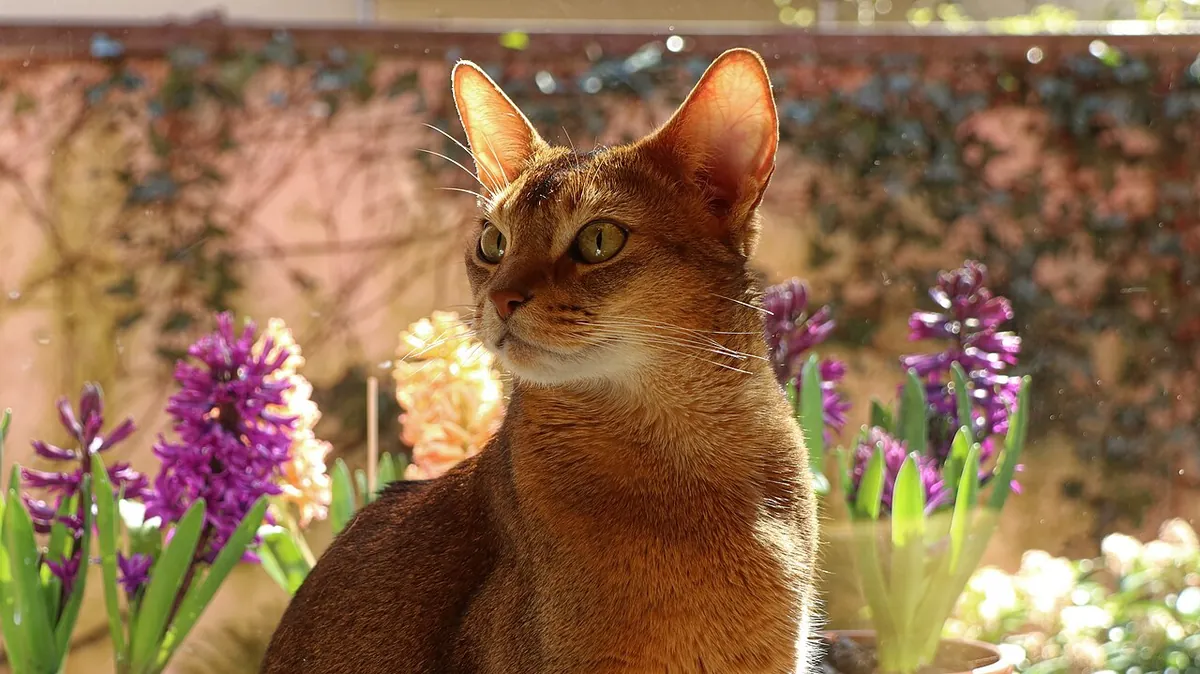
Abyssinian
Also known as: Abyssinian cat · Aby · Abby cat · Ruddy Abyssinian
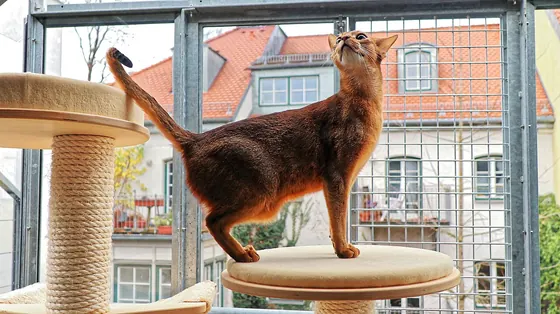
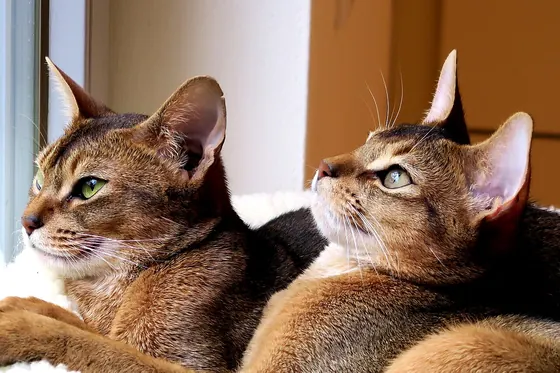
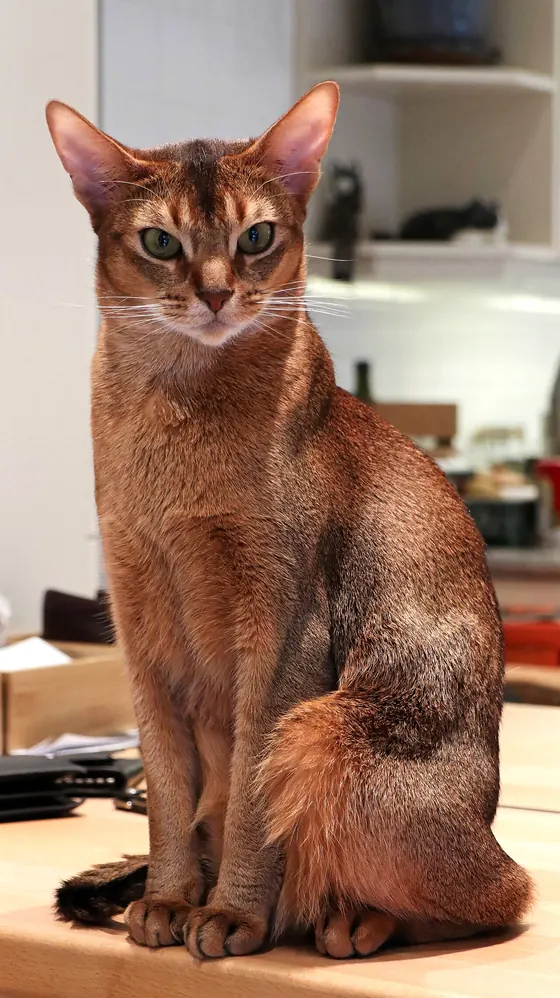
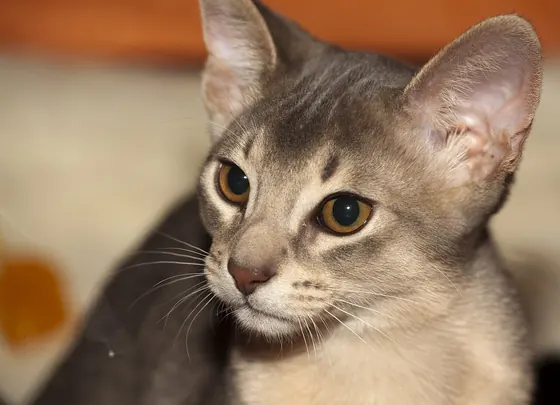
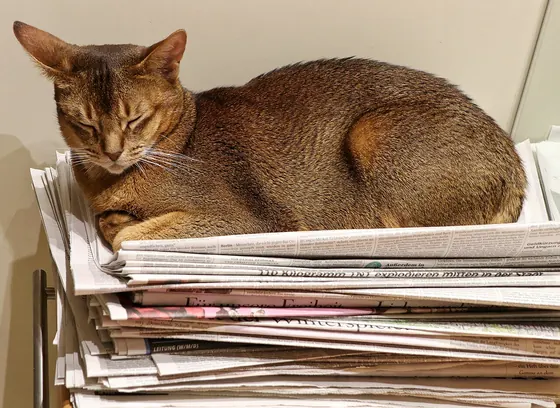
Photos: Burkhard Mücke (CC BY-SA 4.0) · Nickolas Titkov from Moscow, Russian Federation (CC BY-SA 2.0), via Wikimedia Commons.
Breed profile
* An estimate for Spain in 2026 (food, litter, vet and insurance), based on the size, grooming and health needs of the breed, not on measured costs of individual cats.
What it is like
According to the best-known story, the first Abyssinian, Zula, reached England in 1868 with a soldier returning from the war in Abyssinia, present-day Ethiopia. Genetic studies point rather to an origin on the coast of the Indian Ocean and in South-East Asia, but the name stuck. Its hallmark is the ticked coat, with no stripes or spots, which makes it look like a small puma. It is one of the most active, curious and athletic cats: it explores every corner, climbs to the highest point and wants to be involved in everything. It is not a lap cat, but it is very affectionate in its own way. It meows little and softly.
Coat colours and patterns
Colours and patterns that are common or accepted in this breed. Each page explains where the colour comes from, the myths around it and other breeds that have it.
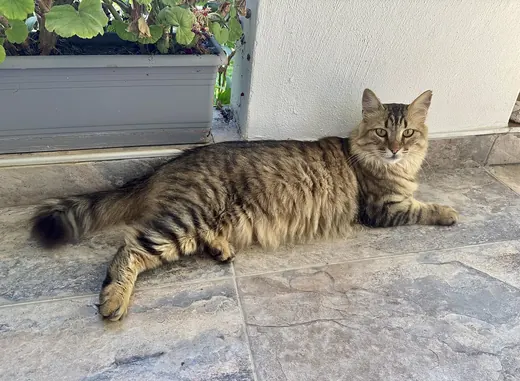 Tabby
Pattern · Tabby, Striped cat
Tabby
Pattern · Tabby, Striped cat
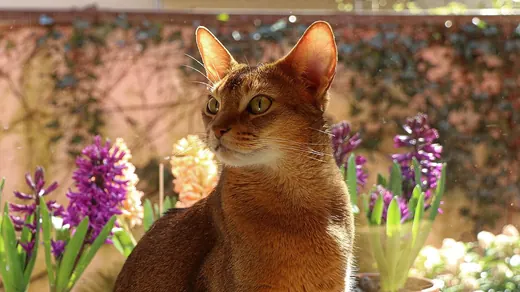 Ticked or agouti
Pattern · Ticked tabby, Abyssinian tabby
Ticked or agouti
Pattern · Ticked tabby, Abyssinian tabby
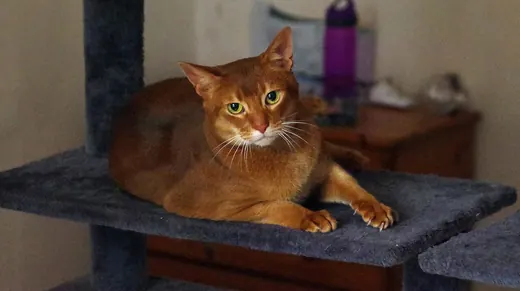 Cinnamon and fawn
Colour · Cinnamon, Sorrel
Cinnamon and fawn
Colour · Cinnamon, Sorrel
All cat coat colours and patterns →
Temperament
Care
Easy coat: a mitt once a week. What it asks for is stimulation: tall scratching posts, shelves, hunting toys, puzzle feeders and play time every day. It learns tricks and walks on a harness. If it is alone for many hours, it is better with another active cat. Check its gums and teeth every few months. It is a born climber: protect fragile objects on high shelves and put netting on windows and balconies.
Health
Pyruvate kinase deficiency (PK-def) and two forms of progressive retinal atrophy: rdAc (CEP290 gene), recessive and late-onset, and rdy (CRX gene), dominant and early-onset; there are DNA tests. Familial renal amyloidosis, and gingivitis and periodontitis are common. Ask for the parents' PK-def and rdAc results.
Health problems to watch for
These are described more often in this breed. It does not mean a Abyssinian will have them, nor that a moggy is free of them: they are worth knowing about and discussing with your vet.
Fun facts
An Abyssinian called Cinnamon was the first cat to have its genome sequenced in detail, in 2007.
Zula, supposedly the first Abyssinian in England, appears in a book from 1874.
The Somali is its semi-longhaired version.
Its usual ruddy colour recalls the cats in ancient Egyptian paintings, although that does not prove an Egyptian origin.
Frequently asked questions
How big does a Abyssinian get?
An adult Abyssinian usually weighs 3–5 kg (7–11 lb) and stands about 23–30 cm (9–12 in) at the shoulder, which makes it a medium cat.
How long does a Abyssinian live?
Its usual life expectancy is 12–15 years. Living indoors, being neutered and having regular vet check-ups make the biggest difference.
Is the Abyssinian hypoallergenic?
No. It produces the usual cat allergens. If someone at home is allergic, spend time with the breed before deciding and talk to an allergist.
Is the Abyssinian good with children?
Usually yes: it tends to be patient and sociable with children. As with any cat, teach children to let it walk away when it has had enough.
How much play does a Abyssinian need?
As a guide, 60 min of play a day. Its activity score is 5 out of 5: short daily play sessions with a wand toy work better than one long one.
Similar breeds
All breeds A to Z Cost calculator (Spanish) Food portions (Spanish)