
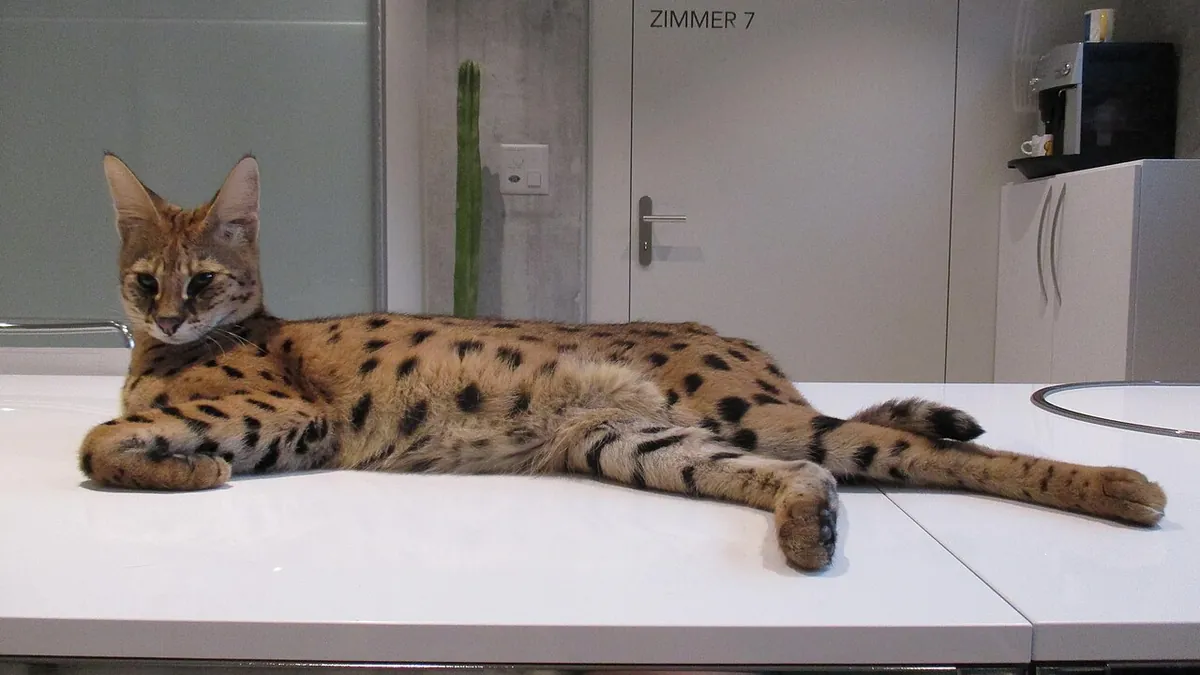
Savannah
Also known as: Savannah cat · Serval hybrid · Serval cat · Savannah F1 · Hybrid cat
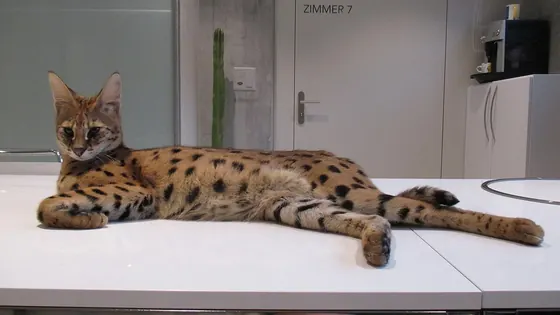
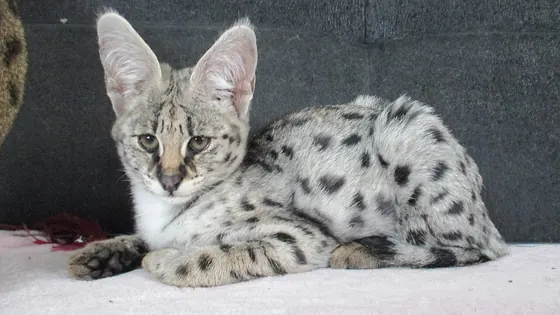
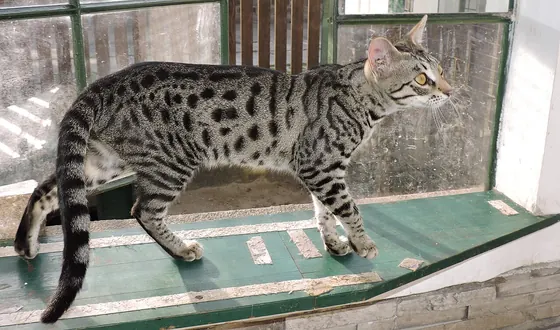
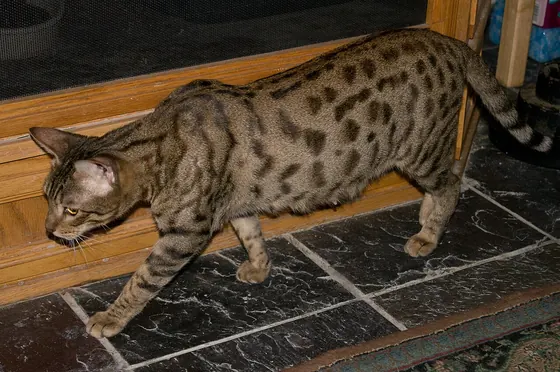
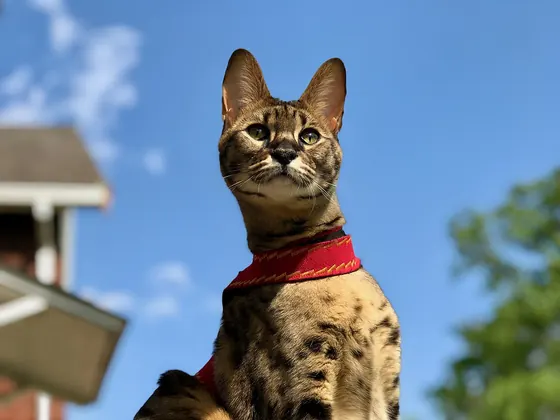
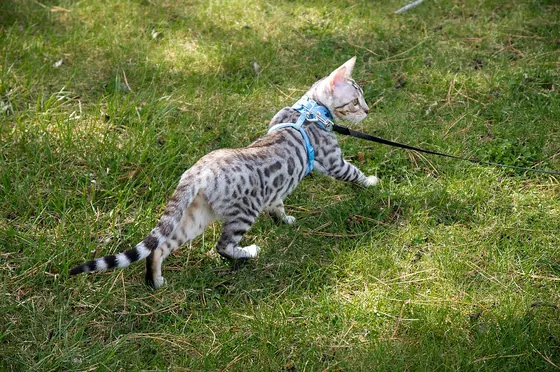
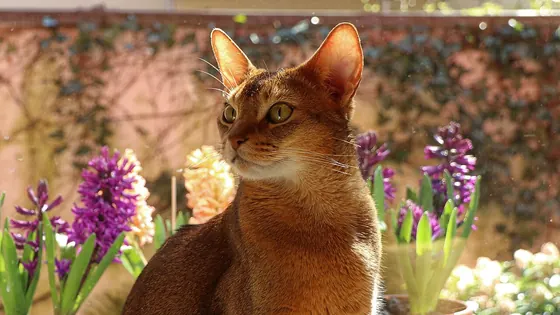
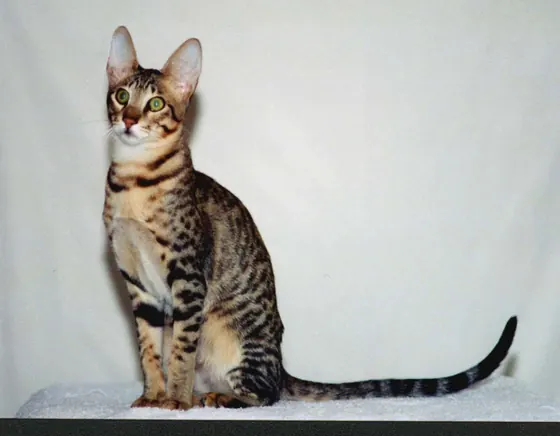
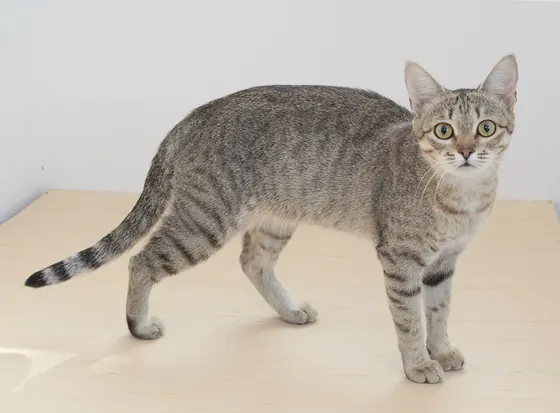
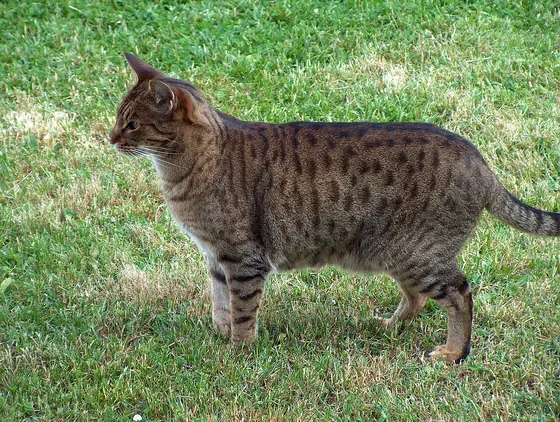
Photos: Sokrates 399 (CC BY 4.0) · Savannah Clark (CC BY-SA 4.0) · will.wade (CC BY-SA 2.0) · Maxinjo (CC0), via Wikimedia Commons.
Breed profile
* An estimate for Spain in 2026 (food, litter, vet and insurance), based on the size, grooming and health needs of the breed, not on measured costs of individual cats.
Varieties
Savannah generations
What it is like
It was born in 1986 from a cross between a male serval, a wild African cat, and a Siamese female; the kitten was called Savannah and gave the breed its name. It is bred by generations: an F1 has a serval parent, an F2 a serval grandparent, and so on. The closer to the serval, the bigger, more expensive and less domestic the cat. It is a huge, rangy cat with long legs, tall ears and a vertical leap of more than two metres. It is loyal and curious, plays with water and learns to walk on a harness, but it is not for everyone: it needs space, lots of activity and an experienced owner. The early generations are closer to a wild animal than to a sofa cat.
Coat colours and patterns
Colours and patterns that are common or accepted in this breed. Each page explains where the colour comes from, the myths around it and other breeds that have it.
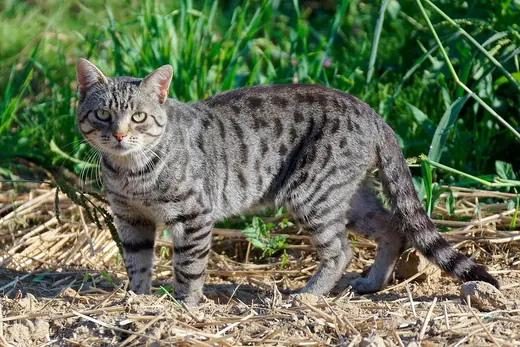 Spotted tabby
Pattern · Spotted tabby, Spotted cat
Spotted tabby
Pattern · Spotted tabby, Spotted cat
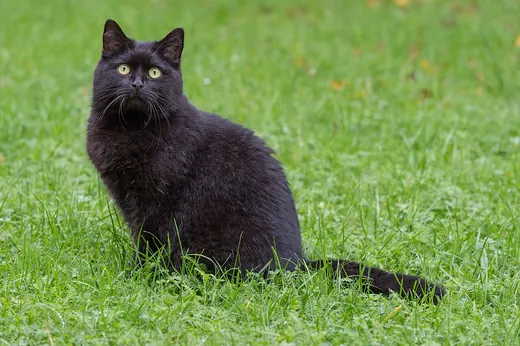 Black
Colour · Solid black cat, Black
Black
Colour · Solid black cat, Black
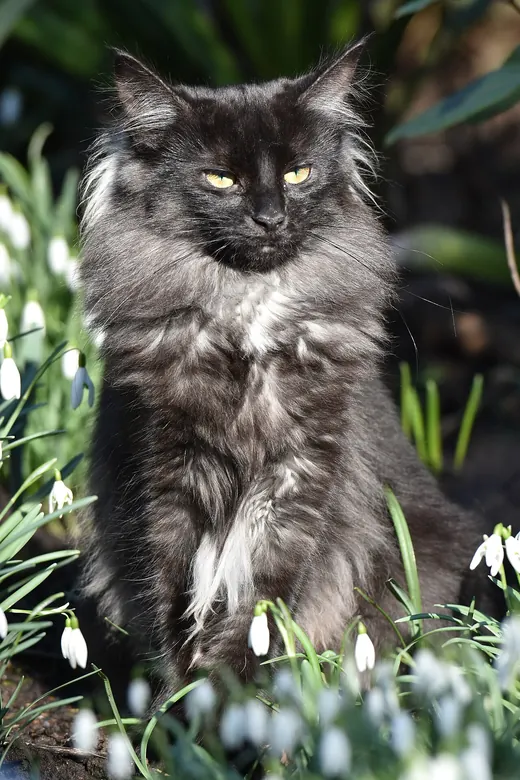 Smoke
Colour · Smoke, Black smoke
Smoke
Colour · Smoke, Black smoke
All cat coat colours and patterns →
Temperament
Care
It needs a large, enriched, jump-proof home: shelves, floor-to-ceiling cat trees, windows with strong netting and nothing fragile within reach. At least an hour of active play a day plus mental challenges. Before buying an early generation, check the rules where you live: in Spain, for example, Law 7/2023 provides for a positive list of companion animals, and keeping hybrids of wild species may come with requirements. Insist on proof of origin. An F1 can cost more than €10,000.
Health
In later generations it is a fairly robust cat. F1–F3 males are usually sterile. The difference in gestation between the serval (about 74 days) and the domestic cat (about 65) means some F1s are born premature. An echocardiogram to rule out HCM is advisable. If your vet is not familiar with hybrids, look for one who specialises in exotics or cats.
Health problems to watch for
These are described more often in this breed. It does not mean a Savannah will have them, nor that a moggy is free of them: they are worth knowing about and discussing with your vet.
Fun facts
Fenrir, an F2 Savannah from Michigan, was recognised by Guinness in 2022 as the tallest living domestic cat: 47.83 cm (18.83 in).
Australia banned its import in 2008 because of the risk to native wildlife.
Its hiss sounds more like a serval's, a kind of snake-like hiss, than a normal cat's.
TICA recognised it as a new breed in 2001 and gave it championship status in 2012.
Frequently asked questions
How big does a Savannah get?
An adult Savannah usually weighs 5–11 kg (11–24 lb, depending on generation) and stands about 35–45 cm (14–18 in) at the shoulder, which makes it an extra large cat.
How long does a Savannah live?
Its usual life expectancy is 12–20 years. Living indoors, being neutered and having regular vet check-ups make the biggest difference.
Is the Savannah hypoallergenic?
No. It produces the usual cat allergens. If someone at home is allergic, spend time with the breed before deciding and talk to an allergist.
Is the Savannah good with children?
It can be, with calm children who respect its space. As with any cat, teach children to let it walk away when it has had enough.
How much play does a Savannah need?
As a guide, 60 min of play a day. Its activity score is 5 out of 5: short daily play sessions with a wand toy work better than one long one.
Similar breeds
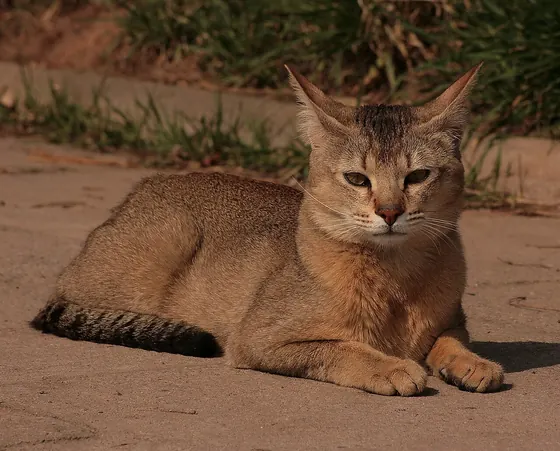
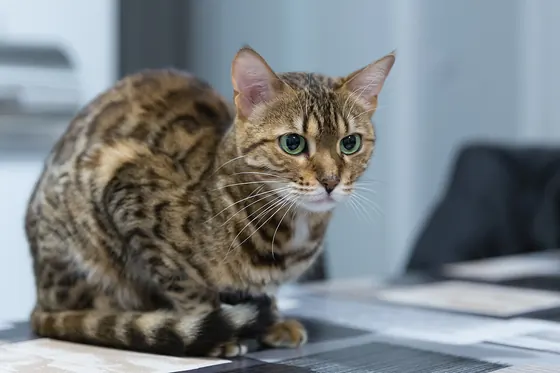
All breeds A to Z Cost calculator (Spanish) Food portions (Spanish)